Thyroid Tests and Treatment Around Pregnancy
If you already take thyroid medicine, pregnancy calls for a monitoring plan; if you don’t, testing depends on your history and symptoms.
If you take levothyroxine, review your thyroid results and treatment plan when planning pregnancy or as soon as you know you’re pregnant. Thyroid hormone needs can rise during pregnancy, and the plan needs another review after birth. If you’ve had thyroid surgery or develop symptoms that could point to thyroid disease, ask whether testing fits your situation. Pregnancy alone doesn’t establish one testing schedule for everyone. 2567
Before pregnancy: start with what you already know
If you have an underactive thyroid and take levothyroxine, planning pregnancy is a good time to make sure your thyroid results and prescription have been reviewed. Pregnancy can increase the amount of levothyroxine needed, so a result that was appropriate before pregnancy doesn’t replace a plan for checking it once you’re pregnant. Don’t stop levothyroxine because of a positive pregnancy test: untreated hypothyroidism carries risks, and levothyroxine treatment should continue during pregnancy. 26
Your history matters even if you don’t currently take thyroid medicine. For example, someone who has had part of her thyroid removed may have a different reason to discuss testing than someone with no thyroid history. In a nationwide retrospective study, elevated TSH was recorded more often in pregnancies after partial thyroidectomy than in pregnancies in the general comparison group. That finding supports paying attention to surgical history; it doesn’t establish a testing schedule for every pregnant woman. 5
During pregnancy: a test result and a treatment plan are different decisions
A blood test for thyroid-stimulating hormone, or TSH, is usually the first thyroid test. Thyroxine, often called T4, and sometimes thyroid antibody tests can add information when a result needs explaining. Pregnancy treatment monitoring uses pregnancy-specific TSH ranges rather than assuming a pre-pregnancy range answers the same question. 12
For someone already taking levothyroxine for hypothyroidism, the practical question is whether her current treatment still keeps TSH in the intended range. The US prescribing information calls for TSH monitoring and adjustment of levothyroxine during pregnancy because requirements may increase. That is a reason to contact the clinician managing the prescription promptly when pregnancy is confirmed, not a reason to change a dose on your own. 2
A newly abnormal result is a different situation. An elevated TSH with normal free T4 is called subclinical hypothyroidism; a normal TSH with low free T4 is called hypothyroxinemia. Neither label, by itself, tells you that every woman needs the same treatment. In a secondary analysis of placebo groups from two pregnancy trials, many participants identified with either condition before 20 weeks had at least one later normal thyroid result. This doesn’t mean an abnormal result should be ignored. It shows why the particular result, clinical history and follow-up matter before treating a mild finding as a settled diagnosis. 4
Symptoms can also give you a reason to raise the question. An underactive thyroid can cause tiredness and weight gain, while an overactive thyroid can cause heat sensitivity, tremor, a fast or irregular heartbeat, and weight loss despite an increased appetite. These symptoms can have other causes, so they’re a reason to discuss testing rather than a way to diagnose yourself. If you’re taking medicine for an overactive thyroid, bring that prescription into the pregnancy conversation too; medicine decisions in pregnancy should weigh the risks of treatment against the risks of leaving a condition untreated. 673
After birth: revisit the pregnancy plan
If your levothyroxine treatment changed during pregnancy, make sure there’s a plan for after delivery rather than assuming the pregnancy prescription remains right indefinitely. For patients with pre-existing primary hypothyroidism whose TSH is above the trimester-specific range, the cited US levothyroxine tablet label describes a return to the pre-pregnancy dose immediately after delivery and a TSH check 4 to 8 weeks postpartum. That specific plan may not fit someone first diagnosed during pregnancy or someone treated for a different thyroid condition, so confirm the plan attached to your prescription. 2
If you weren’t previously diagnosed but notice persistent symptoms after birth, mention them rather than assuming they must be part of recovery. For example, ongoing tiredness with other signs of an underactive thyroid, or a racing heartbeat with tremor and heat sensitivity, gives your care team something more specific to assess. A thyroid blood test can help determine whether thyroid function is involved; symptoms alone can’t do that. 167
The useful distinction throughout is known disease versus a new question. Known hypothyroidism calls for an active treatment-and-monitoring plan across pregnancy and after birth. A new symptom or mildly abnormal test calls for interpretation in context, not an automatic copy of someone else’s treatment plan. 24
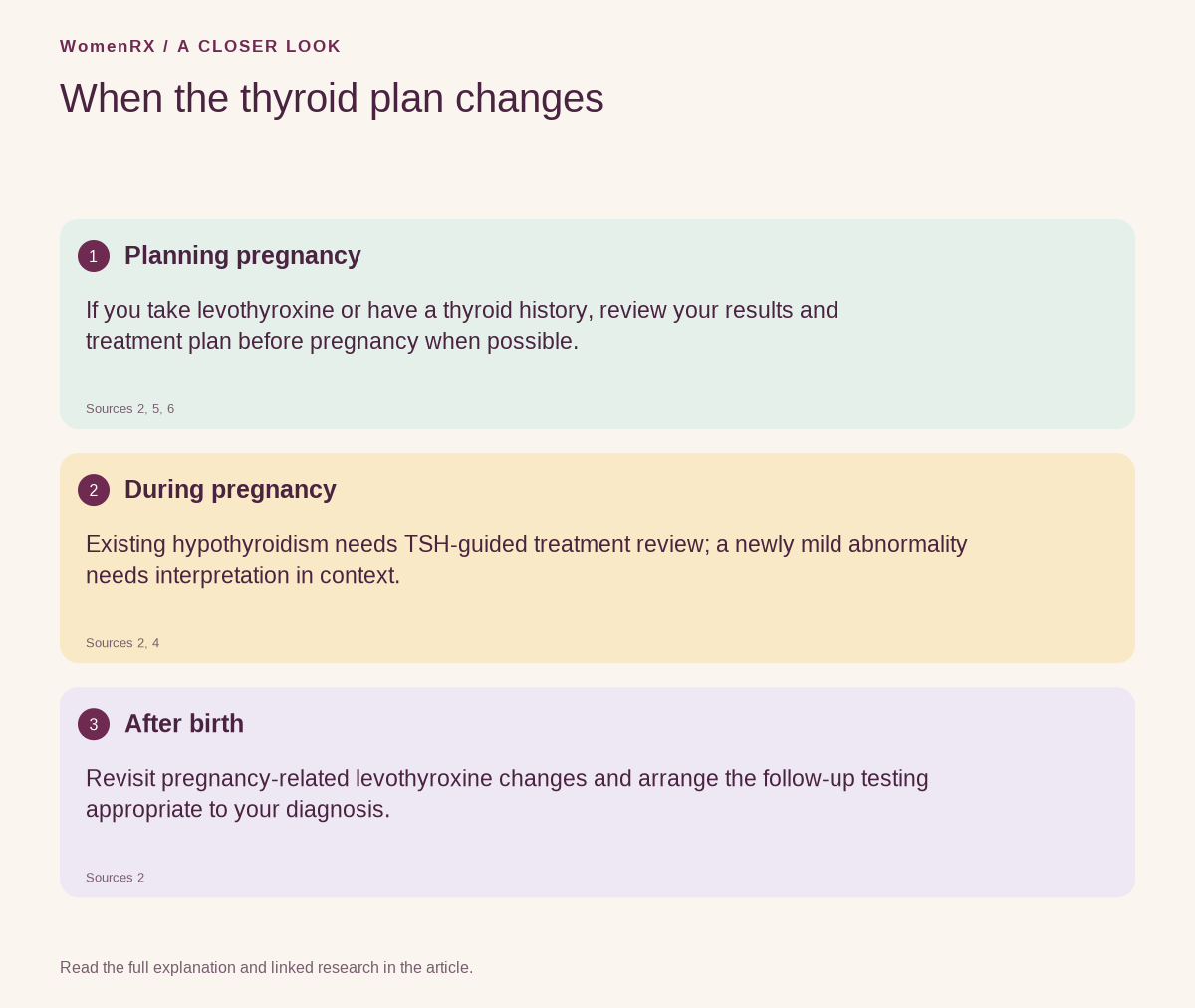
When the thyroid plan changes
Planning pregnancy: If you take levothyroxine or have a thyroid history, review your results and treatment plan before pregnancy when possible.256
During pregnancy: Existing hypothyroidism needs TSH-guided treatment review; a newly mild abnormality needs interpretation in context.24
After birth: Revisit pregnancy-related levothyroxine changes and arrange the follow-up testing appropriate to your diagnosis.2
Read the figure as text
The reason for a thyroid review shifts from establishing a baseline plan to monitoring pregnancy treatment and reassessing it after birth.- Planning pregnancy: If you take levothyroxine or have a thyroid history, review your results and treatment plan before pregnancy when possible.256
- During pregnancy: Existing hypothyroidism needs TSH-guided treatment review; a newly mild abnormality needs interpretation in context.24
- After birth: Revisit pregnancy-related levothyroxine changes and arrange the follow-up testing appropriate to your diagnosis.2
More questions, answered
Could a supplement affect my thyroid test result?
Yes. Biotin, which is found in some supplements, can interfere with laboratory tests for TSH and thyroid hormones. Tell the person ordering your test what supplements you take so they can advise you about the test. 2
Sources you can check
- Thyroid Tests: MedlinePlusAccessed 2026-09-25Return to first citation
- LEVOTHYROXINE SODIUM TABLET [CARDINAL HEALTH 107, LLC] | US prescribing information and patient instructionsAccessed 2026-09-25Return to first citation
- Pregnancy and Medicines | MedlinePlusAccessed 2026-09-25Return to first citation
- Thyroid Function Throughout Pregnancy in Women With Subclinical Hypothyroidism or Hypothyroxinemia.Theilen LH, Mele L, Peaceman AM, Reddy UM, Varner MW, Thorp JM, Saade GR, Tita ATN, Rouse DJ, Sibai BM, Costantine MM, Caritis SN, Casey BM, for th... · Obstetrics and gynecology · 2026Return to first citation
- Thyroid Function Testing During Pregnancy After Partial Thyroidectomy Versus the General Population: A Nationwide Retrospective Cohort.Allon R, Atias D, Ben-Basat N, Melamed G, Saciuk Y, Patalon T. · Endocrine practice : official journal of the American College of Endocrinology and the American Association of Clinical Endocrinologists · 2026Return to first citation
- Underactive thyroid (hypothyroidism) - NHSAccessed 2026-09-25Return to first citation
- Overactive thyroid (hyperthyroidism) - Symptoms - NHSAccessed 2026-09-25Return to first citation