Can Menopause Hormone Therapy Be Used for Weight Loss?
Menopause hormone therapy can treat certain menopause symptoms, but weight loss is a separate goal and not a reason to start it.
No. Menopausal hormone therapy (MHT), including estrogen and sometimes a progestogen, is used for established reasons such as bothersome hot flashes and vaginal or urinary symptoms, and in some cases to prevent bone loss. It isn’t a weight-loss treatment. Research suggests it may affect where fat accumulates or help preserve body composition, but that is different from causing meaningful weight loss. 1 2
What hormone therapy is meant to treat
Menopausal hormone therapy (MHT) is a treatment for specific menopause-related concerns, not a general treatment for changes in weight. The Menopause Society’s 2022 position statement identifies bothersome hot flashes and night sweats, genitourinary symptoms, and prevention of bone loss among established uses. Whether it makes sense depends on the person and the balance of potential benefits and risks. 1
So if your main goal is to lose weight, MHT isn’t the treatment to seek for that purpose. If you’re also having symptoms such as disruptive hot flashes, weight concerns can be part of the same conversation, but they’re separate goals. The potential to ease a menopause symptom doesn’t mean therapy will make the number on the scale go down.
Weight, body composition, and fat distribution aren’t the same thing
A scale measures total body weight. Body composition describes the balance of fat and lean tissue, while fat distribution describes where fat is carried. These can change in different ways, so a treatment might affect body composition or central fat accumulation without producing weight loss.
A 2026 clinical review of MHT and weight management describes changes in body composition during the menopausal transition, including increased body fat and visceral fat and decreased lean mass. It concludes that MHT may help limit central fat accumulation or preserve favorable body composition, but should not be prescribed or promoted as a weight-loss or obesity treatment. Those possible body-composition effects are not a promise of weight loss. 2
Weight changes also shouldn’t automatically be attributed to menopause alone. The review describes the transition as involving multiple influences, and a 2026 discussion of perimenopause notes that fat redistribution can occur even with little weight gain. If you’ve noticed a change, it may help to describe what changed, when it began, and any relevant changes in health or medication when you discuss it with your care team. 2 4
Keep the two goals clear in a treatment conversation
If you’re considering MHT, you might separate the discussion into two questions:
- Which menopause symptoms or health concerns are you hoping to treat? Be specific about symptoms and how they affect daily life. MHT’s established uses include treating bothersome vasomotor symptoms and genitourinary symptoms, and preventing bone loss in appropriate circumstances. 1
- What would you like to understand about your weight or body composition? You can ask whether a change might relate to menopause, another health factor, or medication, and what options address weight as a separate goal.
This distinction helps avoid expecting one treatment to do two different jobs. The Menopause Society says MHT risks vary with factors including therapy type, route, duration, timing, and whether a progestogen is used, and recommends individualizing treatment and periodically revisiting its benefits and risks. 1
What about hormone therapy alongside a weight-loss medication?
One small retrospective study looked at postmenopausal women using semaglutide for overweight or obesity. It compared 16 women who used hormone therapy with 90 who did not. The hormone-therapy group had greater average weight loss at several follow-up points, including 16% versus 12% at 12 months. But the study observed an association in people taking semaglutide; it did not test MHT as a weight-loss treatment or establish that MHT caused the difference. The authors called for larger studies. 3
That finding is not a reason to start MHT for weight loss. It’s an early result about a particular combination in a small, nonrandomized study, and it doesn’t replace the separate decision about whether MHT is appropriate for menopause-related symptoms or another established indication.
Bottom line: Consider MHT for an appropriate menopause-related treatment goal, not as a way to lose weight. Bring weight changes into the conversation too, while keeping weight management as a distinct question.
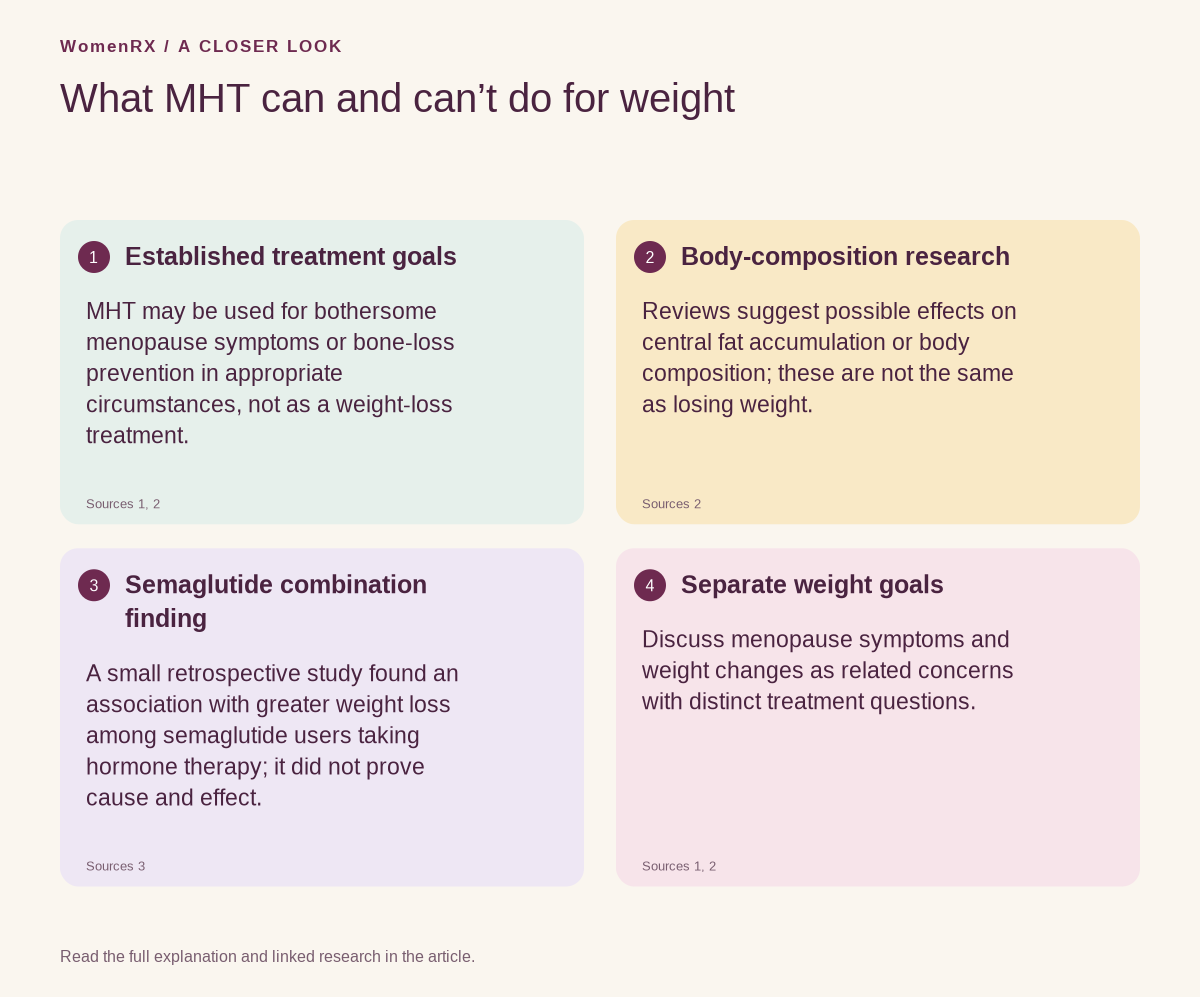
What MHT can and can’t do for weight
Established treatment goals: MHT may be used for bothersome menopause symptoms or bone-loss prevention in appropriate circumstances, not as a weight-loss treatment.12
Body-composition research: Reviews suggest possible effects on central fat accumulation or body composition; these are not the same as losing weight.2
Semaglutide combination finding: A small retrospective study found an association with greater weight loss among semaglutide users taking hormone therapy; it did not prove cause and effect.3
Separate weight goals: Discuss menopause symptoms and weight changes as related concerns with distinct treatment questions.12
Read the figure as text
These distinctions separate established menopause-treatment purposes from body-composition findings and early evidence about combining treatments.- Established treatment goals: MHT may be used for bothersome menopause symptoms or bone-loss prevention in appropriate circumstances, not as a weight-loss treatment.12
- Body-composition research: Reviews suggest possible effects on central fat accumulation or body composition; these are not the same as losing weight.2
- Semaglutide combination finding: A small retrospective study found an association with greater weight loss among semaglutide users taking hormone therapy; it did not prove cause and effect.3
- Separate weight goals: Discuss menopause symptoms and weight changes as related concerns with distinct treatment questions.12
More questions, answered
Can hormone therapy change where I carry fat without making me lose weight?
Possibly. A clinical review reports that MHT may help limit central fat accumulation or preserve favorable body composition, but those possible effects are different from weight loss and don’t make MHT a weight-loss treatment. 2
Does research show hormone therapy improves weight loss with semaglutide?
A small retrospective study found greater average weight loss among postmenopausal semaglutide users who also used hormone therapy than among those who did not. It shows an association, not proof that hormone therapy caused more weight loss, and the authors said larger studies are needed. 3
Sources you can check
- The 2022 hormone therapy position statement of The North American Menopause Society.“The 2022 Hormone Therapy Position Statement of The North American Menopause Society” Advisory Panel. · Menopause (New York, N.Y.) · 2022Return to first citation
- Clinical review: Menopause hormone therapy in weight management.Younglove C. · Obesity pillars · 2026Return to first citation
- Weight loss response to semaglutide in postmenopausal women with and without hormone therapy use.Hurtado MD, Tama E, Fansa S, Ghusn W, Anazco D, Acosta A, Faubion SS, Shufelt CL. · Menopause (New York, N.Y.) · 2024Return to first citation
- Perimenopause as an obesogenic sensitive period: Contributions to elevated cardiovascular risk.Manning ME, Stockman SL, Zanni MV. · American journal of preventive cardiology · 2026Return to first citation