Can Insomnia Be a Perimenopause Symptom?
Sleep problems are more common during the menopausal transition, but their timing alone can’t show what’s causing them.
Yes. Research finds more sleep disruption during perimenopause than before menopause, and hot flashes or other factors can contribute. That’s an association, not proof that hormonal change directly caused your insomnia. If sleep problems begin as your periods change, the timing may be relevant, but it’s worth considering other sleep disruptors too. 4 1
When sleep changes alongside your cycle
Perimenopause can be part of the picture when trouble falling asleep, waking during the night, or waking too early begins around the time your periods become less predictable. Periods can become irregular as menopause approaches. Research reviews also find that sleep disruption is more prevalent during perimenopause and after menopause than before it. 3 4
But those observations don’t establish that hormonal changes directly caused any one person’s insomnia. Sleep disruption varies with menopausal stage, how it’s measured, and whether vasomotor symptoms such as hot flashes are present. In other words, the transition may be relevant without being the only explanation. 4
Look for what is waking you
The pattern can offer useful clues. For example, if you wake feeling hot or sweaty and then struggle to fall back asleep, a menopause-related symptom may be interrupting sleep. If you’re awake for long stretches without noticing that pattern, other contributors may deserve attention too. The review identifies hot flashes and other biological, psychological, and social factors as relevant, but doesn’t establish a single cause that applies to everyone. 4
Insomnia can also accompany stress, pain, some medical conditions or medicines, and use of caffeine, tobacco, or alcohol. Other sleep problems, including interrupted breathing during sleep, can look like or contribute to poor sleep. 1 2
A simple way to assess whether the timing matters is to notice whether sleep changes began alongside cycle changes, whether particular symptoms wake you, and whether the pattern persists even on nights without them. This isn’t a diagnostic test; it helps separate a possible connection from other factors worth discussing.
Insomnia alone doesn’t identify perimenopause
Trouble sleeping can happen at any age and for many reasons. Irregular periods are more common near menopause, but they can also have other causes, including thyroid problems. So insomnia by itself, or insomnia paired with a changed cycle, can’t confirm perimenopause. 1 3
It may help to record when periods occur and note sleep interruptions or symptoms that accompany them. If sleep trouble lasts for months or is affecting your daily life, talk with a clinician about the sleep problem itself as well as any cycle changes. An evaluation can consider other medical or sleep-related causes rather than assuming menopause explains everything. 1 2
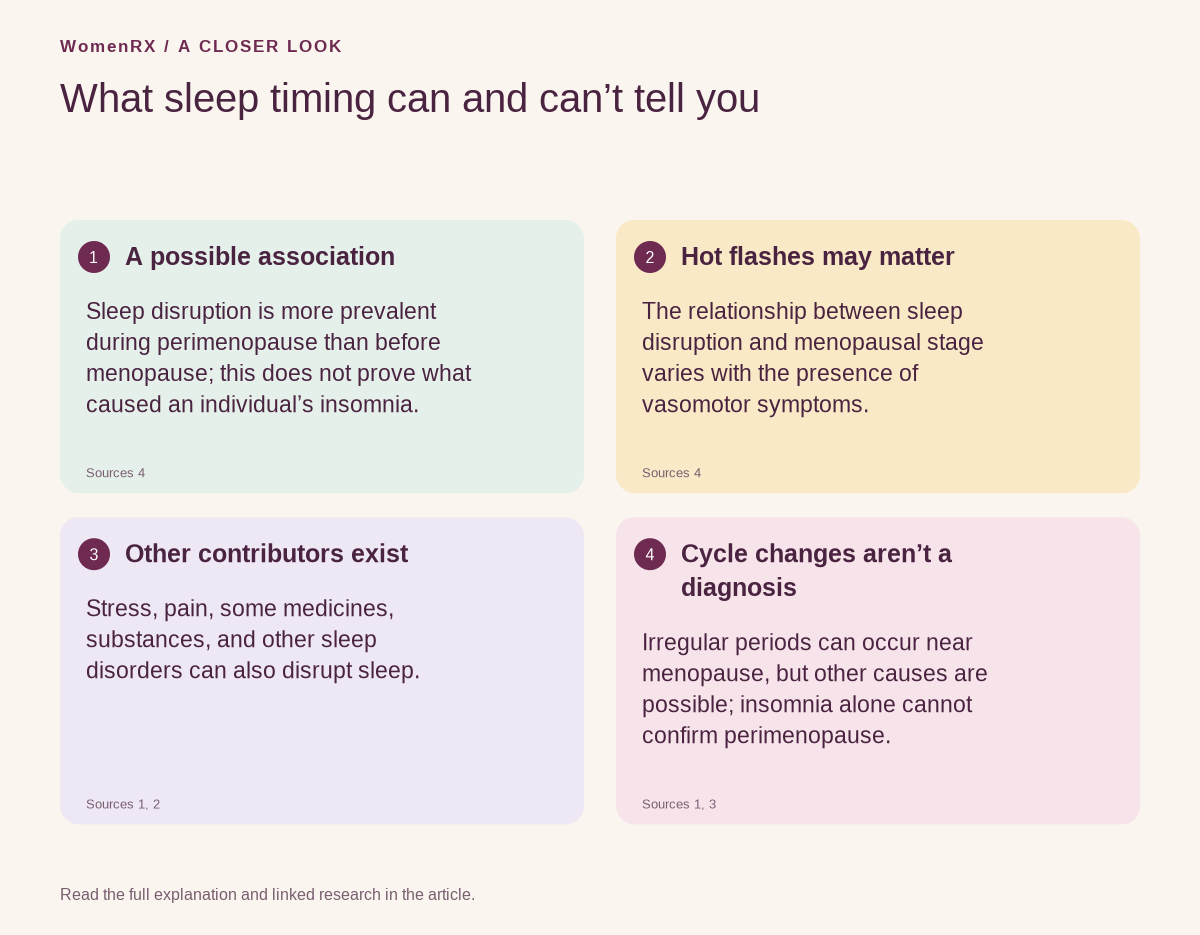
What sleep timing can and can’t tell you
A possible association: Sleep disruption is more prevalent during perimenopause than before menopause; this does not prove what caused an individual’s insomnia.4
Hot flashes may matter: The relationship between sleep disruption and menopausal stage varies with the presence of vasomotor symptoms.4
Other contributors exist: Stress, pain, some medicines, substances, and other sleep disorders can also disrupt sleep.12
Cycle changes aren’t a diagnosis: Irregular periods can occur near menopause, but other causes are possible; insomnia alone cannot confirm perimenopause.13
Read the figure as text
Perimenopause may be relevant to new sleep problems, but several patterns and causes can overlap.- A possible association: Sleep disruption is more prevalent during perimenopause than before menopause; this does not prove what caused an individual’s insomnia.4
- Hot flashes may matter: The relationship between sleep disruption and menopausal stage varies with the presence of vasomotor symptoms.4
- Other contributors exist: Stress, pain, some medicines, substances, and other sleep disorders can also disrupt sleep.12
- Cycle changes aren’t a diagnosis: Irregular periods can occur near menopause, but other causes are possible; insomnia alone cannot confirm perimenopause.13
Sources you can check
- Insomnia | MedlinePlusAccessed 2026-09-25Return to first citation
- Insomnia - NHSAccessed 2026-09-25Return to first citation
- Irregular periods - NHSAccessed 2026-09-25Return to first citation
- Sleep Disruption in the Menopausal Transition and Postmenopause: A Narrative Review.Lyu AC, Kravitz HM. · Obstetrics and gynecology · 2026Return to first citation