Burning Mouth in Your 40s: Could Perimenopause Matter?
Changing cycles may be relevant, but mouth burning has several possible explanations and age alone can’t identify the cause.
Perimenopause could be part of the picture if your cycles are changing, but burning mouth isn’t proof of a hormone problem. Research links burning mouth symptoms with menopause, yet it doesn’t establish that hormonal changes cause them, especially for women specifically in their 40s. Dryness, medicines, oral irritation, dental issues and other health factors may also be relevant, so the pattern deserves a broader look. 2
A possible connection, not a diagnosis
If you’re in your 40s and noticing cycle changes, it’s reasonable to wonder whether they relate to burning, tingling, soreness or an unusual taste in your mouth. Menopause-related hormonal changes may affect the mouth, and a 2026 systematic review found an association between menopause and burning mouth syndrome. But the review combined different kinds of studies, and associations don’t show that hormones caused the symptoms. It also doesn’t settle the question for women in perimenopause specifically. 2
So, changing periods are useful context to mention, not an explanation to assume. Burning mouth can happen alongside dry mouth, altered taste, oral-health problems, medication use and other health factors. The review describes possible contributors such as oral irritation, dental procedures, thyroid or nutritional issues, and psychological factors; it does not identify one cause that explains every case. 2
Burning mouth symptoms aren’t automatically burning mouth syndrome
“Burning mouth syndrome” is generally used for persistent oral burning when an examination and evaluation don’t identify a local or systemic cause. The tongue is a common site, and symptoms can include tingling, numbness, altered taste or a dry-mouth feeling. The name alone doesn’t tell you why the burning started. 2
That distinction matters: a burning sensation is a symptom to investigate, while the syndrome is a diagnosis made after considering other explanations. In a study of people referred for oral burning, existing diagnostic criteria did not perform equally well, reinforcing that the label can’t be established from one symptom alone. 3
Make the pattern easier to see
Before a dental or medical review, jot down a few details. This isn’t a diagnostic score; it’s a way to make the conversation more specific.
- Timing: When did the sensation begin? Is it steady or does it come and go? Note whether it seems to change alongside cycle changes, without assuming a connection.
- Other mouth changes: Record dryness, taste changes, tingling, numbness, or any visible changes you notice. Dryness and altered taste are reported alongside burning mouth symptoms. 2
- Recent changes: List medicines you take and any recent changes to oral-care products, foods or other exposures. Medication use and oral irritants are among the factors discussed in research on burning mouth. 2
- What affects daily life: Note where the sensation is, what seems to ease or aggravate it, and whether it interferes with eating or drinking. These details can help describe the problem; they don’t confirm a cause.
A dentist can check for oral or dental explanations, and a medical clinician may consider broader health factors. In a diagnostic study, assessment of people with oral burning included a clinical examination and laboratory tests, illustrating why the evaluation may go beyond asking whether periods have changed. 3
Keep the next step focused
If the burning persists or keeps returning, arrange an evaluation rather than treating it as hormonal by default. Bring your notes on cycle timing, dryness, taste changes, medicines and oral products. Ask what local or health-related causes have been considered, and whether any next steps are appropriate for your symptoms. The menopause association is worth mentioning, but current evidence doesn’t make hormone treatment a default answer for mouth burning. The menopause hormone-therapy position statement describes established uses such as bothersome hot flashes and genitourinary symptoms, not burning mouth as a treatment indication. 1
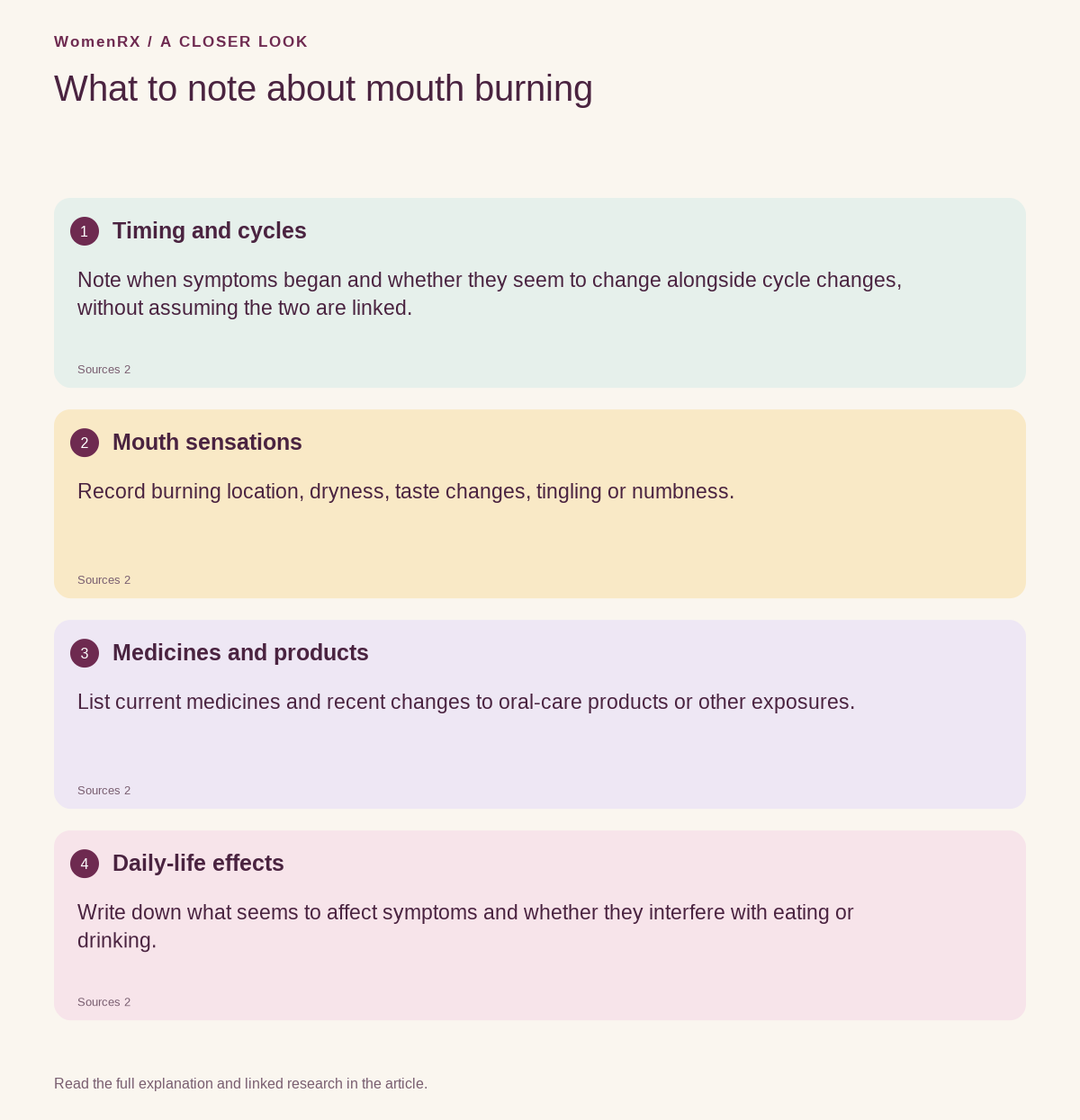
What to note about mouth burning
Timing and cycles: Note when symptoms began and whether they seem to change alongside cycle changes, without assuming the two are linked.2
Mouth sensations: Record burning location, dryness, taste changes, tingling or numbness.2
Medicines and products: List current medicines and recent changes to oral-care products or other exposures.2
Daily-life effects: Write down what seems to affect symptoms and whether they interfere with eating or drinking.2
Read the figure as text
Use these details to describe the pattern at a dental or medical review; they can guide a conversation but cannot diagnose the cause.- Timing and cycles: Note when symptoms began and whether they seem to change alongside cycle changes, without assuming the two are linked.2
- Mouth sensations: Record burning location, dryness, taste changes, tingling or numbness.2
- Medicines and products: List current medicines and recent changes to oral-care products or other exposures.2
- Daily-life effects: Write down what seems to affect symptoms and whether they interfere with eating or drinking.2
More questions, answered
Does a dry-mouth feeling mean I have burning mouth syndrome?
No. Dry mouth can occur alongside burning mouth symptoms, but it doesn’t establish the syndrome or explain what’s causing the sensation. An evaluation may be needed to look for other local or health-related factors. 23
Sources you can check
- The 2022 hormone therapy position statement of The North American Menopause Society.“The 2022 Hormone Therapy Position Statement of The North American Menopause Society” Advisory Panel. · Menopause (New York, N.Y.) · 2022Return to first citation
- Exploring the association between menopause and burning mouth syndrome: an updated review.Qaderi K, Eghdampour F, Mallah MA, Kalhor M, Ghasemi H, Fallahnia N, Sohrabi Z. · BMC oral health · 2026Return to first citation
- Optimized and validated clinical diagnostic criteria for burning mouth syndrome.El-Rubaiy M, List T, Truedsson A, Goulet JP, Svensson P, Alstergren P. · Cephalalgia : an international journal of headache · 2026Return to first citation