Burning Mouth in Perimenopause: What Might Be Behind It?
Mouth burning has been linked with menopause, but the transition isn’t a proven cause, and several oral or health conditions can produce similar symptoms.
Burning, tingling, or altered taste can occur around menopause, and research reports an association between menopause and burning mouth syndrome. That doesn’t show menopause is the cause for any one person. Dry mouth, oral irritation or disease, medication use, nutritional deficiencies, diabetes, and thyroid conditions are among the other factors worth considering before labeling symptoms as primary burning mouth syndrome. 1
A reported link, not a settled cause
A burning or scalded feeling on the tongue, palate, gums, or other areas of the mouth can happen during the menopause transition. Research reviews have found an association between menopause and burning mouth syndrome (BMS), a chronic oral pain condition. But the studies include different types of research, and the review describes BMS as multifactorial: no single cause has been established. An association does not tell you whether menopause caused your symptoms. 1
The evidence also doesn’t pin down a specific risk or timeline for perimenopause. Much of the discussion concerns menopause broadly or postmenopausal women, rather than defining what to expect at each transition stage. So it’s reasonable to consider hormonal change as one possible factor without treating it as the explanation. 1
First distinguish burning mouth from BMS
A burning sensation is a symptom; BMS is a diagnosis used when that sensation persists without an identifiable clinical or laboratory abnormality. If an oral condition or another health issue could explain the burning, clinicians may describe it as secondary oral burning rather than primary BMS. That distinction matters because finding a contributor may point to a more specific way to address it. 1
Dry mouth deserves particular attention. It is reported alongside BMS, and xerostomia, oral health problems, dental procedures, dentures, and habits that irritate the mouth are among the factors associated with symptoms. Smoking, alcohol, and acidic, spicy, or strongly flavored foods have also been reported as possible aggravators. These are possible contributors, not proof of what is driving an individual’s symptoms. 1
Other factors reported in people with oral burning include nutritional deficiencies, diabetes, hypothyroidism, and medication use. Depression, anxiety, stressful events, and poor sleep have also been associated with BMS. Those associations don’t mean symptoms are “just stress”; they underline why the picture can involve more than one factor. 1
What to check before assuming hormones are responsible
A useful assessment starts with the mouth and the pattern of symptoms, then considers the broader health picture. You might note whether the burning is in one area or several, whether there’s visible irritation or a sore spot, and whether dryness, taste changes, dental work, dentures, or particular foods seem connected. Bring a list of medicines and supplements, and mention relevant health conditions or known nutritional problems.
A dentist can look for local oral or dental explanations. If the mouth’s appearance doesn’t explain the symptoms, a medical clinician can consider whether a health condition, dry mouth, medication, or nutritional issue might be contributing. Which checks are appropriate depends on your symptoms and exam; the goal isn’t to assume every possible cause needs testing. 1
Don’t count on hormone therapy to settle the question
Hormone changes may be relevant, but hormone therapy isn’t an established treatment for mouth burning. A review of menopause-related oral symptoms found that hormone therapy does not necessarily prevent or relieve them, and said better-controlled studies are needed to determine its effect. Decisions about hormone therapy should therefore be based on its established indications and your individual circumstances, not on a promise that it will resolve oral symptoms. 2
BMS is described as chronic, but that label doesn’t give you a personal forecast or a menopause-related end date. The practical next step is to identify whether there’s a treatable oral or medical contributor before settling on primary BMS. 1
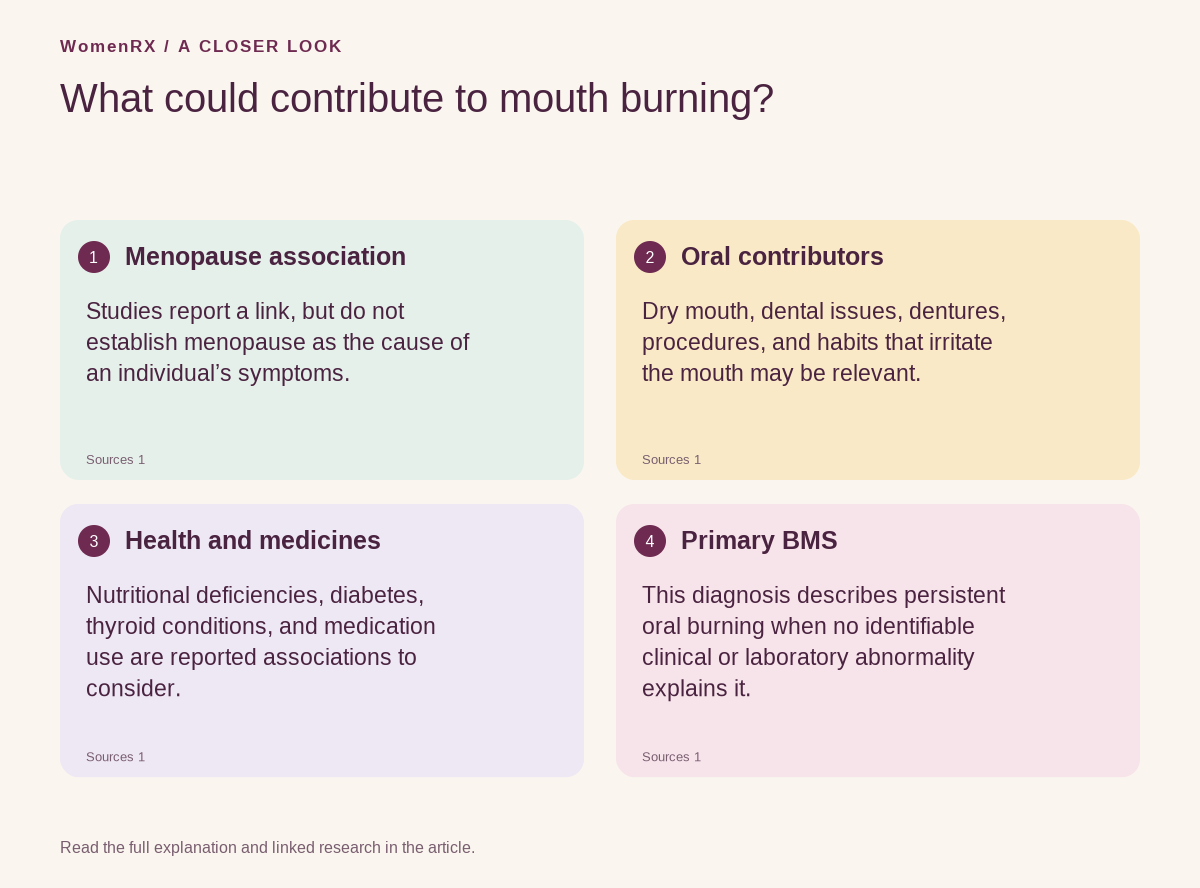
What could contribute to mouth burning?
Menopause association: Studies report a link, but do not establish menopause as the cause of an individual’s symptoms.1
Oral contributors: Dry mouth, dental issues, dentures, procedures, and habits that irritate the mouth may be relevant.1
Health and medicines: Nutritional deficiencies, diabetes, thyroid conditions, and medication use are reported associations to consider.1
Primary BMS: This diagnosis describes persistent oral burning when no identifiable clinical or laboratory abnormality explains it.1
Read the figure as text
Menopause is one reported association, not a confirmed cause. These distinctions show what else an assessment may consider.- Menopause association: Studies report a link, but do not establish menopause as the cause of an individual’s symptoms.1
- Oral contributors: Dry mouth, dental issues, dentures, procedures, and habits that irritate the mouth may be relevant.1
- Health and medicines: Nutritional deficiencies, diabetes, thyroid conditions, and medication use are reported associations to consider.1
- Primary BMS: This diagnosis describes persistent oral burning when no identifiable clinical or laboratory abnormality explains it.1
More questions, answered
Can dry mouth cause a burning feeling?
Dry mouth is reported alongside burning mouth symptoms and among the oral factors associated with BMS. It’s worth mentioning dryness during an oral or medical assessment, while remembering that dryness alone doesn’t establish the cause. 1
Will hormone therapy relieve burning mouth?
It may not. A review of menopause-related oral symptoms found that hormone therapy does not necessarily prevent or help them, and called for better-controlled research. 2
Sources you can check
- Exploring the association between menopause and burning mouth syndrome: an updated review.Qaderi K, Eghdampour F, Mallah MA, Kalhor M, Ghasemi H, Fallahnia N, Sohrabi Z. · BMC oral health · 2026Return to first citation
- The menopause and oral health.Meurman JH, Tarkkila L, Tiitinen A. · Maturitas · 2009Return to first citation