Burning Mouth During Menopause: Causes and Ways to Find Relief
Menopause may be part of the picture, but dryness, irritation, medicines and treatable health conditions deserve a closer look.
A burning mouth can come with dryness or a changed taste, and it’s reported more often in women after menopause. That doesn’t mean menopause is the cause. A dentist can check for oral problems and irritation; a medical clinician can help investigate medicines or health conditions when symptoms point that way. While you’re finding the cause, gentle dry-mouth measures may make eating and talking more comfortable.456
If your tongue feels scalded when you haven’t eaten anything hot, it’s understandable to wonder whether menopause is responsible. Burning mouth complaints are reported more often in women, especially after menopause, but the timing alone can’t tell you why your mouth hurts. Dryness, altered taste and burning can occur together, and some causes can be found and treated.24
First, notice what comes with the burning
A mouth that feels sticky or dry points toward one useful question: is there enough saliva to keep it comfortable? Feeling dry and producing less saliva aren’t quite the same thing. A dentist or clinician can assess the symptoms and, if needed, measure saliva flow. Persistent dry mouth also matters for your teeth because it raises the risk of decay and oral infections.345
Dryness has several possible explanations besides menopause. Medicines, mouth breathing at night and dehydration are among the common ones. If the dryness began around a medicine change, bring that timing to the clinician who prescribes it rather than stopping it yourself. If you wake with a dry mouth and often sleep with your mouth open, mention that too.56
A sore area, redness, white patches or a problem around a tooth or gum calls for a look inside the mouth. A dentist can check for dental problems, infection and irritation that may explain the pain. Think about anything that changed locally, too, such as an oral-care product or dental work. Those details are useful to share, but a change in products by itself doesn’t establish the cause.46
What if your mouth looks normal?
Burning mouth syndrome describes frequent burning, often continuing for months or longer. Pain may be accompanied by dryness or a metallic or otherwise altered taste, even when an examination finds no visible problem. Some people feel relatively comfortable on waking and worse as the day goes on, though patterns vary. A normal-looking mouth doesn’t mean the pain isn’t real. It means the dentist or clinician may need to rule out other explanations before calling it burning mouth syndrome.4
Possible explanations to investigate include an oral yeast infection, diabetes or thyroid problems, and low levels of certain nutrients such as vitamin B or iron. These possibilities don’t mean everyone with burning needs every test or a supplement. The examination and your other symptoms help determine what’s worth checking. For example, persistent dry mouth along with dry eyes, or frequent urination, is a reason to involve a medical clinician as well as a dentist.46
Menopause belongs in that conversation, not at the end of it as an automatic diagnosis. Burning mouth syndrome is more common after menopause, but that observation doesn’t show that hormone changes caused one person’s symptoms. Menopausal hormone therapy recommendations address established indications such as hot flashes and genitourinary symptoms; they aren’t evidence that hormone therapy treats mouth burning.41
Comfort measures while you find the cause
For a dry, uncomfortable mouth, try regular sips of water, sugar-free gum or sugar-free candy to encourage saliva, and a mouthwash made for dry mouth. If acidic, spicy or salty foods sting, ease off them while your mouth is sore. Keep up brushing, flossing and dental care: dryness makes protecting your teeth especially worthwhile. These steps may improve comfort, but they won’t identify an infection, a medicine effect or another underlying cause.56
Start with a dentist if the burning keeps returning or doesn’t go away. The dentist can examine your mouth and teeth and may recommend a medical or oral-medicine assessment if the cause isn’t clear. Contact a dentist or medical clinician promptly rather than waiting to see whether home measures work if your mouth is red, swollen or bleeding, you have sore white patches, or pain or dryness makes it hard to eat or talk. Dryness that continues despite comfort measures, a taste change that won’t go away, dry eyes or frequent urination also deserves medical assessment.46
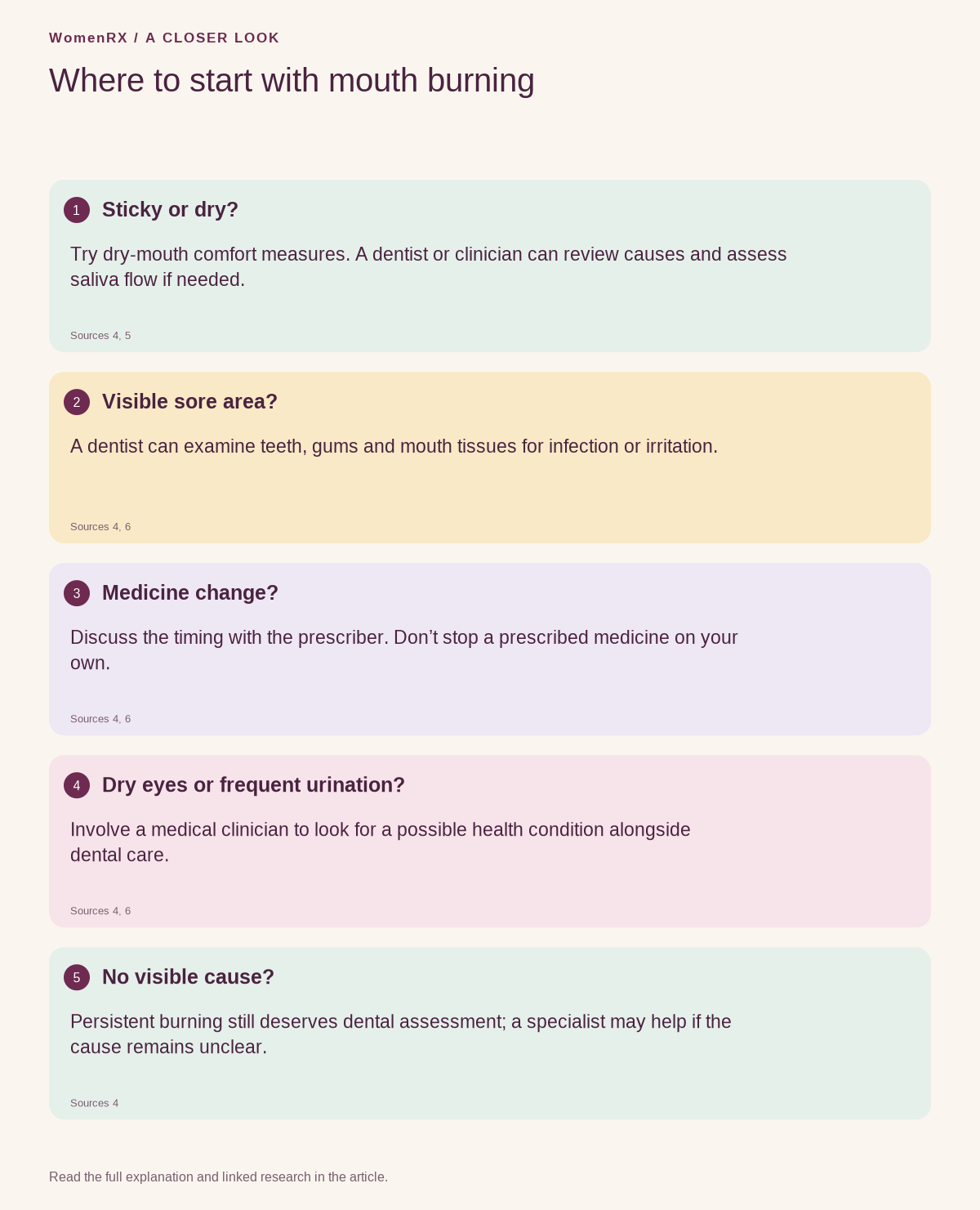
Where to start with mouth burning
Sticky or dry?: Try dry-mouth comfort measures. A dentist or clinician can review causes and assess saliva flow if needed.45
Visible sore area?: A dentist can examine teeth, gums and mouth tissues for infection or irritation.46
Medicine change?: Discuss the timing with the prescriber. Don’t stop a prescribed medicine on your own.46
Dry eyes or frequent urination?: Involve a medical clinician to look for a possible health condition alongside dental care.46
No visible cause?: Persistent burning still deserves dental assessment; a specialist may help if the cause remains unclear.4
Read the figure as text
Accompanying symptoms can help you choose a useful first conversation; they do not diagnose the cause.- Sticky or dry?: Try dry-mouth comfort measures. A dentist or clinician can review causes and assess saliva flow if needed.45
- Visible sore area?: A dentist can examine teeth, gums and mouth tissues for infection or irritation.46
- Medicine change?: Discuss the timing with the prescriber. Don’t stop a prescribed medicine on your own.46
- Dry eyes or frequent urination?: Involve a medical clinician to look for a possible health condition alongside dental care.46
- No visible cause?: Persistent burning still deserves dental assessment; a specialist may help if the cause remains unclear.4
More questions, answered
Can burning mouth syndrome happen without visible sores?
Yes. People with burning mouth syndrome often have no visible signs during an oral examination. A dentist or clinician still checks for other causes before making that diagnosis.4
Sources you can check
- The 2022 hormone therapy position statement of The North American Menopause Society.“The 2022 Hormone Therapy Position Statement of The North American Menopause Society” Advisory Panel. · Menopause (New York, N.Y.) · 2022Return to first citation
- Burning mouth syndrome.Grushka M, Epstein JB, Gorsky M. · American family physician · 2002Return to first citation
- Hyposalivation and Xerostomia and Burning Mouth Syndrome: Medical Management.Thakkar JP, Lane CJ. · Oral and maxillofacial surgery clinics of North America · 2022Return to first citation
- Burning Mouth | NIDCRAccessed 2026-09-25Return to first citation
- Dry Mouth: MedlinePlusAccessed 2026-09-25Return to first citation
- Dry mouth - NHSAccessed 2026-09-25Return to first citation