Bloating while taking progesterone: how to assess timing and other causes
When bloating starts can offer a clue, but it can’t show by itself whether progesterone, your cycle, digestion, or something else is responsible.
If bloating began after starting or changing a progesterone regimen, note the timing and whether it recurs with your prescribed regimen or, if you still have periods, around your cycle. That pattern may help guide a conversation, but it can’t prove the cause. Gas, foods and drinks, swallowed air, and digestive problems are other possibilities. Bloating that keeps returning or doesn’t go away deserves assessment. 1 3

Timing is a clue, not a verdict
If bloating started soon after you began progesterone or changed your regimen, that connection is worth noting. Also note whether it comes back at a similar point in your prescribed schedule. But timing alone can’t show that progesterone caused it, especially if other parts of your hormone therapy or routine changed at the same time.
In a small 12-month randomized study, 67 participants had baseline data. The study compared cyclical micronized progesterone with medroxyprogesterone acetate, with both regimens also including transdermal estradiol. Bloating was among the adverse effects reported. Because the study compared combined regimens rather than progesterone alone, it can’t establish which medicine caused the symptom or how often bloating occurs for people taking progesterone more broadly. 3
If you still have periods, note whether the bloating tends to happen around the time of bleeding. Some people feel bloated around their period, so a repeating cycle pattern may be useful context alongside medication timing. It doesn’t identify the cause by itself. 1
Keep notes that help separate the possibilities
As the symptom happens or recurs, record:
- When it began, whether it comes and goes, and whether it followed a medication change.
- When you take progesterone and any other recent medicine changes.
- If you still have periods, whether bloating seems connected to a particular point in your cycle or to bleeding.
- Whether you’ve noticed a connection with particular foods or drinks, and whether your bowel habits have changed.
You don’t need to overhaul your diet to gather useful clues. Gas is a common reason for bloating. Some foods and fizzy drinks can contribute, as can swallowing air while eating; digestive problems are another possibility. 1 Notes can help you describe a pattern, but they aren’t a way to diagnose the cause.
Persistent bloating deserves attention
Bloating that keeps returning or doesn’t go away should be assessed instead of automatically being blamed on progesterone. Persistent bloating can sometimes have a more serious cause, including ovarian cancer, although bloating is common and has many possible explanations. If you’re postmenopausal and have new or persistent bloating, arrange an assessment rather than assuming it is a medication effect. 1
Contact a clinician promptly if bloating comes with vomiting, diarrhea or constipation, abdominal pain, or fever. Unintentional weight loss or blood in your stool are also reasons to seek medical advice. Sudden, severe abdominal pain with a swollen stomach calls for emergency care. 1
When you raise the symptom, share your notes and the names of your medicines. You might ask whether the timing could fit a treatment effect, whether another cause needs checking, and whether any change to your regimen is appropriate. Menopause hormone therapy decisions are individualized and periodically reevaluated. 2
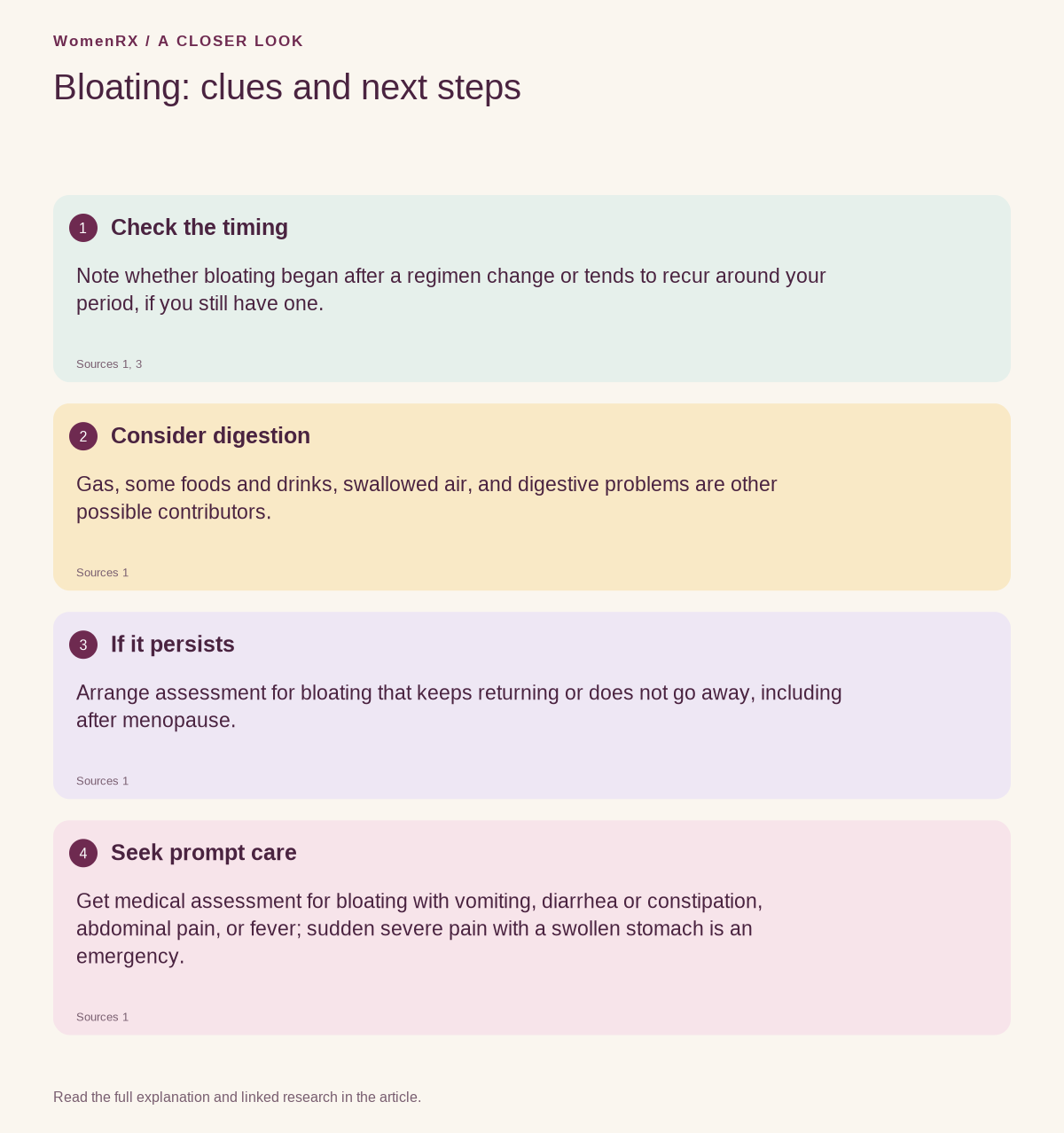
Bloating: clues and next steps
Check the timing: Note whether bloating began after a regimen change or tends to recur around your period, if you still have one.13
Consider digestion: Gas, some foods and drinks, swallowed air, and digestive problems are other possible contributors.1
If it persists: Arrange assessment for bloating that keeps returning or does not go away, including after menopause.1
Seek prompt care: Get medical assessment for bloating with vomiting, diarrhea or constipation, abdominal pain, or fever; sudden severe pain with a swollen stomach is an emergency.1
Read the figure as text
Use timing as one clue, then consider other contributors and symptoms that call for assessment. A pattern can guide a conversation but cannot establish the cause.- Check the timing: Note whether bloating began after a regimen change or tends to recur around your period, if you still have one.13
- Consider digestion: Gas, some foods and drinks, swallowed air, and digestive problems are other possible contributors.1
- If it persists: Arrange assessment for bloating that keeps returning or does not go away, including after menopause.1
- Seek prompt care: Get medical assessment for bloating with vomiting, diarrhea or constipation, abdominal pain, or fever; sudden severe pain with a swollen stomach is an emergency.1
More questions, answered
Does bloating mean progesterone is the wrong treatment for me?
Not by itself. Bloating was reported in a small study comparing two hormone regimens, but both included estradiol and the study can’t pin the symptom on progesterone alone. If bloating is persistent or troublesome, discuss what you’re experiencing and whether a regimen change makes sense with your prescriber. 2 3
Sources you can check
- Bloating - NHSAccessed 2026-09-25Return to first citation
- The 2022 hormone therapy position statement of The North American Menopause Society.“The 2022 Hormone Therapy Position Statement of The North American Menopause Society” Advisory Panel. · Menopause (New York, N.Y.) · 2022Return to first citation
- A direct comparison of women's perceptions and acceptability of micronised progesterone and medroxyprogesterone acetate in combination with transdermal oestradiol in the management of young postmenopausal women, under 45 years of age.Mittal M, Panay N, Supramaniam PR, Savvas M, Cardozo L, Hamoda H. · Post reproductive health · 2020Return to first citation