Are Energy Supplements Worth Trying? Compare the Evidence
Caffeine may boost alertness temporarily, while iron is useful for fatigue only when low iron is part of the problem.
Some energy products can make you feel more alert for a while, especially if they contain caffeine. That’s different from treating persistent fatigue. Iron can help when iron deficiency is involved, but taking it without a reason can cause harm. If low energy has lasted for weeks, look for the cause before relying on a supplement. 1 2 4
First, separate a lift from a fix
“Energy” can mean feeling more awake, having more stamina during a workout, or no longer feeling worn down in daily life. Those aren’t interchangeable outcomes. A product that briefly increases alertness hasn’t necessarily treated the reason you’re tired.
Caffeine stimulates the central nervous system and can make you feel more awake. Its effects can last four to six hours, and energy drinks may temporarily improve alertness or physical endurance. The evidence cited for energy drinks doesn’t establish that they treat ongoing fatigue, and it doesn’t show improved strength or power. 2
That makes caffeine a short-term alertness ingredient, not a fix for persistent low energy. It can also work against sleep: too much caffeine can contribute to sleep problems, which may leave you more tired later. 1 2
Compare what the ingredient is meant to do
| Ingredient or claim | What the evidence supports | What to check |
|---|---|---|
| Caffeine | A temporary increase in alertness; energy drinks may also help physical endurance. | How much caffeine you get from the product and the rest of your day. Amounts vary, and some energy-drink labels may not give the actual amount. 2 |
| Iron | Iron helps the body make hemoglobin, which carries oxygen. Low iron can cause fatigue; correcting a deficiency may be part of treating the problem. 3 4 | Whether iron deficiency is actually present. Blood tests help assess iron status, and iron can be harmful in excess. 3 4 |
| “Energy blend” | A broad product claim doesn’t tell you which ingredient, dose, or outcome is supported. Energy drinks can combine caffeine with sugar, vitamins, herbs, and other supplements. 2 | Whether each ingredient and its amount are clear, and whether the claimed result matches the outcome studied. |
A product can contain several ingredients without showing that the combination treats fatigue. If it uses vague wording or doesn’t let you tell how much caffeine it contains, you can’t make a meaningful comparison of its stimulant exposure. 2
Iron is a reason to investigate, not a default boost
Iron deserves a closer look if you have heavy periods, are pregnant, or are breastfeeding: these are among the situations associated with a greater chance of low iron. Iron deficiency can cause fatigue and trouble concentrating, and it may develop before anemia is present. 3 4
But tiredness alone can’t tell you whether iron is low. Clinicians use blood measures to assess iron status; no single measure is perfect, and inflammation can affect ferritin, a measure of iron stores. That’s why an iron product shouldn’t stand in for checking whether deficiency is the cause. 3
Taking iron when you don’t need it can cause nausea, constipation, abdominal pain, or diarrhea, and too much can damage the body. 4 If iron deficiency is confirmed, treatment can be targeted to that finding instead of treating every tired day as an iron problem.
When low energy deserves more than a product label
Fatigue can follow too little sleep, stress, or physical activity, but it can also be related to conditions such as anemia, thyroid disease, sleep disorders, depression, or anxiety. Some medicines, including antihistamines and certain pain medicines, can contribute too. If you’ve been tired for weeks, MedlinePlus advises contacting a health care provider to look for a cause; evaluation may include questions about sleep and daily life, an exam, and lab tests. 1
Pregnancy is one possible cause of fatigue and also a reason to pay attention to caffeine exposure. MedlinePlus advises checking whether caffeine should be limited or avoided during pregnancy. It also flags possible caffeine interactions with stimulants and certain antibiotic, asthma, and heart medicines. If any apply, check the combination with a clinician or pharmacist rather than assuming an “energy” product is separate from your medicines. 1 2
A practical way to judge a product is to ask: What outcome is it promising? Which ingredient is meant to produce that outcome? Is the amount clear? Does the evidence match my situation, or is it only about brief alertness or athletic performance? If the answer is vague, the product’s energy claim is harder to trust. And when fatigue has lasted for weeks, identifying the cause is a more useful next step than adding a stimulant or iron without knowing whether either fits.
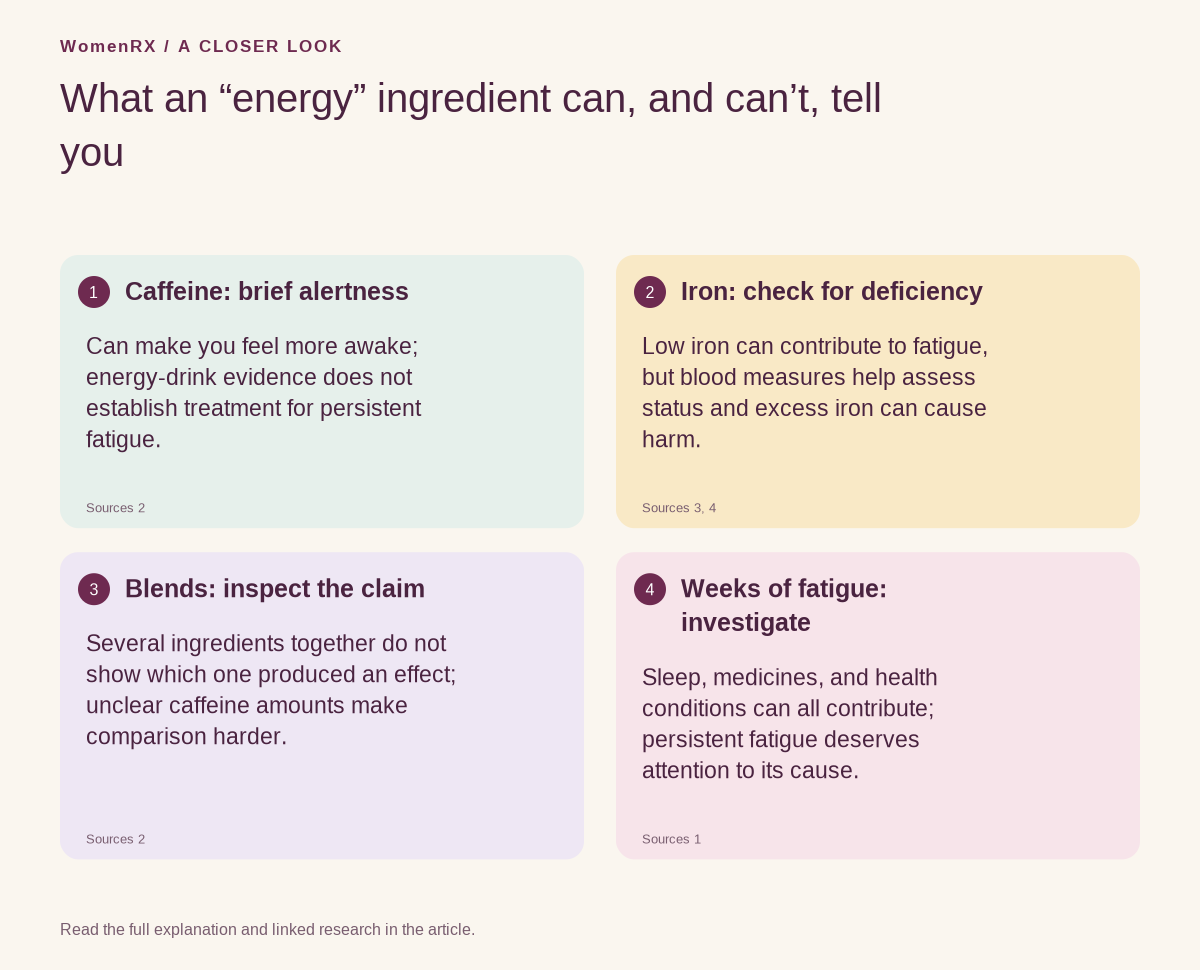
What an “energy” ingredient can, and can’t, tell you
Caffeine: brief alertness: Can make you feel more awake; energy-drink evidence does not establish treatment for persistent fatigue.2
Iron: check for deficiency: Low iron can contribute to fatigue, but blood measures help assess status and excess iron can cause harm.34
Blends: inspect the claim: Several ingredients together do not show which one produced an effect; unclear caffeine amounts make comparison harder.2
Weeks of fatigue: investigate: Sleep, medicines, and health conditions can all contribute; persistent fatigue deserves attention to its cause.1
Read the figure as text
Separate temporary alertness from treating a cause of fatigue, then check what’s known about the ingredient and your situation.- Caffeine: brief alertness: Can make you feel more awake; energy-drink evidence does not establish treatment for persistent fatigue.2
- Iron: check for deficiency: Low iron can contribute to fatigue, but blood measures help assess status and excess iron can cause harm.34
- Blends: inspect the claim: Several ingredients together do not show which one produced an effect; unclear caffeine amounts make comparison harder.2
- Weeks of fatigue: investigate: Sleep, medicines, and health conditions can all contribute; persistent fatigue deserves attention to its cause.1
More questions, answered
How long should I wait before looking into persistent fatigue?
If you’ve been feeling tired for weeks, MedlinePlus recommends contacting a health care provider to help identify the cause. 1
Can I take iron just in case fatigue means I’m low?
It’s better to check whether iron deficiency is present. Iron can cause digestive side effects, and too much can harm the body. 3 4
Sources you can check
- Fatigue: MedlinePlusAccessed 2026-09-25Return to first citation
- Caffeine: MedlinePlusAccessed 2026-09-25Return to first citation
- Iron - Health Professional Fact SheetAccessed 2026-09-25Return to first citation
- Iron: MedlinePlusAccessed 2026-09-25Return to first citation