Zinc Supplement Risks, Interactions, and When to Get Advice
The main safety checks are your total daily zinc, how long you take it, what else is in your routine, and whether you use certain medicines.
Zinc can cause nausea, vomiting, stomach upset, headache, dizziness, or loss of appetite when intake is excessive. For adults, the upper limit is 40 mg a day from food and supplements combined; it’s a safety boundary, not a target. Longer-term high intake can interfere with copper. Check overlapping products and ask a pharmacist about antibiotics, penicillamine, or thiazide diuretics. Pregnancy and breastfeeding call for an individualized review, not automatic avoidance. 1
Start with the total, not just the zinc bottle
Zinc may be listed in a standalone supplement, a multivitamin, cold lozenges, or other products. Add up the elemental zinc shown on each Supplement Facts panel, rather than the total weight of a zinc compound. Food counts toward daily intake too. 1
For adults, including during pregnancy and breastfeeding, the tolerable upper intake level is 40 mg a day from all sources combined. It’s the highest daily intake considered unlikely to cause harm for most healthy people, not a recommended amount to take. A clinician may recommend zinc for a medical reason; the upper limit isn’t intended to cover medically supervised treatment. 1
As an example, someone using a multivitamin and zinc lozenges should check both labels before adding a separate zinc pill. Products used for a cold can contribute zinc too, and heavy, long-term use of some zinc-containing denture creams has also been linked to toxicity. 1
Amount and duration change the risk
Too much zinc can cause nausea, vomiting, stomach or digestive upset, headache, dizziness, and loss of appetite. These effects can occur with high intake; you don’t need to take zinc for months for digestive symptoms to be a concern. 1
Duration matters for another reason. Taking 50 mg or more a day for weeks can interfere with copper absorption and may reduce immune function and HDL cholesterol. The 40 mg adult upper limit and this 50 mg finding describe different things: one is a daily limit for routine total intake, while the other describes effects associated with sustained higher intake. Neither is a reason to aim for a dose close to the limit. 1
Copper is needed for normal health. When high zinc intake causes copper deficiency, problems can include anemia and neurologic effects. Don’t try to offset high-dose zinc by adding copper on your own; review the zinc product and duration with a clinician. 12
Check overlapping products, including iron
Look across supplements and nonprescription products, not just the one you’re considering. Zinc may be included in multivitamins, cold remedies, and lozenges. Some denture adhesive creams also contain zinc; excessive long-term use can be a source of high exposure. 1
A product containing 25 mg or more of elemental iron, taken at the same time as a zinc supplement, can reduce zinc absorption. This is an absorption issue, not a reason to stop prescribed iron. If both are part of your routine, ask a pharmacist how to handle the timing. 1
Medicines that deserve a timing check
Zinc can reduce absorption of both zinc and certain antibiotics when taken at the same time. This includes quinolone antibiotics, such as ciprofloxacin, and tetracycline antibiotics. NIH guidance says taking the antibiotic at least 2 hours before, or 4 to 6 hours after, zinc minimizes the interaction. Because instructions vary by medicine, check the prescription information or ask your pharmacist before changing timing. 1
Zinc can also reduce absorption and action of penicillamine, a medicine used for rheumatoid arthritis and Wilson disease. NIH guidance recommends taking zinc and penicillamine at least 1 hour apart. Thiazide diuretics, including hydrochlorothiazide and chlorthalidone, can increase zinc loss in urine and lower zinc concentrations. If you use one of these medicines regularly, ask your prescriber or pharmacist whether your zinc use needs review. 1
Pregnancy and breastfeeding: review the whole plan
Zinc needs are higher during pregnancy and lactation, but that doesn’t mean an extra zinc supplement is automatically needed. A prenatal vitamin may already contain zinc, and the total from supplements and food still matters. Review the product and amount with your prenatal care team or pharmacist, especially before adding a separate zinc product. 1
A practical product review
Before starting or continuing a zinc product, gather the labels for your zinc supplement, multivitamin or prenatal, and any cold products you use. Note how long you’ve taken them and list your medicines. A pharmacist can help check for duplicate zinc, the iron interaction, and medicine timing. If you’re taking high-dose zinc over time, or have developed ongoing digestive symptoms, ask your clinician whether the product and duration should change. 1
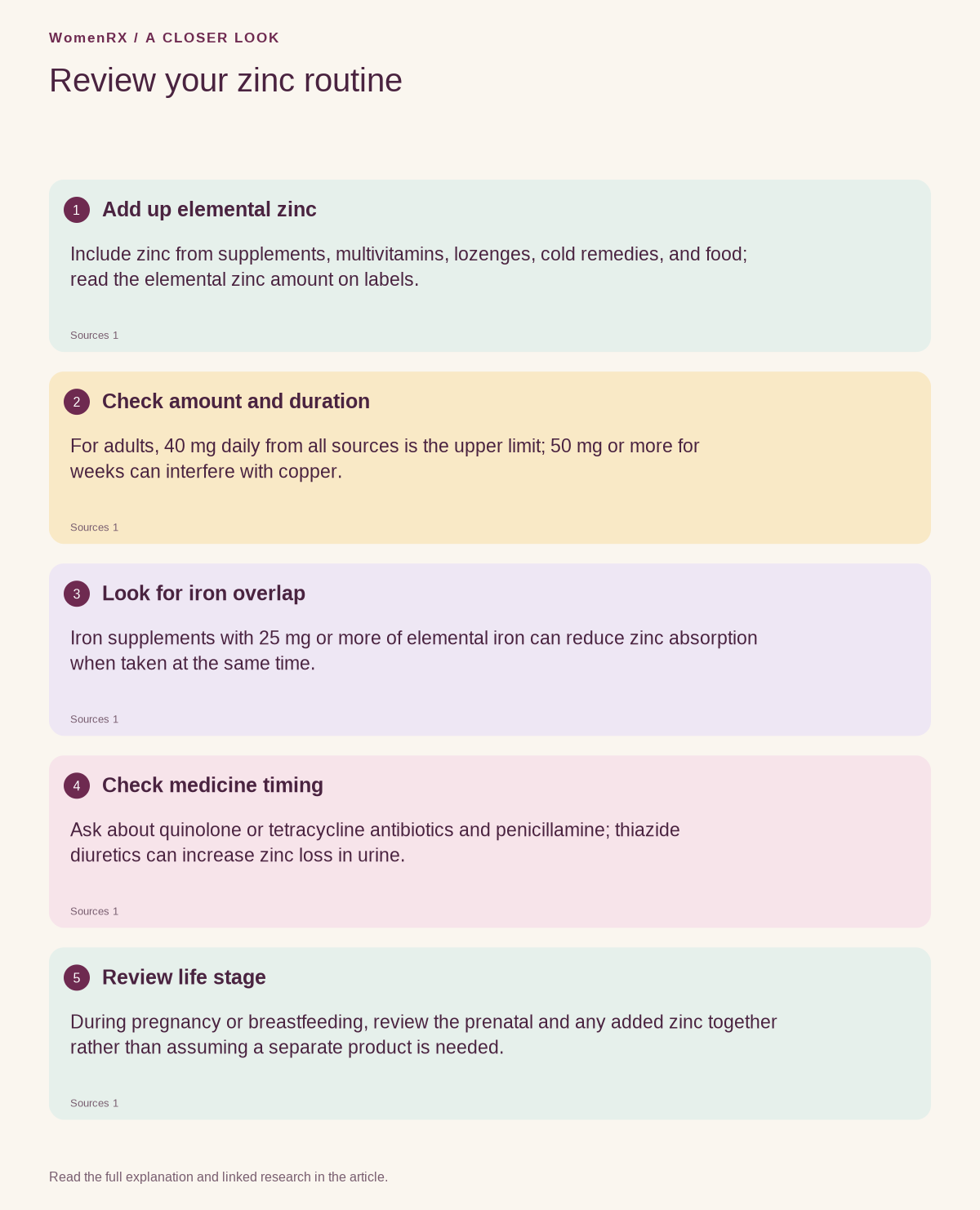
Review your zinc routine
Add up elemental zinc: Include zinc from supplements, multivitamins, lozenges, cold remedies, and food; read the elemental zinc amount on labels.1
Check amount and duration: For adults, 40 mg daily from all sources is the upper limit; 50 mg or more for weeks can interfere with copper.1
Look for iron overlap: Iron supplements with 25 mg or more of elemental iron can reduce zinc absorption when taken at the same time.1
Check medicine timing: Ask about quinolone or tetracycline antibiotics and penicillamine; thiazide diuretics can increase zinc loss in urine.1
Review life stage: During pregnancy or breastfeeding, review the prenatal and any added zinc together rather than assuming a separate product is needed.1
Read the figure as text
Check these five parts of your routine before adding zinc or continuing a high-intake product.- Add up elemental zinc: Include zinc from supplements, multivitamins, lozenges, cold remedies, and food; read the elemental zinc amount on labels.1
- Check amount and duration: For adults, 40 mg daily from all sources is the upper limit; 50 mg or more for weeks can interfere with copper.1
- Look for iron overlap: Iron supplements with 25 mg or more of elemental iron can reduce zinc absorption when taken at the same time.1
- Check medicine timing: Ask about quinolone or tetracycline antibiotics and penicillamine; thiazide diuretics can increase zinc loss in urine.1
- Review life stage: During pregnancy or breastfeeding, review the prenatal and any added zinc together rather than assuming a separate product is needed.1
More questions, answered
Does the 40 mg upper limit apply during pregnancy and breastfeeding?
Yes. The NIH fact sheet lists 40 mg a day from all sources as the adult upper limit for women, including during pregnancy and lactation. It’s a general safety limit, not a personal supplement target; review your prenatal and any added zinc together. 1
Should I stop a prescribed zinc treatment if it exceeds the upper limit?
The upper limit is for healthy people’s usual intake and does not apply to zinc prescribed for medical treatment. Don’t change a prescribed treatment on your own; contact the clinician managing it to review the dose and monitoring. 1
Sources you can check
- Zinc - Health Professional Fact SheetAccessed 2026-09-25Return to first citation
- Copper - Health Professional Fact SheetAccessed 2026-09-25Return to first citation