Zepbound: Starting and Reassessing Treatment
The useful question isn’t just whether Zepbound can help you lose weight, but whether its benefits fit your health, daily life, and plans.
Zepbound is a once-weekly tirzepatide injection used alongside changes in eating and physical activity for adults with obesity, or with overweight and a weight-related health condition. Before starting, review your health history, other medicines, and pregnancy plans. The usual starting dose is 2.5 mg once weekly for four weeks, followed by 5 mg weekly. Follow-up should weigh your progress against side effects and whether the plan remains workable. 24
Start with the reason for treatment
Zepbound is intended to help reduce excess weight and maintain weight reduction over time. It doesn’t replace eating and physical-activity changes; those are part of the treatment studied and described in its prescribing information. Eligibility is a starting point, not a promise that the medicine is right for you. Your weight-related conditions, treatment goals, other medicines, and the risks you’re willing to take all matter. 24
It’s reasonable to ask what improvement you’re hoping for beyond a number on the scale. For example, if a weight-related health condition is part of the reason you’re considering treatment, that condition can be part of how you and your clinician assess progress. Tirzepatide has produced substantial weight loss in studies of adults with overweight or obesity, but results vary, and continued treatment has helped maintain weight loss in withdrawal studies. Weight regain after stopping is a real possibility to include in the decision from the outset. 34
Clear the safety questions before the first dose
A personal or family history of medullary thyroid carcinoma, a condition called multiple endocrine neoplasia syndrome type 2, or a previous serious allergic reaction to tirzepatide or a Zepbound ingredient rules out Zepbound. The thyroid restriction is based on tumors seen in rats; whether tirzepatide causes these tumors in humans is unknown. Severe gastroparesis, which slows stomach emptying, is another reason to discuss a different plan because Zepbound isn’t recommended for people with it. 2
Bring up diabetes treatment in particular. Taking Zepbound with insulin or an insulin-releasing medicine such as a sulfonylurea can raise the risk of low blood sugar. If you have diabetes, the prescribing information calls for blood-glucose monitoring before and during treatment; a history of diabetic retinopathy also changes what needs watching. Zepbound shouldn’t be combined with another tirzepatide product, such as Mounjaro, or with a GLP-1 receptor agonist. 2
Reproductive plans deserve their own conversation. Zepbound may make oral hormonal contraception less effective because it delays stomach emptying. Its prescribing information advises switching to a non-oral method or adding a barrier method for four weeks after starting and for four weeks after each dose increase. If you’re planning a pregnancy, discuss when to stop treatment before trying to conceive; if pregnancy is recognized during treatment, the prescribing information says to discontinue Zepbound. 2
If you’re breastfeeding, the decision is less clear-cut: a small, single-dose study found little or no tirzepatide in breast milk, but there are no data on its effects on a breastfed infant or milk production. That’s a different question from pregnancy, and one to weigh against your need for treatment. 2
Expect a gradual start, not a race to a higher dose
The recommended starting dose is 2.5 mg once weekly for four weeks, followed by 5 mg weekly. Any later increases are in 2.5 mg steps after at least four weeks on the current dose. This gradual escalation helps reduce gastrointestinal side effects. Follow your prescriber’s dosing instructions; the maintenance dose is chosen with both response and tolerability in mind. That distinction matters: a higher dose isn’t automatically a better dose if side effects make it hard to eat, drink, or stay on treatment. 2
Nausea, diarrhea, vomiting, and constipation are among the common side effects. In two placebo-controlled weight-reduction trials, gastrointestinal reactions were reported in 56% of participants at each studied Zepbound dose, compared with 30% taking placebo. Most nausea, vomiting, and diarrhea events occurred during dose escalation and decreased over time, though some participants stopped treatment because of gastrointestinal effects. If nausea is mild, smaller, more frequent meals may help. 21
Don’t treat every stomach symptom as an expected part of escalation. Vomiting with signs of dehydration, such as a dry mouth or infrequent or dark urine, needs prompt medical attention. Zepbound’s prescribing information also calls for attention to side effects that could cause dehydration because of the risk of kidney injury. Persistent or severe abdominal pain, sometimes spreading to the back and with or without vomiting, needs prompt assessment for possible pancreatitis. 12
Reassess the whole plan
Follow-up is a decision about benefit, tolerability, and what happens next, not just whether the scale moved this week. Consider whether weight reduction is helping meet the goal you set, whether side effects are settling or interfering with daily life, and whether your other health conditions or medicines call for closer monitoring. The maintenance dose can be reconsidered if it isn’t tolerated. 24
There’s no need to decide at the first injection whether you’ll take Zepbound forever. There’s also reason not to assume that stopping will preserve every benefit: studies reviewed in adults with overweight or obesity found weight regain after tirzepatide was discontinued. If treatment isn’t helping enough, side effects are difficult, or your circumstances change, the next conversation is about revising the plan rather than simply pushing through. 34
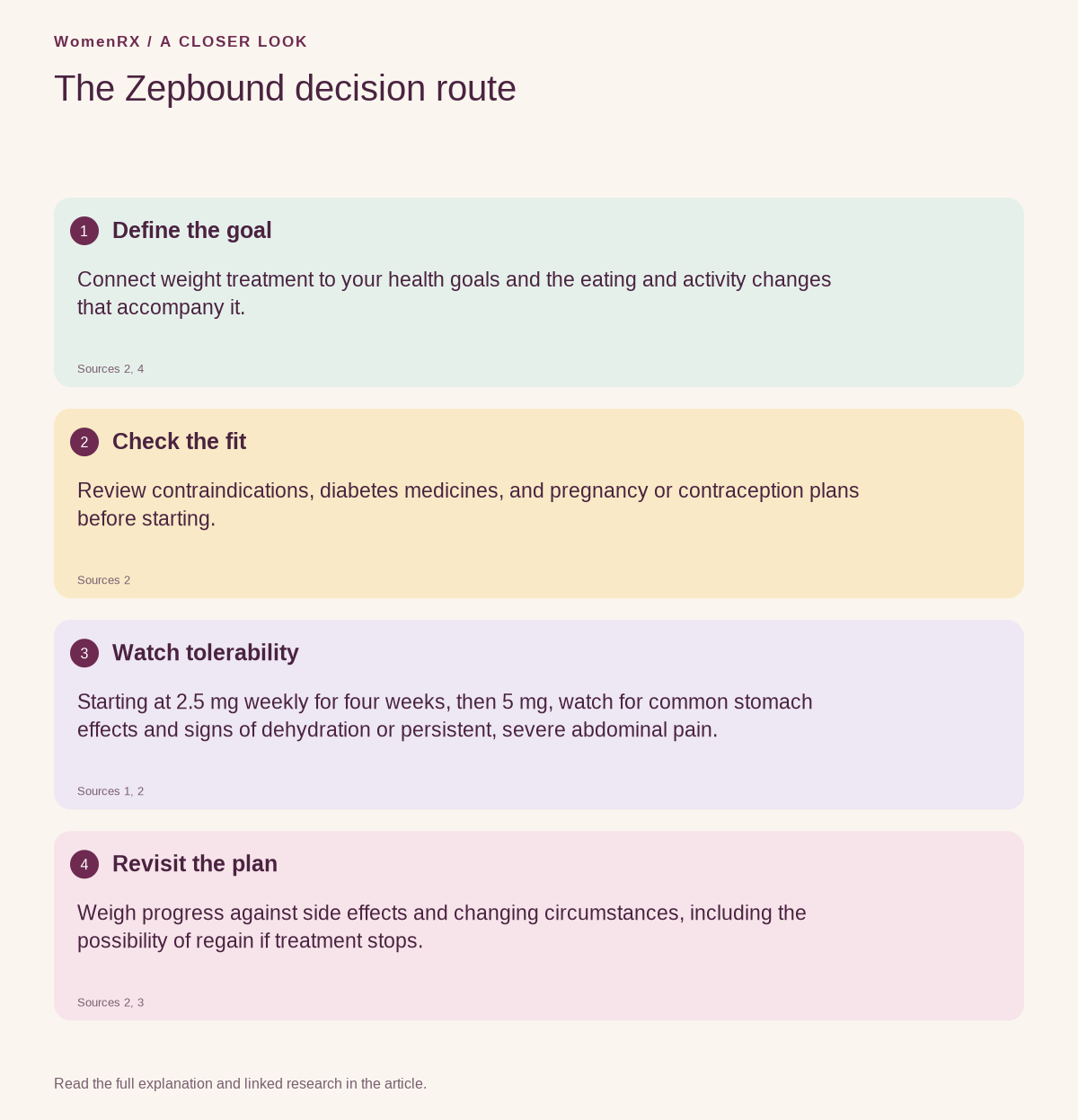
The Zepbound decision route
Define the goal: Connect weight treatment to your health goals and the eating and activity changes that accompany it.24
Check the fit: Review contraindications, diabetes medicines, and pregnancy or contraception plans before starting.2
Watch tolerability: Starting at 2.5 mg weekly for four weeks, then 5 mg, watch for common stomach effects and signs of dehydration or persistent, severe abdominal pain.12
Revisit the plan: Weigh progress against side effects and changing circumstances, including the possibility of regain if treatment stops.23
Read the figure as text
Four different questions matter as treatment moves from consideration to ongoing use.- Define the goal: Connect weight treatment to your health goals and the eating and activity changes that accompany it.24
- Check the fit: Review contraindications, diabetes medicines, and pregnancy or contraception plans before starting.2
- Watch tolerability: Starting at 2.5 mg weekly for four weeks, then 5 mg, watch for common stomach effects and signs of dehydration or persistent, severe abdominal pain.12
- Revisit the plan: Weigh progress against side effects and changing circumstances, including the possibility of regain if treatment stops.23
More questions, answered
What if I have a procedure that requires anesthesia?
Tell the team planning the procedure that you take Zepbound. It delays stomach emptying, and aspiration has been reported with this class of medicines during general anesthesia or deep sedation. The prescribing information doesn’t establish a universal rule for stopping Zepbound before a procedure. 2
Sources you can check
- Nausea | Vomiting | MedlinePlusAccessed 2026-09-25Return to first citation
- ZEPBOUND (TIRZEPATIDE) INJECTION, SOLUTION ZEPBOUND (TIRZEPATIDE) INJECTION, SOLUTION ZEPBOUND KWIKPEN (TIRZEPATIDE) INJECTION, SOLUTION [ELI LILLY AND COMPANY] | US prescribing information and patient instructionsAccessed 2026-09-25Return to first citation
- Long-Term Clinical Outcomes and Real-World Effectiveness of Tirzepatide in Adults With Overweight or Obesity: A Systematic Review.Olaniyi AO, Gogineni KK, Olaniyi H, Sabir H, Agbonrofo Eboigbe G, Yerima SR, Gabriels N. · Cureus · 2026Return to first citation
- Prescription Medications to Treat Overweight & Obesity - NIDDKAccessed 2026-09-25Return to first citation