What to Know Before Starting Zepbound
Zepbound starts at a low weekly dose, but whether to increase it depends on how you’re doing, especially with stomach side effects.
Zepbound is a weekly tirzepatide injection prescribed for certain adults with obesity or overweight, and for adults with obesity and moderate to severe obstructive sleep apnea. The labeled dose starts at 2.5 mg weekly for four weeks, then rises to 5 mg. Later increases may be made in 2.5 mg steps after at least four weeks at the current dose, but an increase isn’t something to push through if you’re struggling. Before starting, discuss your medical history, other medicines, pregnancy plans, contraception, and breastfeeding. 1
What Zepbound is for
Zepbound contains tirzepatide, which acts on two hormone receptors involved in appetite and blood sugar regulation. 14 In the US, it’s prescribed alongside a reduced-calorie diet and increased physical activity to reduce and maintain weight in adults with obesity, or adults with overweight who have at least one weight-related condition. It’s also prescribed to treat moderate to severe obstructive sleep apnea in adults with obesity. Having an interest in weight loss alone doesn’t establish that it’s the right treatment for you. Zepbound isn’t recommended alongside another tirzepatide product or a GLP-1 receptor agonist. 1
Why the dose goes up slowly
The labeled starting dose is 2.5 mg injected once weekly for the first four weeks. After that, it increases to 5 mg once weekly; later increases may be made in 2.5 mg steps after at least four weeks at the current dose. That gradual approach is meant to reduce gastrointestinal side effects, not to get everyone to the highest dose. The maintenance dose is chosen with both treatment response and tolerability in mind. If a maintenance dose isn’t tolerated, the label says a lower one may be considered. 1
Nausea, diarrhea, vomiting and constipation are among the most common problems. In two pooled placebo-controlled weight-reduction trials, gastrointestinal adverse reactions were reported by 56% of participants in each Zepbound dose group, compared with 30% taking placebo. Most nausea, vomiting and diarrhea events happened during dose escalation and decreased over time. A systematic review of trials in people without diabetes who had overweight or obesity also identified these as common gastrointestinal effects across this group of medicines. Those findings can help you anticipate the adjustment period, but they can’t predict how you’ll feel. 13
If side effects bother you or aren’t settling, tell your prescriber before the next planned increase. That conversation is about whether the current dose is tolerable, not whether you’ve tried hard enough. Vomiting or diarrhea also deserves attention if it’s making it difficult to replace fluids: dehydration can contribute to kidney injury reported with Zepbound. Thirst and dizziness are signs of dehydration; confusion calls for medical help right away. 12
Know which symptoms shouldn’t wait
Some symptoms need a different response from routine dose-related nausea:
- Persistent or severe abdominal pain, sometimes spreading to the back and sometimes accompanied by vomiting, needs prompt medical assessment because it may signal pancreatitis. 1
- Severe abdominal pain that could suggest a gallbladder problem also warrants prompt contact with a clinician. Gallbladder disease occurred in Zepbound trials. 14
- Swelling of the throat or tongue, or trouble breathing, may signal a serious allergic reaction. Seek emergency care. 14
- Repeated vomiting or diarrhea with signs of significant dehydration, particularly confusion, needs urgent medical help. 12
The point isn’t to assume every stomach symptom is dangerous. It’s to avoid treating severe, persistent pain or an allergic reaction as just another week of dose adjustment.
Questions worth settling before the first dose
Does anything in your history rule it out? Zepbound must not be used if you or a family member has had medullary thyroid carcinoma, if you have multiple endocrine neoplasia syndrome type 2 (MEN 2), or if you’ve had a serious allergic reaction to tirzepatide or a Zepbound ingredient. The thyroid warning comes from tumors seen in rats; whether tirzepatide causes these tumors in humans is unknown. Tell your prescriber about severe stomach-emptying problems too: Zepbound isn’t recommended for people with severe gastroparesis. 1
Which medicines need a closer look? Insulin or a medicine that prompts insulin release, such as a sulfonylurea, can raise the risk of low blood sugar when used with Zepbound. Tirzepatide also delays stomach emptying, which can affect absorption of oral medicines; the label calls for particular care with medicines whose effect depends on reaching a certain level, including warfarin. If you have a procedure planned with general anesthesia or deep sedation, tell the procedure team you take Zepbound. Don’t decide on your own to change fasting or medication plans for that procedure. 1
Could pregnancy, contraception or breastfeeding affect the decision? Weight loss isn’t recommended during pregnancy, and the Zepbound label says to discontinue it when a pregnancy is recognized. Human pregnancy data are insufficient to determine its risks, while animal studies raise concern about fetal harm. If you’re planning a pregnancy, discuss that plan before starting rather than assuming there’s a universal stop date that fits your situation. 1
If you use an oral hormonal contraceptive, the delayed stomach emptying matters in a more specific way: it may reduce contraceptive effectiveness, particularly after starting Zepbound or increasing the dose. The US label advises switching to a non-oral contraceptive method or adding a barrier method for four weeks after starting and four weeks after each dose increase. It says non-oral hormonal contraceptives should not be affected by this interaction. 1
For breastfeeding, a single-dose study found tirzepatide was undetectable or present at low levels in milk samples from 11 lactating adults. That is not the same as knowing its effects on a breastfed infant or on milk production; those data aren’t available. Whether to use Zepbound while breastfeeding calls for a discussion of your treatment needs and feeding plans. 1
A useful starting decision is therefore more specific than “Can I take it?” Ask what dose-related effects would make your prescriber hold off on an increase, which symptoms need prompt care, and whether any medicine or reproductive plan changes the approach. 1
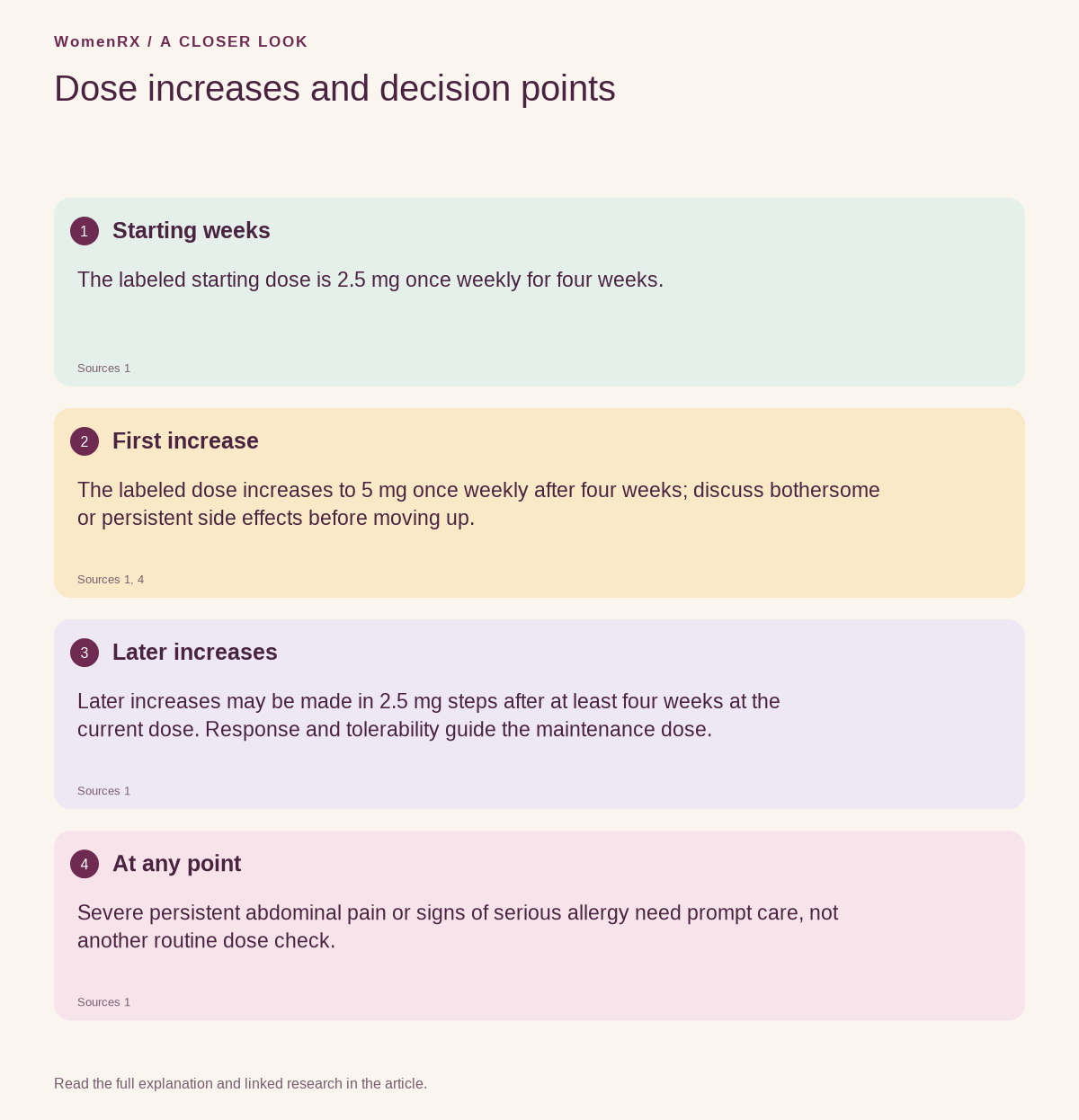
Dose increases and decision points
Starting weeks: The labeled starting dose is 2.5 mg once weekly for four weeks.1
First increase: The labeled dose increases to 5 mg once weekly after four weeks; discuss bothersome or persistent side effects before moving up.14
Later increases: Later increases may be made in 2.5 mg steps after at least four weeks at the current dose. Response and tolerability guide the maintenance dose.1
At any point: Severe persistent abdominal pain or signs of serious allergy need prompt care, not another routine dose check.1
Read the figure as text
The labeled escalation pattern includes time to assess tolerability. Warning signs can occur at any point.- Starting weeks: The labeled starting dose is 2.5 mg once weekly for four weeks.1
- First increase: The labeled dose increases to 5 mg once weekly after four weeks; discuss bothersome or persistent side effects before moving up.14
- Later increases: Later increases may be made in 2.5 mg steps after at least four weeks at the current dose. Response and tolerability guide the maintenance dose.1
- At any point: Severe persistent abdominal pain or signs of serious allergy need prompt care, not another routine dose check.1
More questions, answered
Is hair loss a possible side effect?
Yes. In two pooled weight-reduction trials, hair loss was reported by 7.1% of female participants taking Zepbound versus 1.3% taking placebo; the label says hair loss reactions were associated with weight reduction. Those trial figures don’t tell you whether you personally will experience it. 1
Does everyone eventually reach the highest dose?
No. The labeled approach bases maintenance-dose selection on response and tolerability, and says a lower maintenance dose may be considered if the current one isn’t tolerated. 1
Sources you can check
- ZEPBOUND (TIRZEPATIDE) INJECTION, SOLUTION ZEPBOUND (TIRZEPATIDE) INJECTION, SOLUTION ZEPBOUND KWIKPEN (TIRZEPATIDE) INJECTION, SOLUTION [ELI LILLY AND COMPANY] | US prescribing information and patient instructionsAccessed 2026-09-25Return to first citation
- Dehydration: MedlinePlusAccessed 2026-09-25Return to first citation
- Gastrointestinal adverse events associated with GLP-1 RA in non-diabetic patients with overweight or obesity: a systematic review and network meta-analysis.Ismaiel A, Scarlata GGM, Boitos I, Leucuta DC, Popa SL, Al Srouji N, Abenavoli L, Dumitrascu DL. · International journal of obesity (2005) · 2025Return to first citation
- Tirzepatide: a medicine to manage type 2 diabetes and treat obesity - NHSAccessed 2026-09-25Return to first citation