Starting Zepbound: What to Eat and Track
A flexible meal plan and a simple symptom record can help you prepare for changes in appetite and digestion.
As you start Zepbound, plan for meals you can adjust rather than relying on a special pre-start menu. During treatment, smaller meals, adequate fluids, and limiting high-fat or high-sugar foods if they bother your stomach are practical options, not guarantees against side effects. 1 Track digestive symptoms and changes in eating or drinking; contact your prescriber if symptoms persist or make it hard to stay hydrated. 1 2
Plan for flexibility as you start
Food strategies for these medicines focus on managing digestive symptoms during treatment. 1 You can plan for flexibility: have a few familiar foods available, and be open to eating smaller portions if your appetite changes. Don’t treat low intake as the goal. If you have medical or nutrition needs that already shape what you eat, bring those into the conversation when you make your plan.
Digestive side effects are common with incretin medicines, including tirzepatide. Nausea, vomiting, diarrhea, and constipation are among the symptoms reported. These symptoms can be related to changes in appetite signaling and digestive movement; they’re often described as mild to moderate and may be more noticeable during dose escalation, but individual experiences vary. Food choices can’t guarantee you’ll avoid them. 2 3
Keep the food plan simple and adjustable
A clinical review of GLP-1 and dual GLP-1/GIP medicines suggests starting with smaller, more frequent meals, keeping up with fluids, and avoiding high-fat or high-sugar foods if they trigger symptoms. These are flexible strategies, not rules you have to follow whether or not they suit you. 1
For example, you might divide a usual meal into a smaller portion and save the rest for later, or choose a familiar option that feels manageable when your appetite is low. If a food seems to worsen nausea or another symptom, note that pattern and try a different option next time. The aim is to find a workable way to eat and drink, not to create a perfect menu.
Make a short record that helps at follow-up
A few brief notes can make it easier to describe what’s happening. You might record:
- Symptoms: nausea, vomiting, diarrhea, constipation, or another change.
- Eating and drinking: whether you’re eating or drinking noticeably less than usual.
- Timing: when a symptom started and whether it is continuing or easing.
- Effect on your day: whether it’s interfering with meals, fluids, or usual activities.
This is a communication aid, not a way to diagnose the cause. Bring it to follow-up and mention symptoms that persist, especially if they make it difficult to drink enough. The clinical review recommends adequate hydration and further management when symptoms persist. 1
Add life-stage questions to your plan
If pregnancy planning, the possibility of pregnancy, or breastfeeding is relevant to you, add a direct question for the prescriber: “How would this affect whether or when I start Zepbound?” The right answer is specific to your situation, so don’t assume a general meal plan answers it.
Your main takeaway: prepare for a changeable appetite with a flexible food plan. Choose manageable meals, keep fluids in view, and let your care team know when digestive symptoms or reduced intake are getting in the way.
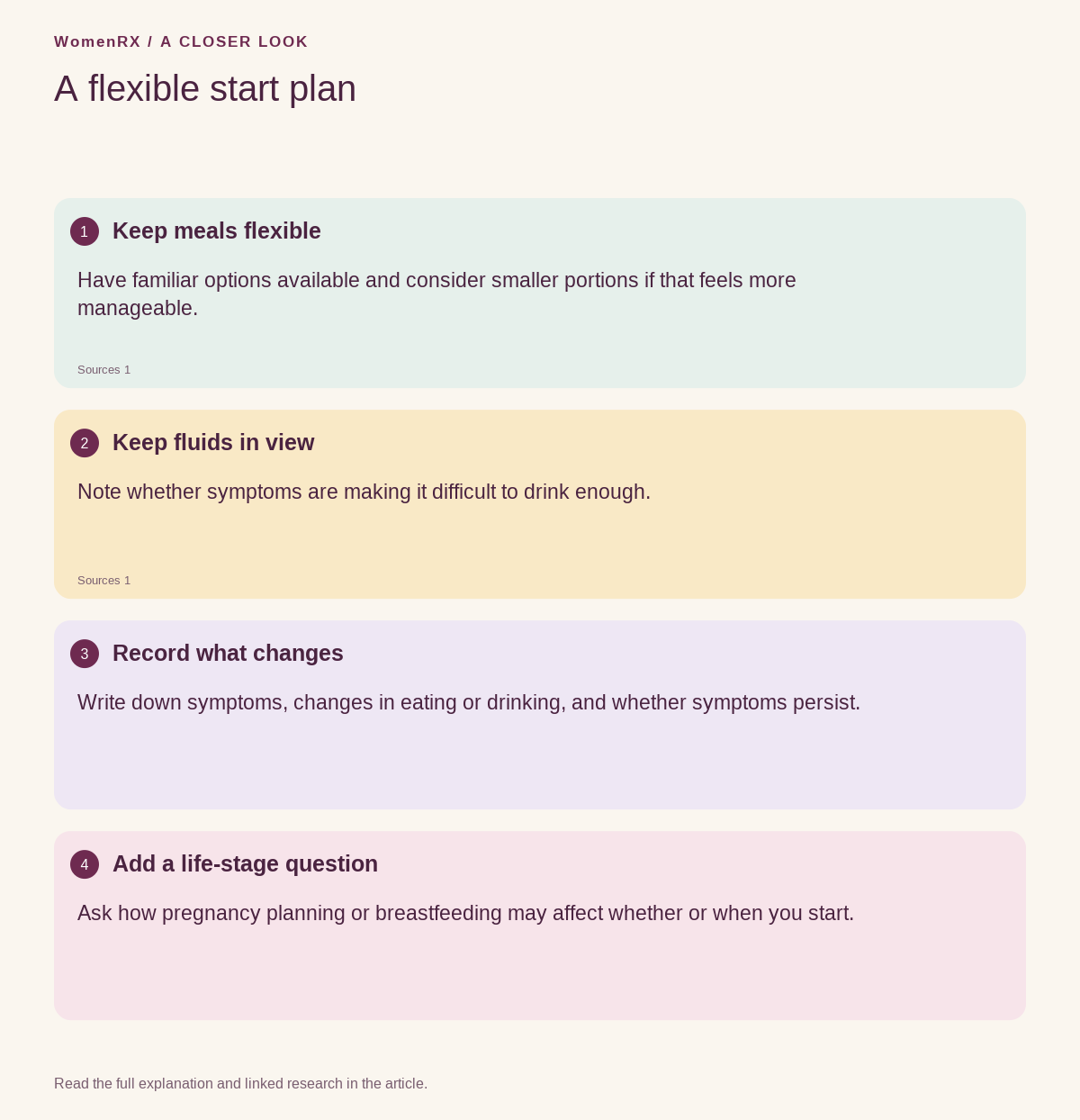
A flexible start plan
Keep meals flexible: Have familiar options available and consider smaller portions if that feels more manageable.1
Keep fluids in view: Note whether symptoms are making it difficult to drink enough.1
Record what changes: Write down symptoms, changes in eating or drinking, and whether symptoms persist.
Add a life-stage question: Ask how pregnancy planning or breastfeeding may affect whether or when you start.
Read the figure as text
Use these prompts to plan manageable meals and capture changes worth describing at follow-up.- Keep meals flexible: Have familiar options available and consider smaller portions if that feels more manageable.1
- Keep fluids in view: Note whether symptoms are making it difficult to drink enough.1
- Record what changes: Write down symptoms, changes in eating or drinking, and whether symptoms persist.
- Add a life-stage question: Ask how pregnancy planning or breastfeeding may affect whether or when you start.
Sources you can check
- GLP1 and GIP Receptor Agonists: Effects on the Gastrointestinal Tract and Management Strategies for Primary Care Physicians.Saha B, Kamalumpundi V, Codipilly DC. · Mayo Clinic proceedings · 2025Return to first citation
- Gastrointestinal Symptoms in Obesity Therapy: Mechanisms, Epidemiology, and Management Strategies.Witaszek T, Biesiada A, Iskra-Trifunović J, Babicki M, Mastalerz-Migas A, Kłoda K. · Biomedicines · 2025Return to first citation
- The Body weight Reducing Effects of Tirzepatide in People with and without Type 2 Diabetes: A Review on Efficacy and Adverse Effects.Jensen TL, Brønden A, Karstoft K, Sonne DP, Christensen MB. · Patient preference and adherence · 2024Return to first citation