Your Third Trimester: What’s Common and When to Call
Late pregnancy can bring new discomforts, but a change in your baby’s movement or certain symptoms needs prompt attention.
In the third trimester, more trips to the bathroom, trouble sleeping, hemorrhoids, breast leakage, and some breathlessness can be part of a changing pregnancy. Keep going to prenatal visits and make a practical plan for birth and the first days at home. If your baby moves less than usual, you’re leaking fluid, or you have a serious new symptom, seek medical care immediately rather than waiting for your next visit. 857
What may change as birth gets closer
The third trimester spans weeks 29 through 40. As your baby grows, pressure on your organs can mean more frequent urination and a sense that breathing takes more effort. Hemorrhoids, trouble sleeping, tender breasts that leak colostrum, and contractions can also appear. Not every contraction means labor has begun. These changes can feel different from one pregnancy to the next. 8
The useful distinction isn’t simply whether a symptom is new. It’s what the symptom is like and whether it crosses a warning line. For example, mild breathlessness as your pregnancy progresses is different from feeling unable to get enough air, having chest tightness, or finding it hard to breathe when you lie down. Slight swelling can happen late in pregnancy; sudden or extreme swelling of your hands or face needs prompt attention. 87
Keep your prenatal visits even when you feel well. They give your care team a chance to monitor your health and spot problems that may not announce themselves through symptoms. High blood pressure in pregnancy, for instance, may cause no other symptoms, and preeclampsia often develops in the last trimester. 56
Give the practical questions room before labor
Birth preferences matter, and so does knowing what to do if the day unfolds differently than you expected. At an upcoming prenatal visit, you could ask: Where should I go when I think labor has started? Which number should I use for questions after hours? What should I do if I notice leaking fluid or a change in movement? Are there considerations from my pregnancy history or health that could change the birth plan? These are planning prompts, not a schedule that every pregnancy has to follow. Regular prenatal care is where your team monitors your particular pregnancy and addresses problems as they arise. 5
It’s also worth reviewing the medicines and supplements you’re already taking rather than stopping or adding something on your own. Some medicines are needed to manage conditions such as asthma or diabetes during pregnancy, and the choice involves weighing the risks of treatment against those of leaving a condition untreated. Prenatal supplements can help meet increased nutrient needs, but their ingredients vary. 32
For the first days after birth, think about who could help you rest, eat, and manage daily tasks. Recovery may include bleeding, cramping, constipation, breast changes, and swelling. Physical and emotional needs can both change after delivery, so your plan doesn’t need to assume you’ll feel or function exactly as you did before birth. 1
Changes that shouldn’t wait for a routine visit
Your baby is moving less than usual or has stopped moving. What matters is a change from your baby’s usual movement, not reaching a single number of kicks. Seek medical care immediately if movement slows or stops. A systematic review of trials did not find a clear improvement in perinatal outcomes from instructing pregnant women to count movements compared with giving no such instructions, so a counting app shouldn’t override a change you’ve noticed. 74
You’re bleeding or leaking fluid. Bleeding that’s more than spotting, fluid leaking from your vagina, or discharge that smells bad belongs on the urgent list. You don’t need to decide for yourself whether leaking fluid means labor has started before seeking care. 7
A headache won’t go away or is getting worse, your vision changes, or your hands or face swell markedly. These can be urgent warning signs. Preeclampsia involves high blood pressure after 20 weeks of pregnancy and can affect organs including the liver and kidneys; it may become serious for both you and your baby. 76
Breathing becomes difficult, you have chest pain, or you have severe belly pain that doesn’t go away. These are not discomforts to put on a list for the next appointment. Seek medical care immediately. The same applies to fainting, a fever of 100.4°F or higher, severe vomiting that keeps you from holding down fluids, or a leg that becomes unusually swollen, red, or painful, particularly on one side. 7
Warning signs can matter after birth, too. If a serious symptom appears then, tell the person caring for you that you recently gave birth. And if something feels wrong but doesn’t fit neatly into a list, contact your care team rather than trying to name the problem first. 7
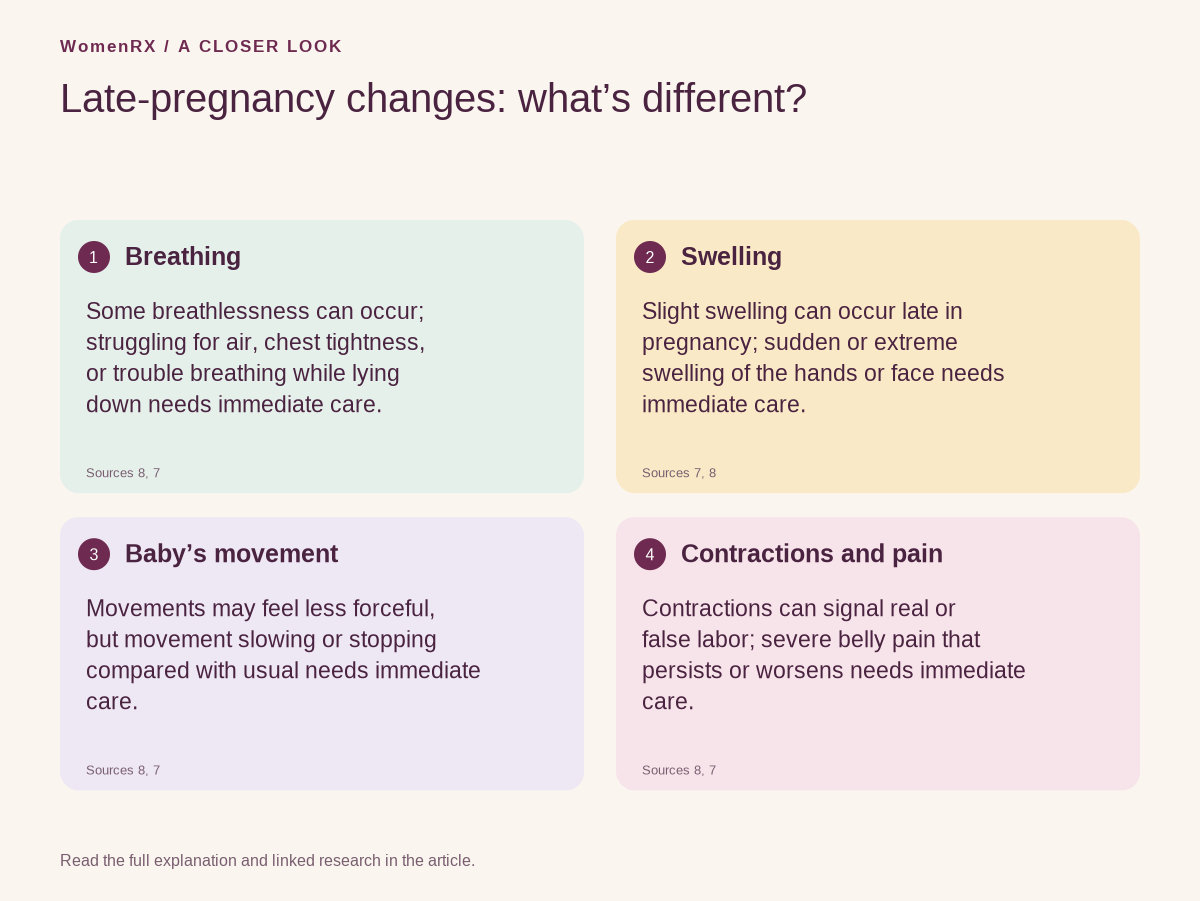
Late-pregnancy changes: what’s different?
Breathing: Some breathlessness can occur; struggling for air, chest tightness, or trouble breathing while lying down needs immediate care.87
Swelling: Slight swelling can occur late in pregnancy; sudden or extreme swelling of the hands or face needs immediate care.78
Baby’s movement: Movements may feel less forceful, but movement slowing or stopping compared with usual needs immediate care.87
Contractions and pain: Contractions can signal real or false labor; severe belly pain that persists or worsens needs immediate care.87
Read the figure as text
Similar-sounding symptoms can point to different next steps. The distinctions below are not a diagnostic test.- Breathing: Some breathlessness can occur; struggling for air, chest tightness, or trouble breathing while lying down needs immediate care.87
- Swelling: Slight swelling can occur late in pregnancy; sudden or extreme swelling of the hands or face needs immediate care.78
- Baby’s movement: Movements may feel less forceful, but movement slowing or stopping compared with usual needs immediate care.87
- Contractions and pain: Contractions can signal real or false labor; severe belly pain that persists or worsens needs immediate care.87
More questions, answered
Does my baby having less room mean I should expect less movement?
Movements may feel less forceful late in pregnancy, with more stretches and wiggles. That isn’t a reason to dismiss a baby moving less than usual or stopping. Seek medical care immediately for a change in your baby’s usual movement. 87
Sources you can check
- Postpartum Care: MedlinePlusAccessed 2026-09-25Return to first citation
- Dietary Supplements and Life Stages: Pregnancy - Health Professional Fact SheetAccessed 2026-09-25Return to first citation
- Pregnancy and Medicines | MedlinePlusAccessed 2026-09-25Return to first citation
- Fetal Movement Counting and Perinatal Mortality: A Systematic Review and Meta-analysis.Bellussi F, Po' G, Livi A, Saccone G, De Vivo V, Oliver EA, Berghella V. · Obstetrics and gynecology · 2020Return to first citation
- Pregnancy | Pregnant | Prenatal Care | MedlinePlusAccessed 2026-09-25Return to first citation
- High Blood Pressure in Pregnancy | Preeclampsia | MedlinePlusAccessed 2026-09-25Return to first citation
- Urgent Maternal Warning Signs and Symptoms | HEAR HER Campaign | CDCAccessed 2026-09-25Return to first citation
- Stages of pregnancyAccessed 2026-09-25Return to first citation