The First Trimester: What to Expect and When to Call
Early pregnancy can bring tiredness, nausea, or hardly any symptoms, while your first prenatal visit starts a care plan that fits you.
In the first trimester, you may feel tired or nauseated, notice breast tenderness or need to urinate more often. You may also feel little different. Arrange prenatal care, bring your health history and questions, and expect a discussion of routine tests and prenatal vitamins. Seek medical care immediately for warning signs such as fainting, severe belly pain, or bleeding heavier than spotting. 625
Start with care, not a symptom checklist
The first trimester runs from week 1 through week 12, counting pregnancy weeks from the first day of your last period. Hormonal changes can bring tiredness, tender breasts, nausea with or without vomiting, constipation, more frequent urination, food aversions, or mood changes. You might have several of these, or hardly any. A previous pregnancy isn’t a reliable preview of this one. 6
Once you know you’re pregnant, arrange a prenatal visit. Prenatal care gives you a place to ask questions and helps your care team find health problems early. An obstetrician or midwife commonly provides this care; your team will set a visit schedule for your circumstances. 2
Before the visit, jot down what you want to discuss. Useful examples include a symptom that’s disrupting meals or sleep, medicines and supplements you take, a prior pregnancy loss, or a health condition that needs ongoing care. If you have preexisting diabetes, bring it up when arranging care rather than waiting for a routine discussion: specialist diabetes care throughout pregnancy is recommended because blood sugar management can affect outcomes. 1
What may happen at the first visit
The first prenatal appointment may be longer than later ones. Your provider will likely ask about your health history, including prior pregnancies, review routine blood or urine tests, and discuss eating, weight gain, and prenatal vitamins. First-visit testing can check for blood-related problems, signs of infection, and immunity to rubella and chickenpox. Which additional tests are offered depends in part on your history and results. 23
A screening test looks for a possibility of a health issue; it doesn’t diagnose one. If a result is outside the expected range, ask what it means and whether a diagnostic test would help. Prenatal testing is a choice you can discuss with your provider, including what a test can tell you and what it cannot. 3
Ask about a prenatal supplement if you haven’t already. Folic acid is especially relevant early: taking enough before pregnancy and in early pregnancy reduces the risk of neural tube defects, which develop very early, often before someone knows they’re pregnant. Your visit is also a chance to review what you’re taking now rather than guessing which supplements meet your needs. 42
Everyday changes versus signs that need care
Nausea can be an ordinary first-trimester change, but being unable to keep fluids down is different. For manageable discomfort, a small, frequent meal or an earlier bedtime may make the day easier. Bring up symptoms that interfere with eating, sleeping, or daily life, even if they appear on a list of common pregnancy changes. 65
Seek medical care immediately if you faint; have severe or worsening belly pain that doesn’t go away; have vaginal bleeding heavier than spotting; or have a fever of 100.4°F (38°C) or higher. The same applies to chest pain, trouble breathing, a severe headache that won’t go away, or thoughts of harming yourself. Severe vomiting also needs prompt care, particularly if you cannot keep fluids down or cannot drink for more than eight hours. Tell the person caring for you that you’re pregnant. 5
If you notice spotting, new pain, or another change that worries you but doesn’t match those urgent signs, contact your prenatal care team for advice rather than trying to judge it by a symptom list alone. The urgent-sign list isn’t exhaustive. If you haven’t had a first appointment yet, you can still seek care for a concerning symptom. 5
There’s no single way you’re supposed to feel in these weeks. The useful distinction is between changes you can discuss as you establish care and warning signs that shouldn’t wait for an appointment.
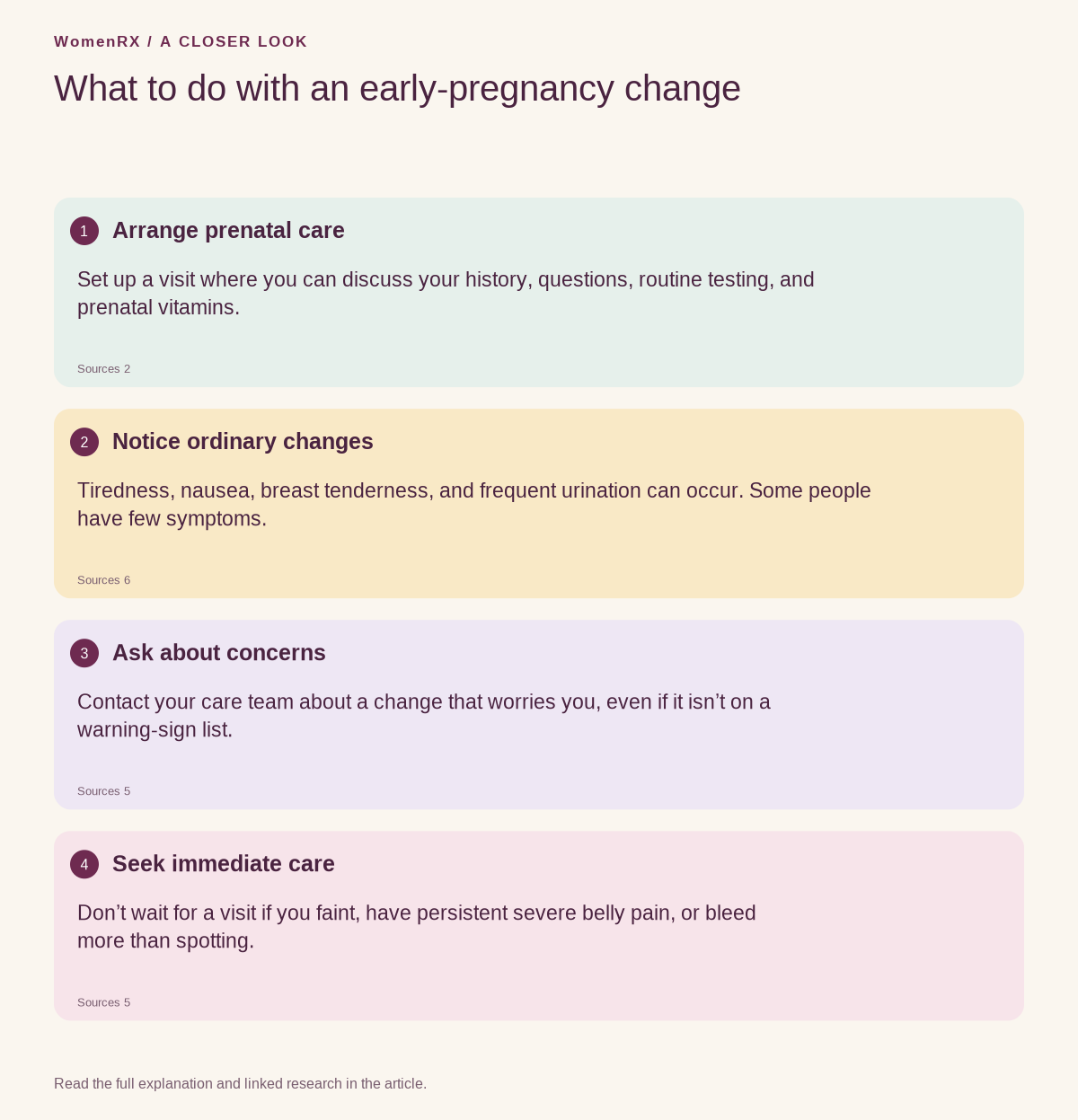
What to do with an early-pregnancy change
Arrange prenatal care: Set up a visit where you can discuss your history, questions, routine testing, and prenatal vitamins.2
Notice ordinary changes: Tiredness, nausea, breast tenderness, and frequent urination can occur. Some people have few symptoms.6
Ask about concerns: Contact your care team about a change that worries you, even if it isn’t on a warning-sign list.5
Seek immediate care: Don’t wait for a visit if you faint, have persistent severe belly pain, or bleed more than spotting.5
Read the figure as text
Use the symptom and care paths separately; a planned appointment is not a reason to wait on a warning sign.- Arrange prenatal care: Set up a visit where you can discuss your history, questions, routine testing, and prenatal vitamins.2
- Notice ordinary changes: Tiredness, nausea, breast tenderness, and frequent urination can occur. Some people have few symptoms.6
- Ask about concerns: Contact your care team about a change that worries you, even if it isn’t on a warning-sign list.5
- Seek immediate care: Don’t wait for a visit if you faint, have persistent severe belly pain, or bleed more than spotting.5
More questions, answered
Does an abnormal prenatal screening result mean something is wrong?
Not necessarily. Screening identifies a possible risk; it doesn’t make a diagnosis. Ask what the result means for you and whether a diagnostic test is an option. 3
Sources you can check
- Preexisting Diabetes and Pregnancy: An Endocrine Society and European Society of Endocrinology Joint Clinical Practice Guideline.Wyckoff JA, Lapolla A, Asias-Dinh BD, Barbour LA, Brown FM, Catalano PM, Corcoy R, Di Renzo GC, Drobycki N, Kautzky-Willer A, Murad MH, Stephenson-Gray M, Tabák AG, Weatherup E, Ze... · The Journal of clinical endocrinology and metabolism · 2025Return to first citation
- Prenatal Care | Prenatal Testing | MedlinePlusAccessed 2026-09-25Return to first citation
- Prenatal Testing | Gestational Diabetes | MedlinePlusAccessed 2026-09-25Return to first citation
- Dietary Supplements and Life Stages: Pregnancy - Health Professional Fact SheetAccessed 2026-09-25Return to first citation
- Urgent Maternal Warning Signs and Symptoms | HEAR HER Campaign | CDCAccessed 2026-09-25Return to first citation
- Stages of pregnancyAccessed 2026-09-25Return to first citation