Your First Month on Tirzepatide: What to Track
Nausea, vomiting, and diarrhea can happen as treatment begins, so track symptoms, fluid intake, and changes that deserve a prompt call.
In the first month, keep a simple record of when symptoms occur, what you can eat and drink, and whether you’re urinating normally. Nausea, vomiting, and diarrhea are common with Mounjaro and often arise during dose increases, but persistent symptoms or signs of dehydration need prompt attention. If you use oral hormonal birth control, ask about added protection after starting or increasing the dose. 1
A useful first-month log
There’s no need to turn every meal or symptom into a project. A short daily note can help you and your care team see whether a problem is brief, getting better, or making it hard to keep up with fluids and food. Record:
- When you took your injection and when symptoms began.
- Nausea, vomiting, diarrhea, constipation, or other changes, including whether they’re improving or worsening.
- What you’ve been able to eat and drink, and whether you’re urinating as usual.
- Any change in your menstrual cycle, if relevant, and whether pregnancy is possible.
This isn’t a validated monitoring score. It’s a practical way to describe what’s happening, especially if you need advice about the next dose. Don’t change your dose on your own; contact the prescribing team with questions about dosing or how to use your specific pen.
What can happen as treatment starts
In adult placebo-controlled trials of Mounjaro, gastrointestinal side effects were more common with tirzepatide than placebo. Nausea, vomiting, and diarrhea were reported mostly during dose escalation and decreased over time. Some people stopped treatment because of gastrointestinal side effects, so symptoms that are severe or keep going shouldn’t simply be written off as a normal adjustment. 1
If nausea is mild, smaller, more frequent meals may be easier to manage. 3 Keep track of whether you can take in fluids as well as food. Vomiting and diarrhea can cause fluid loss; the Mounjaro prescribing information advises taking precautions to avoid dehydration. It also advises prompt reporting of persistent nausea, vomiting, or diarrhea, because dehydration can contribute to acute kidney injury. 1
Know when to get help
Contact your care team promptly if nausea, vomiting, or diarrhea is persistent, or if you’re struggling to replace fluids. Dry mouth, urinating less often, and dark urine can be signs of dehydration; MedlinePlus advises immediate contact with a health care provider for these signs. 134
For adults, MedlinePlus also advises contacting a provider for diarrhea lasting more than two days or severe abdominal or rectal pain. Don’t wait for a planned follow-up if these apply. 4
Two questions specific to women
If you take oral hormonal birth control: Mounjaro may reduce its effectiveness because it delays stomach emptying. The US prescribing information advises using a non-oral method or adding a barrier method for four weeks after starting Mounjaro and for four weeks after each dose increase. Ask your prescriber or pharmacist how this applies to your contraceptive and treatment plan. 1
If you’re planning pregnancy or might be pregnant: The Mounjaro prescribing information advises telling your health care provider if you’re pregnant or intend to become pregnant, and notes a potential risk to the fetus. Raise pregnancy plans before treatment decisions, rather than making changes to the medicine on your own. 2
A menstrual change or a change on the scale doesn’t, by itself, tell you what caused it. Note when it happened and share it in context, including possible pregnancy, changes in eating, and the timing of treatment.
A simple check-in rhythm
At the start, make sure you know how to use your particular pen and whom to contact with administration or dosing questions. During the month, update your brief log and watch whether symptoms settle or interfere with drinking and eating. If symptoms persist or dehydration signs appear, reach out promptly instead of waiting for the next routine check-in. The point is not to predict exactly how you’ll feel; it’s to make changes and concerns easier to describe and act on.
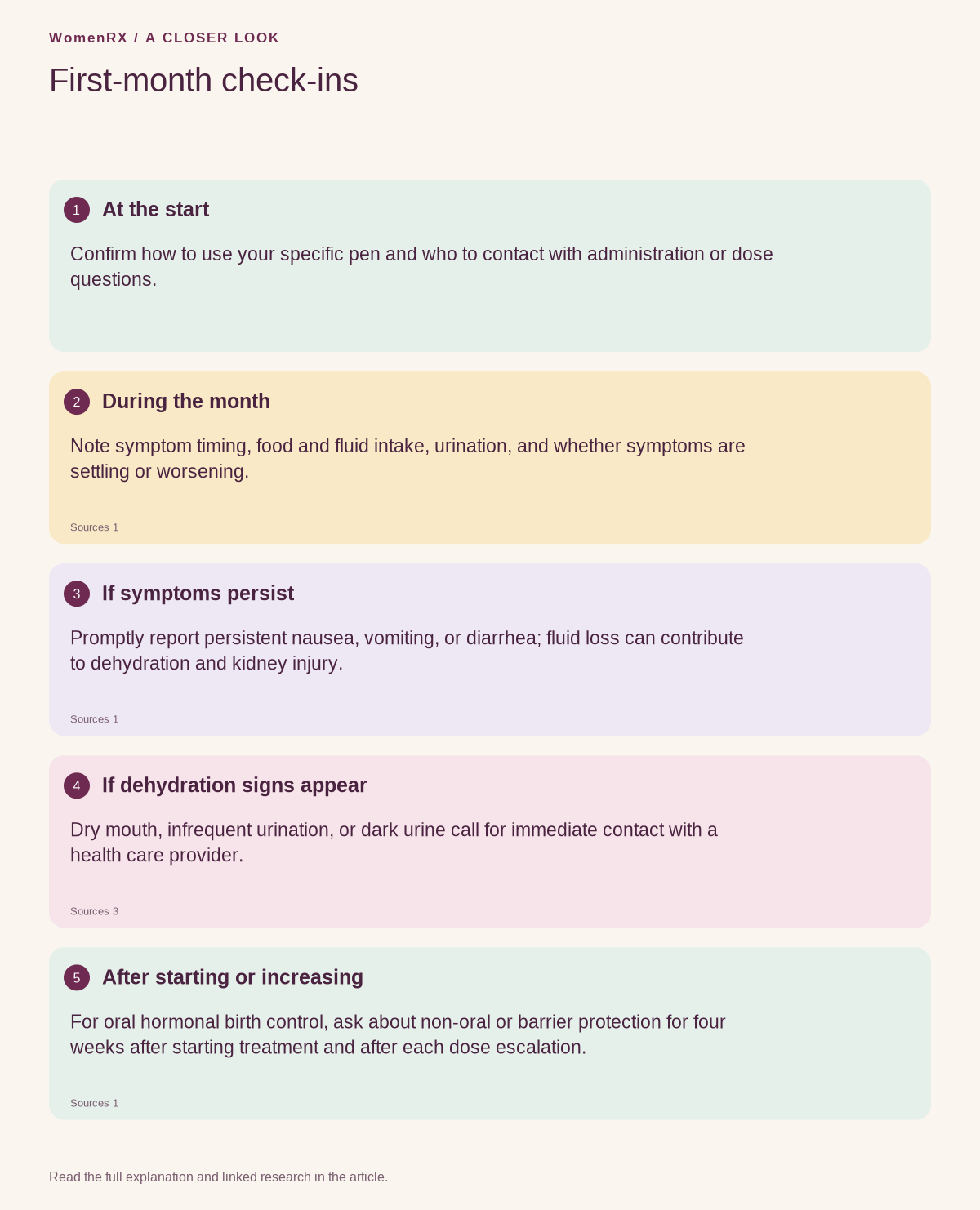
First-month check-ins
At the start: Confirm how to use your specific pen and who to contact with administration or dose questions.
During the month: Note symptom timing, food and fluid intake, urination, and whether symptoms are settling or worsening.1
If symptoms persist: Promptly report persistent nausea, vomiting, or diarrhea; fluid loss can contribute to dehydration and kidney injury.1
If dehydration signs appear: Dry mouth, infrequent urination, or dark urine call for immediate contact with a health care provider.3
After starting or increasing: For oral hormonal birth control, ask about non-oral or barrier protection for four weeks after starting treatment and after each dose escalation.1
Read the figure as text
Use this as a practical sequence for noticing changes and acting on symptoms, not as a dosing schedule.- At the start: Confirm how to use your specific pen and who to contact with administration or dose questions.
- During the month: Note symptom timing, food and fluid intake, urination, and whether symptoms are settling or worsening.1
- If symptoms persist: Promptly report persistent nausea, vomiting, or diarrhea; fluid loss can contribute to dehydration and kidney injury.1
- If dehydration signs appear: Dry mouth, infrequent urination, or dark urine call for immediate contact with a health care provider.3
- After starting or increasing: For oral hormonal birth control, ask about non-oral or barrier protection for four weeks after starting treatment and after each dose escalation.1
More questions, answered
Should I change my dose if side effects are bothering me?
Don’t make a dose change on your own. Contact the prescribing team to discuss symptoms and what to do next; persistent nausea, vomiting, or diarrhea should be reported promptly. 1
Does the birth-control advice apply to every contraceptive?
The Mounjaro label’s specific advice concerns oral hormonal contraceptives. It recommends a non-oral method or added barrier protection for four weeks after starting and after each dose increase. Ask about your own method. 1
Sources you can check
- MOUNJARO (TIRZEPATIDE) INJECTION, SOLUTION MOUNJARO KWIKPEN (TIRZEPATIDE) INJECTION, SOLUTION [ELI LILLY AND COMPANY] | US prescribing information and patient instructionsAccessed 2026-09-25Return to first citation
- MOUNJARO (TIRZEPATIDE) INJECTION, SOLUTION [A-S MEDICATION SOLUTIONS] | US prescribing information and patient instructionsAccessed 2026-09-25Return to first citation
- Nausea | Vomiting | MedlinePlusAccessed 2026-09-25Return to first citation
- Diarrhea | MedlinePlusAccessed 2026-09-25Return to first citation