Yeast Infection Symptoms: How Diagnosis and Treatment Work
Itching and thick white discharge can fit a yeast infection, but symptoms alone can’t confirm the cause.
Yeast can cause vulvar itching, burning, redness, and sometimes thick white discharge, but other conditions can look similar. Confirmation involves assessing symptoms and checking a vaginal sample for yeast. For a familiar, mild episode after a previous confirmed infection, an over-the-counter vaginal antifungal may be reasonable to consider. Persistent or recurrent symptoms need reassessment, and pregnancy changes the treatment choice. 2 3 4
Clues are useful, but they aren’t a diagnosis
A yeast infection, also called vulvovaginal candidiasis, can cause itching, burning, soreness, vulvar redness or swelling, and sometimes thick white discharge. These clues can make yeast more likely, but they don’t confirm it. Bacterial vaginosis, trichomoniasis, and noninfectious irritation or inflammation can also cause vaginal or vulvar symptoms. 2 3
Discharge patterns can offer hints. A fishy smell may fit bacterial vaginosis, while yellow or green frothy discharge can occur with trichomoniasis. Yeast discharge is often described as thick and white, but symptoms and appearance overlap, so they can’t reliably identify the cause on their own. 1 3
Vaginal pH doesn’t settle the question either. Yeast may occur with a normal or acidic pH; a higher pH can point toward other causes, including bacterial vaginosis. A pH result is a clue, not proof of yeast. 3
When antifungal treatment fits
Clotrimazole and miconazole, used inside the vagina, are antifungal options for uncomplicated candidiasis; treatment guidance lists some vaginal formulations as over-the-counter products. They treat yeast, not bacterial vaginosis, trichomoniasis, or irritation from another cause. So itching alone isn’t a sound reason to assume an antifungal is the right treatment. 4 3
An over-the-counter vaginal azole may be reasonable to consider if you’ve had yeast confirmed before and this feels like the same mild-to-moderate, infrequent episode. That’s a practical distinction, not a way to confirm yeast at home. If this is your first episode, the symptoms feel different, or discharge has an unusual odor or color, get assessed rather than assuming the cause. 1 3 4
If a test or clinician has established that symptoms are uncomplicated candidiasis, an intravaginal azole may be part of the treatment plan. Oral fluconazole is another treatment option in some situations, but it isn’t a fit for everyone. Which treatment makes sense depends on the diagnosis, severity, pregnancy status, and whether symptoms have returned or resisted treatment. 2 4
If symptoms don’t improve after treatment, avoid simply repeating antifungal courses without reassessing the cause. Poor response can follow an inaccurate diagnosis, and persistent symptoms may need further evaluation. 3
When testing changes the plan
A clinical assessment can help distinguish yeast from other causes of vaginitis. It considers your symptoms and clinical findings, then checks a vaginal sample for yeast to confirm whether it’s present rather than relying on discharge or pH alone. Confirmation is particularly useful when symptoms don’t fit clearly, treatment hasn’t worked, or episodes recur. 2 3
With repeated or persistent symptoms, identifying the Candida species can matter because treatment choices may differ. An expert consensus defines recurrent vulvovaginal candidiasis as three or more confirmed infections in a year. That definition describes a pattern that deserves a more deliberate plan; it isn’t a reason to wait for a particular episode count before seeking assessment. 4
Treatment for confirmed recurrent yeast differs from treating one uncomplicated episode: an initial full course may be followed by maintenance antifungal treatment. Oral fluconazole is one maintenance option when appropriate; topical options can also be considered. Suppressive treatment may control symptoms while it is being used, but symptoms can return after it ends. The choice should follow confirmation of the diagnosis and, when relevant, species identification. 2 4
Pregnancy calls for a different choice
If you’re pregnant, don’t use oral fluconazole for a suspected vaginal yeast infection without clinical guidance. The expert consensus recommends a seven-day course of a topical azole for initial treatment during pregnancy and advises avoiding fluconazole and intravaginal boric acid. Confirm the diagnosis and treatment choice with your pregnancy care team rather than relying on symptoms alone. 4
A practical next step
Think of symptoms as a reason to consider yeast, not a way to confirm it. If the cause is uncertain, treatment hasn’t helped, or symptoms keep returning, ask for an assessment that can distinguish yeast from other causes and determine whether species identification could affect treatment. If candidiasis is confirmed and uncomplicated, an intravaginal azole may be an appropriate option; pregnancy and recurrent symptoms change that conversation. 2 3 4
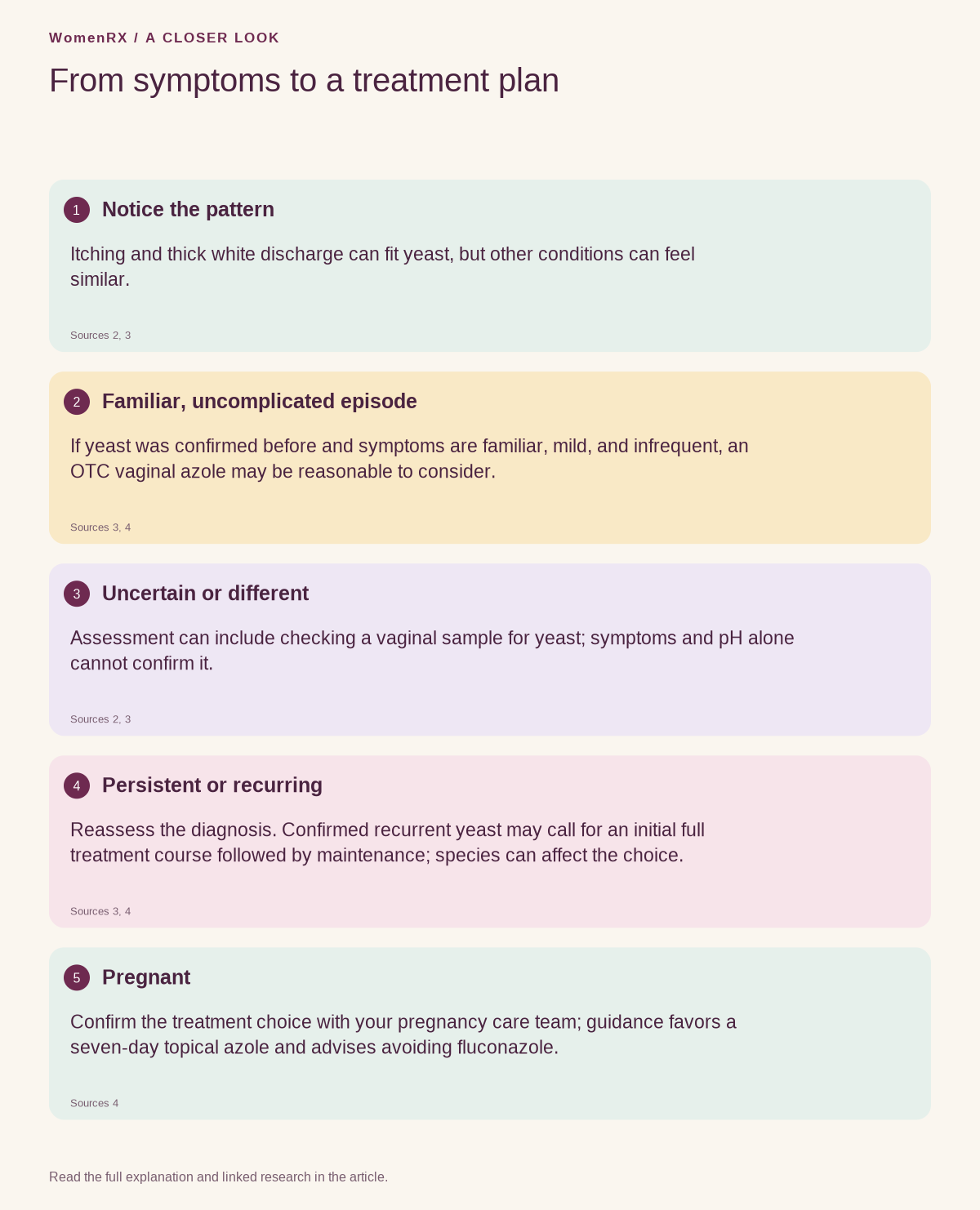
From symptoms to a treatment plan
Notice the pattern: Itching and thick white discharge can fit yeast, but other conditions can feel similar.23
Familiar, uncomplicated episode: If yeast was confirmed before and symptoms are familiar, mild, and infrequent, an OTC vaginal azole may be reasonable to consider.34
Uncertain or different: Assessment can include checking a vaginal sample for yeast; symptoms and pH alone cannot confirm it.23
Persistent or recurring: Reassess the diagnosis. Confirmed recurrent yeast may call for an initial full treatment course followed by maintenance; species can affect the choice.34
Pregnant: Confirm the treatment choice with your pregnancy care team; guidance favors a seven-day topical azole and advises avoiding fluconazole.4
Read the figure as text
Start with the symptom pattern, then follow the branch that fits your situation.- Notice the pattern: Itching and thick white discharge can fit yeast, but other conditions can feel similar.23
- Familiar, uncomplicated episode: If yeast was confirmed before and symptoms are familiar, mild, and infrequent, an OTC vaginal azole may be reasonable to consider.34
- Uncertain or different: Assessment can include checking a vaginal sample for yeast; symptoms and pH alone cannot confirm it.23
- Persistent or recurring: Reassess the diagnosis. Confirmed recurrent yeast may call for an initial full treatment course followed by maintenance; species can affect the choice.34
- Pregnant: Confirm the treatment choice with your pregnancy care team; guidance favors a seven-day topical azole and advises avoiding fluconazole.4
More questions, answered
Can thick white discharge confirm a yeast infection?
No. Thick white discharge can occur with yeast, but vaginal symptoms overlap across infections and noninfectious conditions. Itching, burning, and discharge are clues, not a reliable diagnosis by themselves. 1 3
Does a vaginal pH result confirm yeast?
No. Yeast can occur with a normal or acidic vaginal pH. A higher pH may point toward other causes, but pH alone doesn’t identify the cause of symptoms. 3
Sources you can check
- Vaginal discharge - NHSAccessed 2026-09-25Return to first citation
- A Comprehensive Overview of Candida albicans as the Leading Pathogen in Vulvovaginal Candidiasis.Srb N, Talapko J, Meštrović T, Fureš R, Stupnišek M, Srb AM, Škrlec I. · Journal of fungi (Basel, Switzerland) · 2025Return to first citation
- Vaginal pH Value for Clinical Diagnosis and Treatment of Common Vaginitis.Lin YP, Chen WC, Cheng CM, Shen CJ. · Diagnostics (Basel, Switzerland) · 2021Return to first citation
- Topical Treatment of Recurrent Vulvovaginal Candidiasis: An Expert Consensus.Phillips NA, Bachmann G, Haefner H, Martens M, Stockdale C. · Women's health reports (New Rochelle, N.Y.) · 2022Return to first citation