Who Should Avoid Flibanserin? A Safety Checklist
Liver impairment and certain interacting medicines rule out Addyi under US labeling; alcohol, other medicines, pregnancy, and breastfeeding need a careful review.
Under US Addyi prescribing information, flibanserin is contraindicated if you have any degree of hepatic impairment or take a moderate or strong CYP3A4 inhibitor. Alcohol has specific timing instructions rather than being a blanket contraindication. Review your medicines and supplements with the prescriber or pharmacist, and get advice before taking it if you’re pregnant or breastfeeding. 1 2
Start with the two reasons not to take it
The US prescribing information for Addyi lists two formal contraindications: any degree of hepatic impairment and taking a moderate or strong CYP3A4 inhibitor at the same time. These combinations can raise flibanserin levels and increase the risk of severe low blood pressure or fainting. If either may apply, don’t start the prescription until the prescriber has reviewed it. 1
A medicine’s interaction category isn’t always obvious from its name. The label lists examples of moderate or strong CYP3A4 inhibitors including fluconazole, erythromycin, diltiazem, verapamil, ciprofloxacin, and grapefruit juice; it also lists several antifungals, antibiotics, and HIV medicines. This isn’t a complete list, so have someone check your full medication and supplement list rather than relying on memory or a quick search. 1
Alcohol is a timing issue, not a simple yes-or-no rule
Alcohol close to an Addyi dose can increase the risk of low blood pressure, fainting, and central nervous system depression, which can include pronounced sleepiness or sedation. The US label says to wait at least two hours after one or two standard drinks before taking the bedtime dose. If you’ve had three or more standard drinks that evening, skip that dose; after taking Addyi, don’t drink alcohol until the following day. 1
If you can’t reliably follow those instructions, bring that up before starting. The label gives a specific way to manage alcohol timing, but it doesn’t make drinking near a dose risk-free. 1
Bring every medicine and supplement into the review
Some combinations call for extra caution even when they aren’t listed as formal contraindications:
- Medicines that cause sleepiness: The label names diphenhydramine, opioids, hypnotics, and benzodiazepines as examples of central nervous system depressants that may add to sedation. 1
- More than one weak CYP3A4 inhibitor: Several together may raise flibanserin levels. The label gives examples including some oral contraceptives, cimetidine, fluoxetine, and ginkgo. 1
- CYP3A4 inducers: The label does not recommend using Addyi with medicines such as carbamazepine, phenytoin, rifampin, or St. John’s wort because they can substantially lower flibanserin exposure. 1
- Strong CYP2C19 inhibitors: These may increase flibanserin exposure and the risk of low blood pressure, fainting, or central nervous system depression. 1
- Digoxin: Addyi may increase digoxin concentration, so the label calls for increased monitoring of digoxin. 1
These are reasons for a medication review, not all automatic reasons to avoid treatment. Share prescriptions, over-the-counter products, herbs, and supplements, including items you take only occasionally. A pharmacist can help check interaction categories and combinations. 1
Pregnancy and breastfeeding need separate answers
If you’re pregnant, trying to become pregnant, or could be pregnant, ask the prescriber to review flibanserin before starting. Medicine decisions during pregnancy should weigh the risks and benefits of the particular medicine; don’t start, stop, or change a medicine on your own. 2
Breastfeeding is clearer in the US Addyi label: Addyi is not recommended while breastfeeding. It says it’s unknown whether flibanserin is present in human milk, whether it affects a breastfed infant or milk production, and cites the potential for serious infant reactions, including sedation. 1
A practical check before the first dose
Bring the prescription, a current medication and supplement list, and details about alcohol use to the prescriber or pharmacist. Be specific about liver problems, pregnancy or plans for pregnancy, and breastfeeding. This checklist follows US Addyi prescribing information; check the prescribing information for the exact product you’re prescribed. 1
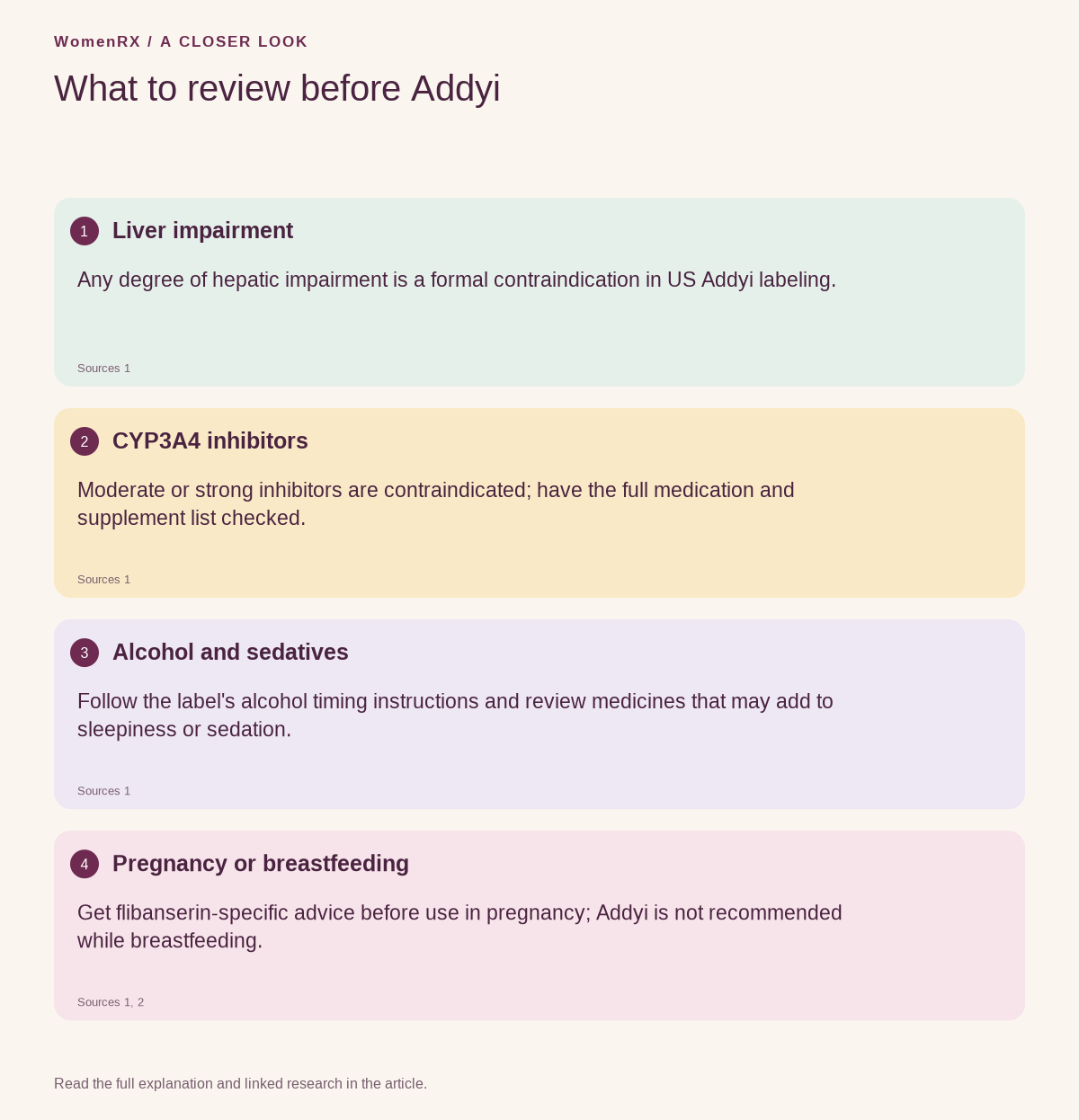
What to review before Addyi
Liver impairment: Any degree of hepatic impairment is a formal contraindication in US Addyi labeling.1
CYP3A4 inhibitors: Moderate or strong inhibitors are contraindicated; have the full medication and supplement list checked.1
Alcohol and sedatives: Follow the label's alcohol timing instructions and review medicines that may add to sleepiness or sedation.1
Pregnancy or breastfeeding: Get flibanserin-specific advice before use in pregnancy; Addyi is not recommended while breastfeeding.12
Read the figure as text
Use this checklist to separate formal US-label reasons not to take Addyi from issues that call for a medication or reproductive-health review.- Liver impairment: Any degree of hepatic impairment is a formal contraindication in US Addyi labeling.1
- CYP3A4 inhibitors: Moderate or strong inhibitors are contraindicated; have the full medication and supplement list checked.1
- Alcohol and sedatives: Follow the label's alcohol timing instructions and review medicines that may add to sleepiness or sedation.1
- Pregnancy or breastfeeding: Get flibanserin-specific advice before use in pregnancy; Addyi is not recommended while breastfeeding.12
More questions, answered
Is alcohol an absolute contraindication with flibanserin?
The US Addyi label gives timing instructions rather than listing alcohol as a formal contraindication: wait at least two hours after one or two standard drinks before the bedtime dose, skip the dose after three or more drinks that evening, and avoid alcohol until the following day after taking it. Alcohol close to a dose can increase the risk of low blood pressure, fainting, and sedation. 1
Can I take flibanserin while breastfeeding?
The US Addyi label says it is not recommended while breastfeeding. It’s unknown whether flibanserin enters human milk or affects the infant or milk production, and the label cites the potential for serious reactions, including sedation, in a breastfed infant. 1