When Vitamin C Supplements May Make a Difference
A supplement can help fill a dietary gap, but meeting your needs isn’t the same as preventing a cold.
Vitamin C supplementation is most clearly useful when it helps someone who may not get enough meet their intake needs. Most people can get vitamin C from foods, and there’s little evidence that supplements prevent colds or help people recover more quickly. Pregnancy and breastfeeding raise recommended intakes, but that alone doesn’t mean every woman needs a supplement. 1 2
Start with what you’re trying to change
Vitamin C has a clear nutritional job: getting enough helps prevent deficiency. That’s different from taking extra vitamin C to prevent a common illness or improve a health outcome. For women ages 19 and older, the recommended intake is 75 mg a day, 85 mg during pregnancy, and 120 mg while breastfeeding. For ages 14-18, those figures are 65 mg, 80 mg, and 115 mg, respectively. These are intake targets, not instructions to take that amount as a supplement. 1
If you already get enough from food, the fact that vitamin C supports normal body functions doesn’t establish that extra supplementation will provide an additional benefit. A useful first step is to look at what you eat across a typical day, then consider whether there’s a real gap to fill.
Food can cover the target
Many familiar foods provide vitamin C. One medium orange contains 70 mg; half a cup of raw red pepper contains 95 mg; and three-quarters of a cup of orange juice contains 93 mg. Those examples show why a varied diet can meet the recommended intake without a dedicated vitamin C pill. 1
Fruits and vegetables are the best sources. Cooking and prolonged storage can reduce vitamin C, though steaming or microwaving may lessen cooking losses. If you don’t eat many fruits or vegetables, or your food choices are very limited, a supplement may be one way to address a shortfall. 1
When low intake is the main concern
Vitamin C deficiency can cause scurvy, but it’s rare in developed countries. People with a limited variety of foods, people who smoke, and people with severe intestinal malabsorption or certain chronic conditions may be more likely to have inadequate intake. People who smoke need 35 mg more vitamin C per day than nonsmokers. 1
Very low intake over many weeks can lead to deficiency. Signs described in the NIH reference include fatigue, inflamed or bleeding gums, poor wound healing, joint pain, and easy bruising. If your diet is severely restricted or you have a condition that affects absorption, it’s worth discussing how to meet your needs with your care team. 1
For cold prevention or recovery, expectations should be modest
Vitamin C is often marketed for colds, but the NHS reference says there’s little evidence that supplements prevent colds or help you get better more quickly. That’s a different question from correcting inadequate intake: a supplement may help address a nutritional gap without being a reliable cold remedy. 2
So if you’re considering vitamin C specifically because you have a cold, don’t count on it to prevent one or shorten recovery. If your concern is that your usual diet doesn’t provide enough, think about your overall intake rather than treating the supplement as a cold medicine.
Choosing a supplement, if you need one
The common supplemental form is ascorbic acid. The NIH Office of Dietary Supplements reports that it has bioavailability equivalent to vitamin C in foods. A few human studies comparing other forms found no consistent advantage in blood vitamin C levels, so a more elaborate form isn’t automatically a better fit. 1
Use the recommended intake for your age and life stage as a guide to your total intake from food and supplements. During pregnancy and breastfeeding, the recommended totals are higher, but the guidance does not establish that every pregnant or breastfeeding woman needs a separate vitamin C product. If a prenatal or other supplement is part of your routine, check its label before adding another product so you can consider the combined amount.
The practical decision is simple: if your food pattern likely covers your needs, a separate vitamin C supplement may not add a clear benefit for the outcomes discussed here. If your intake is limited or a health condition puts you at risk of inadequacy, a supplement may help close that gap. For cold prevention or quicker recovery, there’s little evidence that vitamin C supplements help.
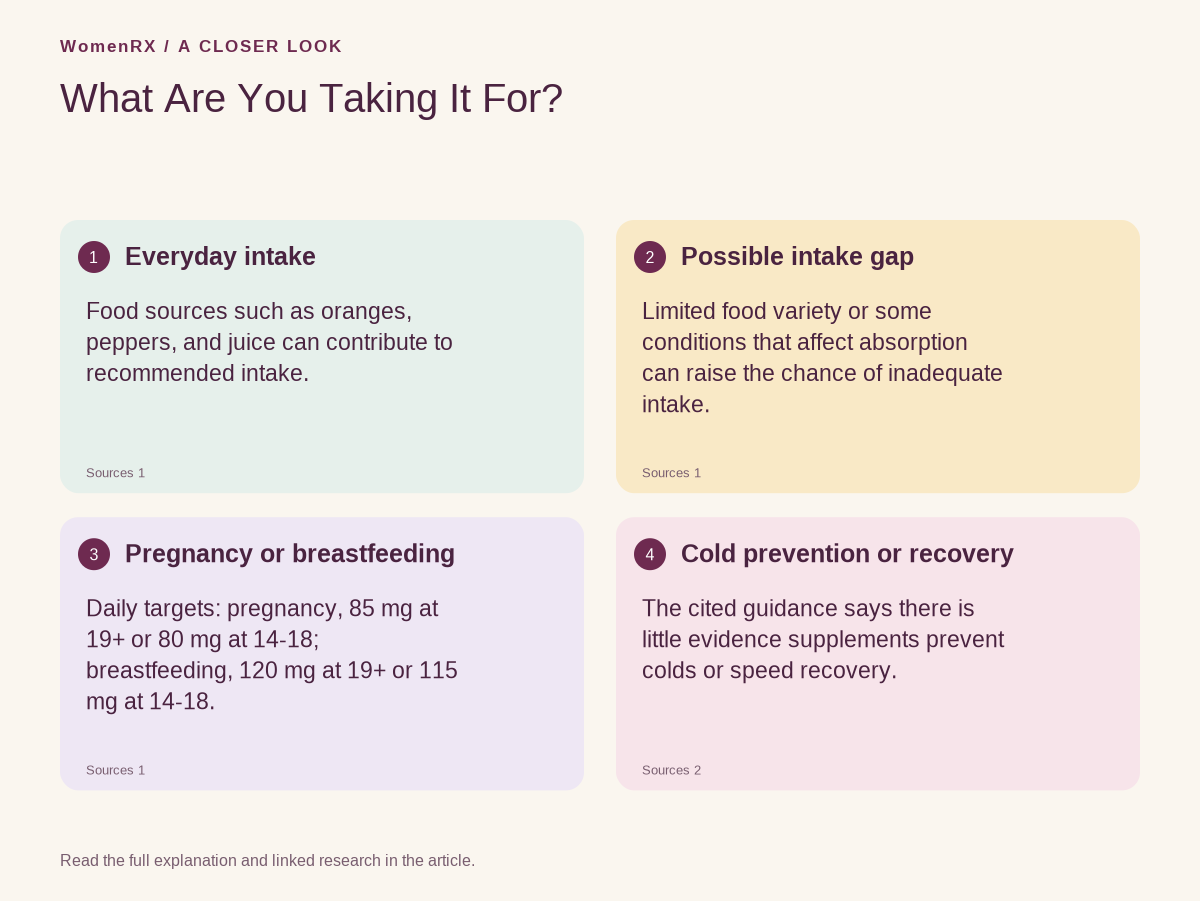
What Are You Taking It For?
Everyday intake: Food sources such as oranges, peppers, and juice can contribute to recommended intake.1
Possible intake gap: Limited food variety or some conditions that affect absorption can raise the chance of inadequate intake.1
Pregnancy or breastfeeding: Daily targets: pregnancy, 85 mg at 19+ or 80 mg at 14-18; breastfeeding, 120 mg at 19+ or 115 mg at 14-18.1
Cold prevention or recovery: The cited guidance says there is little evidence supplements prevent colds or speed recovery.2
Read the figure as text
Separate the goal of meeting vitamin C intake needs from claims about preventing or treating colds.- Everyday intake: Food sources such as oranges, peppers, and juice can contribute to recommended intake.1
- Possible intake gap: Limited food variety or some conditions that affect absorption can raise the chance of inadequate intake.1
- Pregnancy or breastfeeding: Daily targets: pregnancy, 85 mg at 19+ or 80 mg at 14-18; breastfeeding, 120 mg at 19+ or 115 mg at 14-18.1
- Cold prevention or recovery: The cited guidance says there is little evidence supplements prevent colds or speed recovery.2
More questions, answered
Does pregnancy mean I should take extra vitamin C?
During pregnancy, the recommended total intake is 85 mg a day for ages 19 and older, compared with 75 mg when not pregnant. For ages 14-18, it’s 80 mg during pregnancy, compared with 65 mg when not pregnant. These are targets for total intake, not proof that every pregnant person needs a separate vitamin C supplement. 1
Are special forms of vitamin C better absorbed?
Ascorbic acid, the most common supplement form, has bioavailability equivalent to vitamin C from food. The few human comparisons described by the NIH reference did not show a consistent advantage in blood levels for the other forms studied. 1
Sources you can check
- Vitamin C - Health Professional Fact SheetAccessed 2026-09-25Return to first citation
- Common cold - NHSAccessed 2026-09-25Return to first citation