When the Scale Stays Still, Check the Pattern
Comparable readings can show whether your weight is steady, but the reason takes more context.
A flat scale reading doesn’t prove that your body fat hasn’t changed. Weight includes water, muscle, bone, and fat.2 First, compare readings taken under similar conditions. If the trend stays flat, consider changes in routine, medicines, and how you feel. A sudden unexpected weight change, or weight that keeps falling without trying, deserves a clinical conversation.27
First, make the readings comparable
If Monday’s weight was taken after waking and Friday’s was taken after dinner, they don’t tell you much about a trend. For a clearer comparison, use the same scale in the same place and weigh under similar conditions each time. Write down the readings rather than relying on whichever number you remember. This reduces obvious differences between measurements; it isn’t a medical test or a rule that you must weigh daily.
Then look across several weeks. Are readings moving in one direction, or do they go up and down around roughly the same range? For example, if a higher reading is followed by a lower one and the overall range looks similar, calling the higher day “weight gain” would be premature. If readings under comparable conditions remain around the same range over time, it’s more reasonable to call that a flat scale trend.
Put a higher day in context
Water counts toward body weight, so a change in the water your body is carrying can change the number without an equivalent change in body fat. The scale cannot tell you whether fluid explains a particular reading.2 A higher day that returns to your usual range therefore calls for a different interpretation from a sustained change in comparable readings.
If you have periods, you might record where each reading falls in your cycle and note symptoms you actually experience. Premenstrual symptoms vary from month to month and can include appetite changes or cravings.1 If a higher reading repeatedly appears at a similar point in your cycle and later settles, that pattern is more informative than one higher day. It still doesn’t prove fluid retention. Compare readings across more than one cycle rather than treating the date of a period as an explanation for a persistent flat trend.
Pregnancy and the period after delivery call for a different conversation about what, if anything, you’re tracking. Fluid retention can occur during pregnancy and around delivery, but that does not establish how much of any particular scale reading is fluid or predict a postpartum weight trend.5 If you’re unsure how to interpret your readings then, ask your prenatal or postpartum care clinician what changes matter in your situation. Separately, new breathing symptoms in late pregnancy or soon after delivery need prompt medical assessment rather than more weigh-ins. A review of peripartum cardiomyopathy reports describes respiratory symptoms in this period that can initially be mistaken for other conditions.6
If the trend really is flat, ask what else changed
Think about the period when the trend flattened. Have meal portions, snacks, or how often you’re active changed? Eating patterns and activity are relevant to long-term weight loss, but neither a flat number nor a single week’s routine proves which factor explains your result.3 The useful question is whether something changed at about the same time, not whether you can find a habit to blame.
Also be clear about what you’re trying to learn. If your concern is a change in muscle or fat, a steady total weight cannot settle that question. Around menopause, a flat reading is not, by itself, evidence that menopause explains your trend. As you get older, maintaining muscle and strength matters even when total weight is steady.2
Include relevant medicines in your review of what changed. Antipsychotic-associated weight gain, for instance, is a recognized issue in research involving people treated for psychiatric conditions.4 That doesn’t mean a medicine caused your flat trend, or that all medicines affect weight in the same way. If the timing raises a question, bring the medication name and when you started or changed it to the prescribing clinician rather than changing it based on the scale.
If comparable readings remain flat and you’re concerned, put the pattern alongside your health history and any other changes you’ve noticed. A clinician can consider those factors when discussing a healthy weight and whether the number reflects the change you’re trying to understand.2 A flat trend alone cannot identify a medical cause.
There’s a difference between asking about a flat trend and overlooking a new change. A sudden, unexpected gain or loss is worth raising with a clinician, as is weight that keeps falling when you haven’t changed your eating or activity.27 Mention new symptoms or concerns about fluid retention alongside the readings. Medicines and heart, kidney, or liver problems can affect fluid balance, but the scale cannot tell you whether any of those explains your weight.28
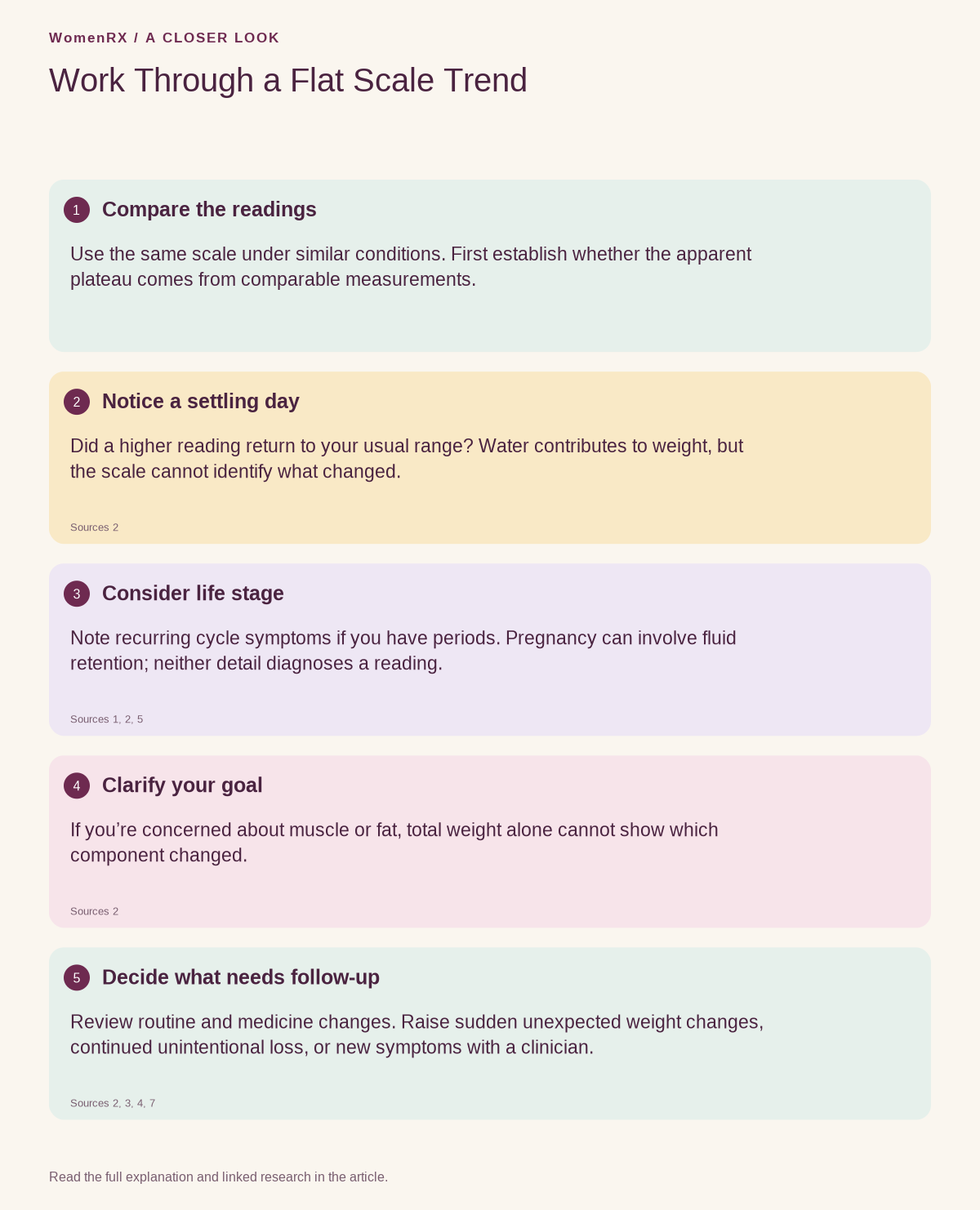
Work Through a Flat Scale Trend
Compare the readings: Use the same scale under similar conditions. First establish whether the apparent plateau comes from comparable measurements.
Notice a settling day: Did a higher reading return to your usual range? Water contributes to weight, but the scale cannot identify what changed.2
Consider life stage: Note recurring cycle symptoms if you have periods. Pregnancy can involve fluid retention; neither detail diagnoses a reading.125
Clarify your goal: If you’re concerned about muscle or fat, total weight alone cannot show which component changed.2
Decide what needs follow-up: Review routine and medicine changes. Raise sudden unexpected weight changes, continued unintentional loss, or new symptoms with a clinician.2347
Read the figure as text
Each check answers a different question before you assign a reason to the number.- Compare the readings: Use the same scale under similar conditions. First establish whether the apparent plateau comes from comparable measurements.
- Notice a settling day: Did a higher reading return to your usual range? Water contributes to weight, but the scale cannot identify what changed.2
- Consider life stage: Note recurring cycle symptoms if you have periods. Pregnancy can involve fluid retention; neither detail diagnoses a reading.125
- Clarify your goal: If you’re concerned about muscle or fat, total weight alone cannot show which component changed.2
- Decide what needs follow-up: Review routine and medicine changes. Raise sudden unexpected weight changes, continued unintentional loss, or new symptoms with a clinician.2347
Sources you can check
- PMS (premenstrual syndrome) - NHSAccessed 2026-09-25Return to first citation
- Body Weight: MedlinePlusAccessed 2026-09-25Return to first citation
- Dietary Supplements for Weight Loss - Health Professional Fact SheetAccessed 2026-09-25Return to first citation
- Efficacy and Safety of Semaglutide for Managing Antipsychotic-associated Weight Gain: A Systematic Review and Meta-analysis.Jena S, Dutta D, Mukherjee A, Joshi A, Kamrul-Hasan ABM, Bhattacharya S. · Indian journal of endocrinology and metabolism · 2026Return to first citation
- Airway problems and changing Mallampati score during pregnancy and labor: a systematic review.Vastarella MG, Gaetano D, Molitierno R, Iavazzo N, Esposito G, Giaccari LG, Pota V, De Franciscis P, Sansone P, La Verde M. · Journal of anesthesia, analgesia and critical care · 2025Return to first citation
- Respiratory-onset peripartum cardiomyopathy: a systematic review of diagnostic pitfalls and clinical outcomes.Andonotopo W, Bachnas MA, Prabowo W, Yuliantara EE, Adi Pramono MB, Dewantiningrum J, Lukas E, Hariyasa Sanjaya IN, Gede Putra Wiradnyana AA, Ngurah Jaya Kusuma AA, Mulyana RS, Gum... · Journal of perinatal medicine · 2026Return to first citation
- Unintentional weight loss - NHSAccessed 2026-09-25Return to first citation
- Fluid and Electrolyte Balance: MedlinePlusAccessed 2026-09-25Return to first citation