When Protein Powder Fits a Weight-Management Plan
Protein powder can be a convenient way to fill a real gap, but higher-protein diet research doesn’t show that powder itself causes weight loss.
Protein powder may help if you regularly struggle to get enough protein from meals, but it isn’t necessary for every woman or a weight-loss treatment on its own. Studies of higher-protein diets found small benefits compared with usual-protein diets; they did not test whether protein powder works better than food. Most Americans get enough protein, and needs vary with age, health, and activity. 2 3
The useful question isn’t “Does powder burn fat?”
It’s whether a powder solves a practical problem for you. Maybe breakfast is often just coffee, your appetite is low, or a meal is hard to manage on busy days. In those situations, a protein powder may be a convenient source of protein. If your meals already provide enough, adding powder may not offer a meaningful advantage.
Protein supports the body’s muscles, bones, and skin. It comes from foods such as meat, dairy, nuts, beans, and some grains. How much you need depends in part on age, sex, health, and activity, and most Americans get enough from their diets. Those points argue against assuming that all women, including women in midlife or later life, need a supplement. 2
Diet studies aren’t the same as powder studies
A systematic review and meta-analysis examined studies of higher-protein, lower-carbohydrate diets in adults with at least 12 months of follow-up. Across as many as 32 studies involving 3,492 people, the recommendation was associated with small differences equivalent to about 0.4 kg more weight loss and 0.4 kg more fat loss than comparison diets. These were whole-diet approaches, not trials showing that a protein shake or powder causes weight loss. The abstract did not report a women-only result. 3
That distinction matters. A higher-protein eating pattern can include food, and its effects depend on the broader diet and how closely people follow it. You can’t take the result from those studies and assume that adding a scoop to your usual meals will produce the same outcome. Those diet studies don’t show that powder is better than protein-rich food or that adding it causes weight loss by itself. 3
Weight management depends on the overall eating pattern and activity, not a single supplement. NIH guidance describes dietary changes and physical activity as the basis for long-term weight loss and says nutritional needs should generally be met through food, including fortified foods. 1
Compare a powder with the meal or snack it would replace
Start with the meals you actually eat, rather than a product’s marketing. If you can regularly include protein foods in meals and snacks, a powder may be unnecessary. If you often miss that opportunity, a powder could be one convenient option among others.
If you’re considering one, check its serving size, protein per serving, calories, added sugars, and other ingredients. Compare those details with the food or drink you’d actually have instead. Is the powder filling a recurring gap, or would it simply be added to meals that already work for you? A powder is a source of protein, not a complete weight-management plan.
If you’re unsure whether your meals meet your protein needs, particularly because your health or food intake has changed, a clinician or registered dietitian can help you assess that question before you buy a supplement. Protein needs vary with health. If a product is marketed for weight loss and you have a medical condition such as diabetes, high blood pressure, or liver or heart disease, NIH advises discussing its potential benefits and risks with your health care provider. 2 1
Keep the product’s purpose in view. NIH’s weight-loss supplement reference notes that dietary needs are best met primarily through diet and that supplements may be useful when a specific need can’t be met through food. It also cautions that evidence for many products marketed for weight loss is inconclusive. That general caution isn’t proof that every protein powder is ineffective; it’s a reason not to treat a powder as a fat-loss product without evidence for that claim. 1
What a surgery trial can and can’t tell you
For example, one small randomized trial studied whey protein after one-anastomosis gastric bypass. Over three months, the whey group had smaller reductions in measures of fat-free mass and muscle mass than the placebo group, but the groups did not differ significantly in total weight loss. This was a particular post-surgery population and doesn’t show that whey powder preserves muscle or improves weight loss for women generally. 4
For midlife and older women, the same practical question applies: what are you eating, and is it meeting your needs? The diet review doesn’t give a women-specific result, and the clinical trial is limited to people recovering from a particular surgery. These findings don’t establish a general need for powder in midlife or older women. 2 3 4
use powder, if you use it, as a convenient food choice that addresses a specific gap. Don’t expect it to do the work of an overall weight-management plan.
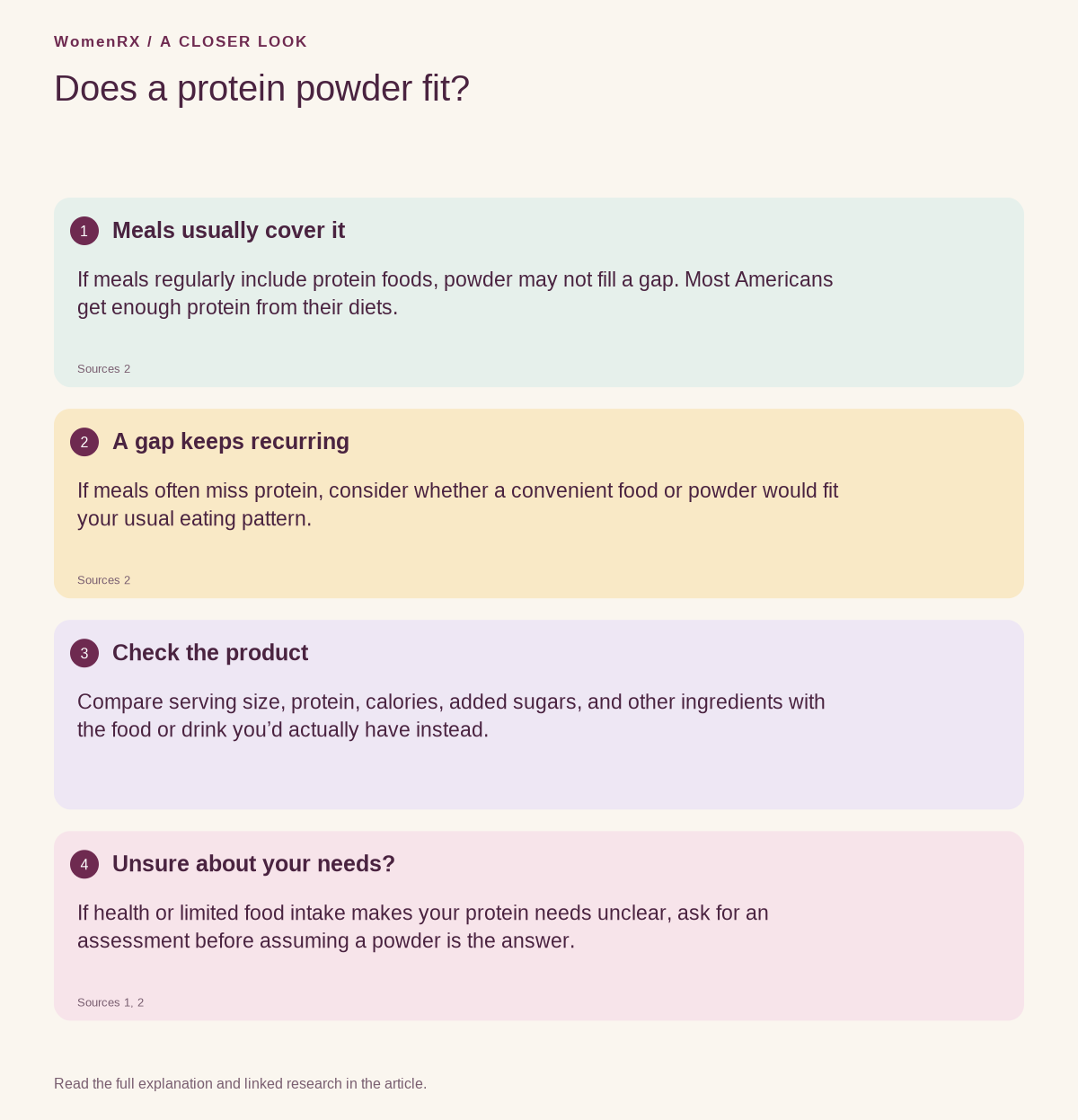
Does a protein powder fit?
Meals usually cover it: If meals regularly include protein foods, powder may not fill a gap. Most Americans get enough protein from their diets.2
A gap keeps recurring: If meals often miss protein, consider whether a convenient food or powder would fit your usual eating pattern.2
Check the product: Compare serving size, protein, calories, added sugars, and other ingredients with the food or drink you’d actually have instead.
Unsure about your needs?: If health or limited food intake makes your protein needs unclear, ask for an assessment before assuming a powder is the answer.12
Read the figure as text
A way to separate a practical protein gap from an expectation that powder will cause weight loss.- Meals usually cover it: If meals regularly include protein foods, powder may not fill a gap. Most Americans get enough protein from their diets.2
- A gap keeps recurring: If meals often miss protein, consider whether a convenient food or powder would fit your usual eating pattern.2
- Check the product: Compare serving size, protein, calories, added sugars, and other ingredients with the food or drink you’d actually have instead.
- Unsure about your needs?: If health or limited food intake makes your protein needs unclear, ask for an assessment before assuming a powder is the answer.12
More questions, answered
Does protein powder help preserve muscle while losing weight?
That small post-surgery trial doesn't establish that protein powder preserves muscle during weight loss for women generally. It found less loss in some lean-mass measures with whey after one-anastomosis gastric bypass, but the groups had similar total weight loss, and the result is specific to that surgery population. 4
Do women need more protein powder as they get older?
Not necessarily. Protein needs vary with age, health, and activity, but that doesn’t mean age alone makes a supplement necessary. Most Americans get enough protein from their diets. 2
Sources you can check
- Dietary Supplements for Weight Loss - Health Professional Fact SheetAccessed 2026-09-25Return to first citation
- Dietary Proteins: MedlinePlusAccessed 2026-09-25Return to first citation
- Long term weight maintenance after advice to consume low carbohydrate, higher protein diets--a systematic review and meta analysis.Clifton PM, Condo D, Keogh JB. · Nutrition, metabolism, and cardiovascular diseases : NMCD · 2014Return to first citation
- The role of whey protein supplementation after one-anastomosis gastric bypass: Results of a double-blind randomized controlled trial.Sabooni K, Farsi F, Safari S, Mahjoubi M, Davarpanah Jazi AH, Moosavi D, Gholi Z, Kermansaravi M, Shahabi S. · Clinical nutrition ESPEN · 2025Return to first citation