Protein, Fiber, or Both for Weight Management?
Protein and fiber do different jobs, so the more useful first change is the one your meals are missing.
There isn’t a clear universal winner. Fiber-rich foods add bulk and can help you feel full sooner; protein supplies building blocks for the body and may help preserve muscle during weight loss. Neither nutrient alone guarantees lasting weight change. Start with the gap you notice in your usual meals, and include both when that feels practical. 2 3 4
Start with the gap in your meals
If your meals rarely include fruit, vegetables, or whole grains, adding a fiber-rich food may be the most straightforward change. If they often lack a source of protein, adding one may make meals more nutritionally complete. You don’t have to choose one nutrient for every meal, and you don’t need to overhaul your diet to begin.
Protein and fiber aren’t interchangeable. Protein helps the body build and maintain muscle, bones, and skin. It comes from foods such as meat, dairy, nuts, beans, and some grains. How much protein you need varies with factors including age, sex, health, and activity level. 3
Fiber is found in plant foods. Whole grains, fruits, and vegetables are useful sources. Fiber adds bulk and can help you feel full sooner; it also supports digestion and helps prevent constipation. 2
Fullness isn’t the same as long-term weight change
Feeling full sooner may make a meal pattern easier to stick with, but that experience by itself doesn’t show that a nutrient will lead to greater or more lasting weight loss. Long-term weight loss involves a broader pattern of eating and activity, not a single nutrient. 1 2
The available evidence illustrates why it helps to separate the outcomes. In a three-month trial of 66 women with overweight who were following a low-calorie diet, adding oat-bran beta-glucan, a type of fiber, did not produce significantly different weight loss from the control condition. All groups lost weight. That result doesn’t show that fiber-rich foods are ineffective, and it doesn’t compare a high-fiber eating pattern with a high-protein one. 1
Protein may matter for a different reason during weight loss: a 2026 review summarizes evidence that higher protein intake can help reduce declines in muscle mass among adults with overweight or obesity. That is a muscle-preservation outcome, not proof that protein independently causes more weight loss. The review also describes resistance training as a direct way to support muscle during weight loss. 4
Choose the change that fits your routine
Think about a typical day, not an ideal one. If breakfast is mostly refined grains and coffee, for example, you could try oatmeal with fruit and yogurt: oats and fruit provide fiber, while dairy provides protein. If you already get protein at most meals but rarely eat fruit, vegetables, or whole grains, adding one of those foods may be a more natural next step. These are examples, not required meal plans. 2 3
If you’re increasing fiber, do it gradually. A sudden increase can cause gas, bloating, or cramps. 2 If you’re considering a major change in protein intake, remember that protein needs vary with health and other personal factors; a single target won’t fit everyone. 3
The practical answer is often both, but not as a rule you have to follow perfectly. Build meals around foods you enjoy and can keep eating. A fiber-rich plant food and a protein source can sit in the same meal, while the overall eating pattern does the work that neither nutrient can promise on its own.
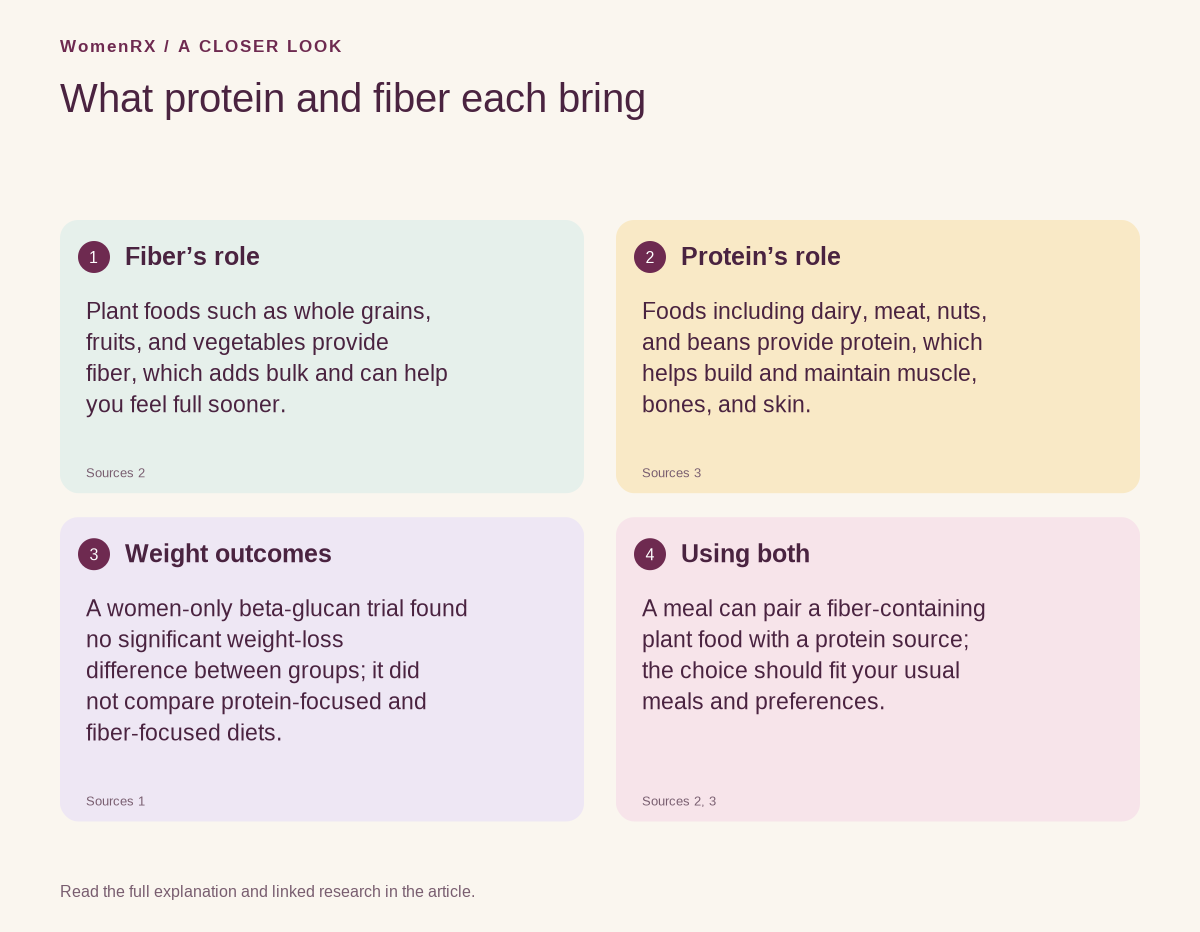
What protein and fiber each bring
Fiber’s role: Plant foods such as whole grains, fruits, and vegetables provide fiber, which adds bulk and can help you feel full sooner.2
Protein’s role: Foods including dairy, meat, nuts, and beans provide protein, which helps build and maintain muscle, bones, and skin.3
Weight outcomes: A women-only beta-glucan trial found no significant weight-loss difference between groups; it did not compare protein-focused and fiber-focused diets.1
Using both: A meal can pair a fiber-containing plant food with a protein source; the choice should fit your usual meals and preferences.23
Read the figure as text
A quick comparison of their food roles and what the evidence does, and doesn’t, say about weight outcomes.- Fiber’s role: Plant foods such as whole grains, fruits, and vegetables provide fiber, which adds bulk and can help you feel full sooner.2
- Protein’s role: Foods including dairy, meat, nuts, and beans provide protein, which helps build and maintain muscle, bones, and skin.3
- Weight outcomes: A women-only beta-glucan trial found no significant weight-loss difference between groups; it did not compare protein-focused and fiber-focused diets.1
- Using both: A meal can pair a fiber-containing plant food with a protein source; the choice should fit your usual meals and preferences.23
Sources you can check
- Dietary Supplements for Weight Loss - Health Professional Fact SheetAccessed 2026-09-25Return to first citation
- Dietary Fiber: MedlinePlusAccessed 2026-09-25Return to first citation
- Dietary Proteins: MedlinePlusAccessed 2026-09-25Return to first citation
- Optimizing Weight Loss in the GLP-1 Era: Preserving Muscle Mass, Function and Metabolic Health Through Precision Nutrition and Resistance Training.Sancho-Haro E, Muñoz-López M, Baz-Valle E, Villanueva-Tobaldo CV, Tornero-Aguilera JF, López-Gil JF, López-Moreno M, Martín-Rodríguez A, Clemente-Suárez VJ. · Pharmaceuticals (Basel, Switzerland) · 2026Return to first citation