When Preperiod Mood Symptoms May Be PMDD
A recurring pattern that lifts after your period is more informative than a difficult premenstrual week by itself.
PMDD is more than ordinary premenstrual mood changes: symptoms recur before menstruation, cause significant distress or disrupt daily life, and ease after bleeding starts. The clearest next step is to rate symptoms each day for at least two cycles, including days when you feel well. That record can help distinguish PMDD from PMS or an ongoing mood condition that worsens before a period. 135
Look for a pattern, not just a bad week
Feeling irritable, low, anxious, or physically uncomfortable before a period is common, and those symptoms alone don’t mean you have PMDD. PMDD is considered when symptoms are severe, recur in the premenstrual phase, and cause significant distress or interfere with work, school, relationships, or social life. Symptoms often begin a week or two before a period and improve after bleeding starts. 123
The pattern across the whole cycle matters. PMDD criteria include at least five symptoms during the luteal, or premenstrual, phase, including core emotional symptoms, with significant distress or impairment. Symptoms should ease after menstruation, leaving a stretch when they’re absent or minimal. A diagnosis can’t be established from a general impression that “I always feel worse before my period”; prospective daily ratings help confirm whether the timing fits. 35
Symptoms can include depression, anxiety, anger, and mood swings, as well as physical symptoms such as bloating. PMS can also bring emotional or physical symptoms, but PMDD is distinguished by the severity and impact of the symptoms and the pattern they make across the cycle. 125
Daily ratings can separate similar patterns
For at least two menstrual cycles, make a brief entry every day, including days when symptoms are absent. Rate how severe each symptom is rather than waiting until the end of the month to remember how you felt. Note the first day of bleeding, how symptoms affect your daily activities or relationships, and when they ease. A validated tool such as the Daily Record of Severity of Problems (DRSP) is one option; a clinician can help you choose a format. 35
The well days are as useful as the hard ones. If mood symptoms largely lift after your period and stay low for a stretch, that helps show a cycle-linked pattern. If symptoms continue through the month, even if they intensify premenstrually, tell the clinician: ongoing depression, anxiety, or another mood condition that worsens before menstruation can look different from PMDD. This pattern is called premenstrual exacerbation. 35
A simple example of a useful entry is: “Anxiety: moderate; anger: mild; missed a social plan; bleeding: no.” The point isn’t to write a diary or make your own diagnosis. It’s to capture the timing, severity, and effect on your life consistently enough to discuss them. 3
What to bring into an assessment
Bring your ratings for both cycles and describe what symptoms make harder: getting through work, sleeping, keeping plans, or maintaining relationships. Mention whether you feel substantially better at any point in the cycle and whether symptoms have been present outside the premenstrual phase. Those details help distinguish a cycle-specific pattern from symptoms that are present more broadly. 35
If you have bipolar disorder or a history of mania or hypomania, mention it before discussing medication. A review of PMDD with bipolar disorder notes that SSRI treatment can carry a risk of treatment-emergent manic symptoms in people with bipolar disorder, so the coexisting conditions need to be considered together. 4
Support can include more than one approach
SSRIs are described as a first-line medication option for PMS and PMDD; side effects can limit their use. Cognitive behavioral therapy and exercise are among other approaches that may help. Which option is appropriate depends on the symptom pattern and your health history, and response can vary. 3
If symptoms include thoughts of suicide or harming yourself, seek urgent mental health support now rather than waiting to finish tracking. PMDD and other premenstrual disorders can carry serious emotional distress, and tracking should never delay immediate help. 15
Track the pattern across cycles
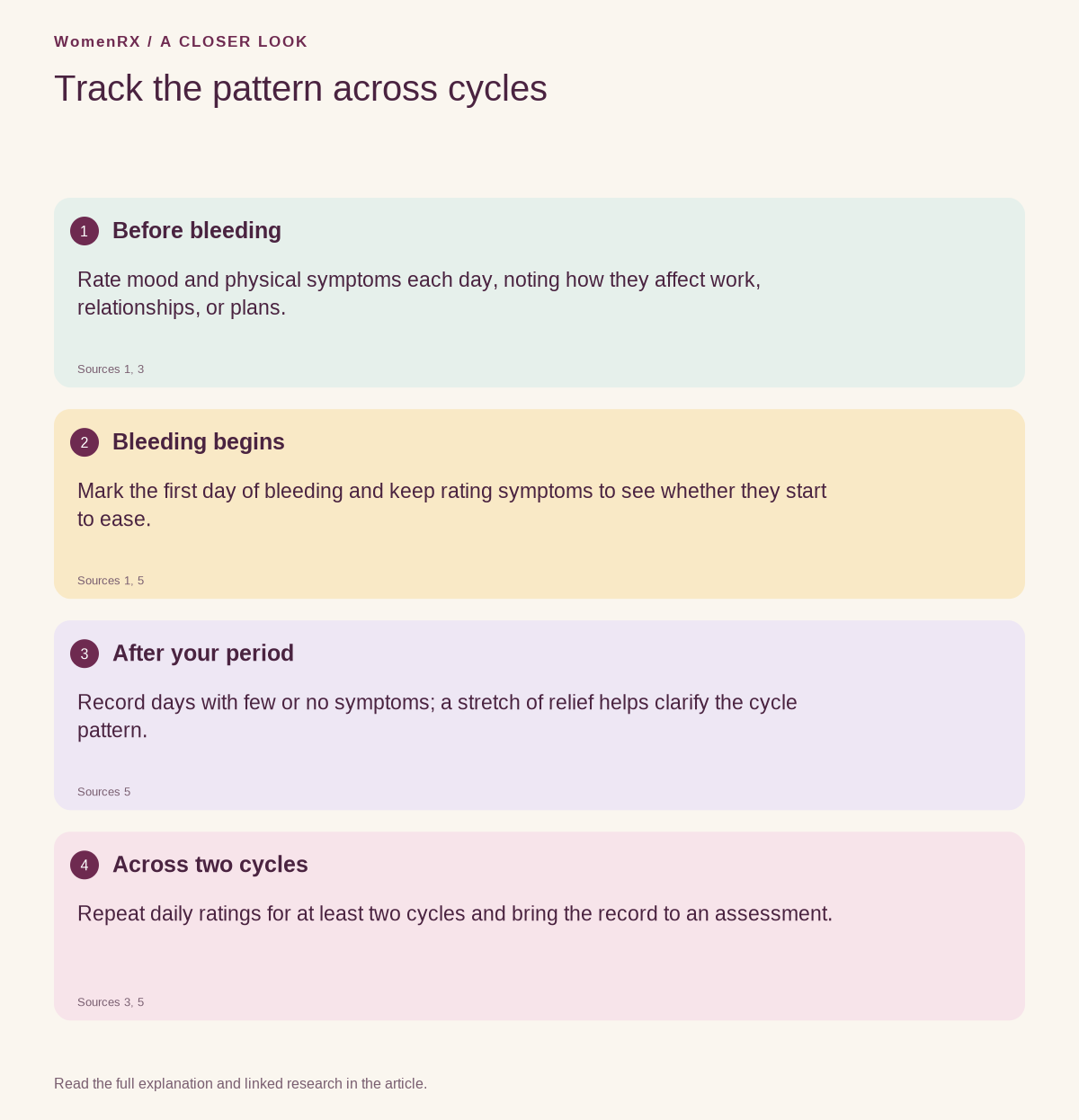
Before bleeding: Rate mood and physical symptoms each day, noting how they affect work, relationships, or plans.13
Bleeding begins: Mark the first day of bleeding and keep rating symptoms to see whether they start to ease.15
After your period: Record days with few or no symptoms; a stretch of relief helps clarify the cycle pattern.5
Across two cycles: Repeat daily ratings for at least two cycles and bring the record to an assessment.35
Read the figure as text
Daily ratings show whether symptoms rise before bleeding, ease afterward, and leave a stretch of relief, or continue through the month.- Before bleeding: Rate mood and physical symptoms each day, noting how they affect work, relationships, or plans.13
- Bleeding begins: Mark the first day of bleeding and keep rating symptoms to see whether they start to ease.15
- After your period: Record days with few or no symptoms; a stretch of relief helps clarify the cycle pattern.5
- Across two cycles: Repeat daily ratings for at least two cycles and bring the record to an assessment.35
More questions, answered
Do I need to track symptoms when I feel fine?
Yes. Recording low-symptom days helps show whether there is a distinct stretch of relief between premenstrual symptoms and the next cycle. Daily ratings across at least two cycles are recommended for identifying the pattern. 35
What if my mood symptoms never fully go away?
Tell the clinician that they continue outside the premenstrual phase. Symptoms that are present more broadly but worsen before a period may reflect premenstrual exacerbation of an ongoing condition rather than PMDD alone. 35
Sources you can check
- PMDD (premenstrual dysphoric disorder) - NHSAccessed 2026-09-25Return to first citation
- Menstruation | Period | MedlinePlusAccessed 2026-09-25Return to first citation
- Premenstrual Syndrome and Premenstrual Dysphoric Disorder: Common Questions and Answers.Biggs WS, Romeu JM, Gaudard T. · American family physician · 2025Return to first citation
- Comorbid Premenstrual Dysphoric Disorder and Bipolar Disorder: A Review.Slyepchenko A, Minuzzi L, Frey BN. · Frontiers in psychiatry · 2021Return to first citation
- Study protocol for the development of a digital menstrual cycle diary for routine mental health and gynecological care: A human-centered design approach.Schmitter M, Cantineau A, Aan Het Rot M, Lely A, Verhage T, Servaas MN, Riese H. · PloS one · 2026Return to first citation