PMDD or Premenstrual Mood Changes: What Sets Them Apart?
The clearest distinction is a repeated cycle-linked pattern that causes substantial distress or disruption, not simply feeling irritable before a period.
Premenstrual mood changes can be real without meeting criteria for PMDD. PMDD involves a recurring pattern: symptoms rise before menstruation, ease soon after bleeding starts, and significantly disrupt daily life. Diagnosis also considers how many symptoms occur and whether they largely fade between periods. Daily records across at least two symptomatic cycles help confirm the pattern; a symptom checklist alone can’t do that. 1 3 4
The pattern matters more than a single bad week
Irritability, sadness, anxiety, or feeling unusually sensitive before a period can happen without PMDD. The useful question is whether these symptoms form a recurring, clearly timed pattern and how much they interfere with life. Many people have premenstrual symptoms with little disruption; PMDD is considered when symptoms are severe and affect work, relationships, social life, or other everyday activities. 1 4
PMDD symptoms typically emerge in the final week before menstruation, begin to improve within a few days after bleeding starts, and become minimal or resolve in the following week. The symptoms and their impact should recur across most cycles, rather than appearing once during an unusually stressful month. 1 4
What clinicians look for in PMDD
The diagnostic criteria describe 11 possible symptoms. At least five must be present, including at least one of four core emotional symptoms: marked depression or hopelessness; anxiety or tension; pronounced mood swings; or persistent irritability or anger. Other symptoms can include reduced interest in usual activities, trouble concentrating, low energy, appetite or sleep changes, feeling overwhelmed, or physical symptoms such as breast tenderness or bloating. 4
The number matters, but it isn’t enough on its own. Symptoms must cause significant distress or interfere with daily functioning, and their timing must fit the menstrual-cycle pattern. A person can have premenstrual symptoms without having PMDD, and a screening questionnaire or remembered impression can’t establish the diagnosis by itself. 3 4
A second distinction is what happens outside the premenstrual window. If depression, anxiety, or another ongoing problem is present through much of the month and gets worse before a period, a clinician may consider premenstrual worsening of that existing condition rather than PMDD alone. The two patterns can be difficult to separate from memory, which is one reason the less symptomatic days matter too. 4 5
Why daily records help
People often remember the hardest days more clearly than the rest of the month. Daily ratings make it easier to see whether symptoms reliably rise before bleeding, ease afterward, and leave a stretch when they are minimal. Diagnostic criteria call for prospective daily ratings across at least two symptomatic cycles; one study describing PMDD assessment also notes that retrospective reports can produce false positives. 3 4
A useful record is simple: rate mood and other symptoms each day, note bleeding, and jot down whether symptoms affected work, relationships, or normal activities. Include days when you feel well. A diary or app can help, but the important part is recording consistently rather than relying on a month-end summary. Tracking is information for an assessment, not a test that diagnoses you on its own. 3 4
If your cycles are irregular, you may not be able to predict when the next period will start. Recording symptoms and bleeding as they happen can still show whether a pattern repeats, while making clear that the timing is harder to interpret. The criteria depend on symptoms’ relationship to menstruation, so share the irregularity when discussing the record. 3 4
Hormonal contraception can change the picture
Note whether you use hormonal contraception and when it changes, because mood may shift with hormonal medication as well as across a menstrual cycle. Research on oral contraceptive mood effects is not consistent overall. One study found an association between reported adverse mood effects and PMDD among oral contraceptive users who already had a lifetime depression diagnosis; that finding does not show that the pill causes PMDD or apply to everyone using contraception. 2
For a practical comparison, look for whether symptoms follow the same pattern repeatedly, how severe they become, and whether they substantially disrupt your life. Bring the daily record, including symptom-light days, bleeding dates, and contraception changes, to an appointment if you want help making sense of the pattern. A clinician can also consider whether symptoms are present throughout the month, another condition, or medication effects better explain what you’re experiencing. 2 4
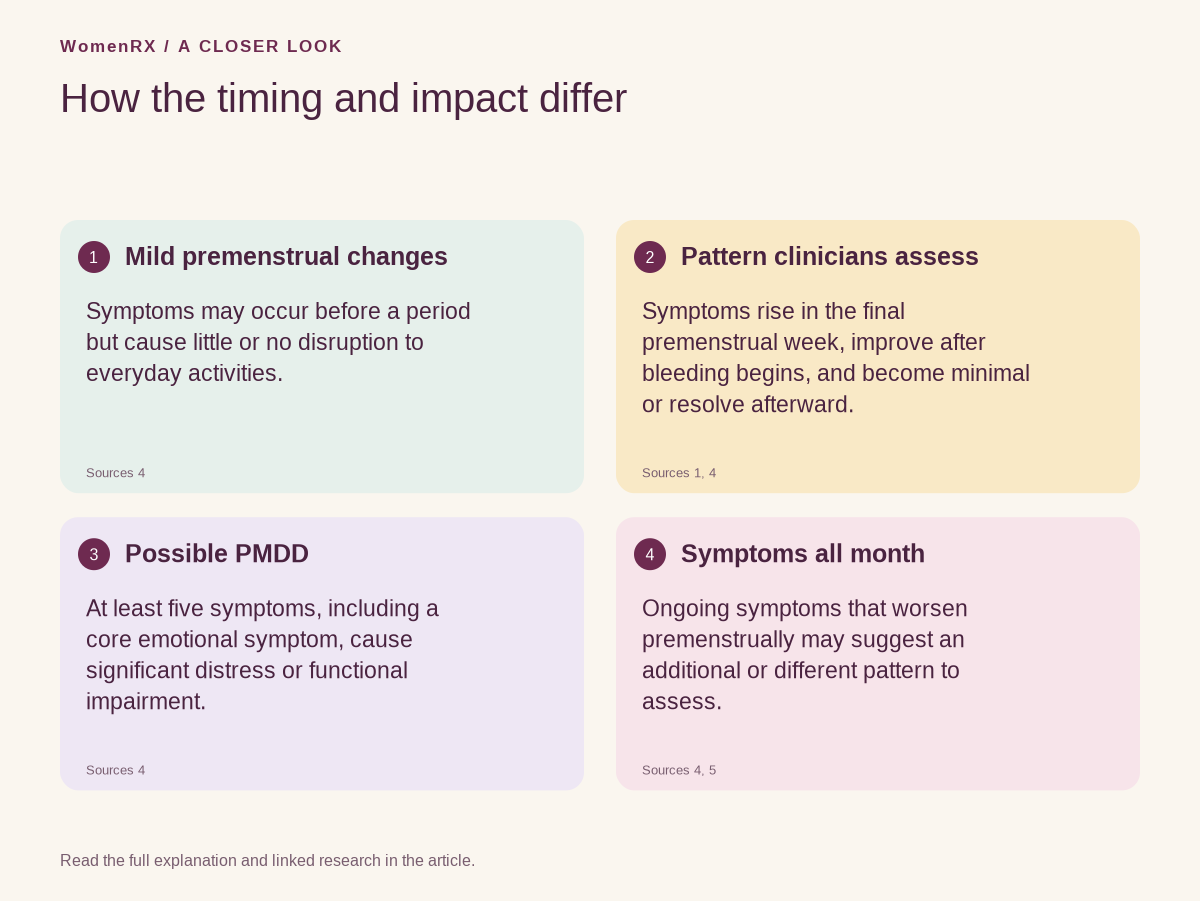
How the timing and impact differ
Mild premenstrual changes: Symptoms may occur before a period but cause little or no disruption to everyday activities.4
Pattern clinicians assess: Symptoms rise in the final premenstrual week, improve after bleeding begins, and become minimal or resolve afterward.14
Possible PMDD: At least five symptoms, including a core emotional symptom, cause significant distress or functional impairment.4
Symptoms all month: Ongoing symptoms that worsen premenstrually may suggest an additional or different pattern to assess.45
Read the figure as text
Compare the recurring pattern and day-to-day effect, not just whether mood symptoms happen before a period.- Mild premenstrual changes: Symptoms may occur before a period but cause little or no disruption to everyday activities.4
- Pattern clinicians assess: Symptoms rise in the final premenstrual week, improve after bleeding begins, and become minimal or resolve afterward.14
- Possible PMDD: At least five symptoms, including a core emotional symptom, cause significant distress or functional impairment.4
- Symptoms all month: Ongoing symptoms that worsen premenstrually may suggest an additional or different pattern to assess.45
More questions, answered
Can I tell whether I have PMDD from a symptom checklist?
A checklist can help organize what you’ve noticed, but PMDD assessment also considers timing, impairment, and daily ratings across at least two symptomatic cycles. It isn’t diagnosed from a symptom count alone. 3 4
What if I feel low or anxious throughout the month?
If symptoms continue outside the premenstrual phase and worsen before bleeding, an assessment may consider premenstrual worsening of an ongoing condition as well as PMDD. Daily records can help distinguish these patterns. 4 5
Sources you can check
- PMDD (premenstrual dysphoric disorder) - NHSAccessed 2026-09-25Return to first citation
- Poor mood after oral contraceptive use is associated with increased vulnerability to peripartum depression, premenstrual dysphoric disorder, and higher genetic risk for depression.Kiewa J, Lind PA, Hickie IB, Medland SE, Mitchell BE, Middeldorp CM, Martin NG, Wray NR, Byrne EM. · Archives of women's mental health · 2026Return to first citation
- Developing a Mood and Menstrual Tracking App for People With Premenstrual Dysphoric Disorder: User-Centered Design Study.Apsey C, Di Florio A, Stawarz K. · JMIR formative research · 2024Return to first citation
- Premenstrual DisordersMiller C, Carlson K. · 2026Return to first citation
- Unmasking the cycle: Premenstrual and menstrual exacerbation of psychiatric disorders and impact on female mental health.Mazza M, Marano G. · World journal of psychiatry · 2025Return to first citation