When Metformin May Be Considered for PCOS
Metformin is one option to discuss when metabolic health or cycle regulation is a goal, but the right reason depends on your age, priorities, and treatment alternatives.
Metformin may be considered for metabolic features of PCOS. For adolescents, guidance also allows considering it for cycle regulation, though evidence is limited. Earlier adult guidance recommends considering it alongside lifestyle changes for metabolic and weight-related outcomes in people with a BMI of 25 or higher. It isn’t the recommended first-line medication for inducing ovulation. Diarrhea, nausea, and abdominal discomfort are treatment trade-offs worth discussing. 4 5 7
Metformin is worth discussing when you and your care team can name a goal it’s meant to address. That goal might be a metabolic concern, such as insulin resistance, or, especially for an adolescent, cycle regulation. The choice isn’t automatic: PCOS affects people differently, and another treatment may fit your main concern better. 1 4
Start with the goal, not the diagnosis alone
PCOS can involve irregular or absent ovulation, and insulin resistance can also be part of the condition. These features don’t show up the same way in everyone. A PCOS diagnosis by itself therefore doesn’t tell you whether metformin is the right option; the decision depends on which features and outcomes matter to you. 1
A useful conversation might begin with a specific aim: “I want to understand my metabolic risk,” “I’d like help with irregular cycles,” or “I’m hoping to get pregnant.” Those are different goals, and metformin shouldn’t be assumed to serve them equally well.
If metabolic health is your priority
Metformin may be considered for metabolic features of PCOS. An earlier international guideline, summarized in a 2021 review, said to consider it alongside lifestyle changes for adults with PCOS and a BMI of 25 or higher to manage weight and metabolic outcomes. That is a guideline recommendation, not a rule that everyone above that BMI should take metformin. 5
It may help to ask which specific metabolic concern is driving the discussion and which measures your care team wants to review. PCOS is associated with metabolic risk, but that risk varies; a general reference on metabolic syndrome identifies PCOS as a risk factor and describes blood glucose as one measure used to assess metabolic risk. 2
Insulin resistance means the body has trouble using insulin and can lead to high blood glucose. Discussing it doesn’t mean metformin will produce a particular amount of weight change or address every PCOS symptom. 1 5
If cycle regulation is the goal
For adolescents with PCOS, a 2025 international guideline says metformin could be considered for metabolic features and cycle regulation. The same guideline notes that the evidence in adolescents is limited, with recommendations based on low- to moderate-certainty evidence. 4
For adults, an earlier guideline summarized in the 2021 review suggested metformin as a second-line option for menstrual irregularity when combined oral contraceptives can’t be taken or aren’t tolerated. MedlinePlus also describes hormonal birth control as an option that can make periods more regular when pregnancy isn’t currently a goal. These are different approaches to a cycle-related concern; which one fits depends on your circumstances and preferences. 5 1
If you’re approaching menopause or your periods have changed, don’t assume PCOS is the only possible explanation. Menstrual patterns can change near menopause, and irregular periods can have other causes. A new or changing pattern is a reason to discuss what’s behind it rather than starting a treatment based on the symptom alone. 3
If you’re hoping to get pregnant
A fertility goal deserves its own discussion. Metformin may come up when a person with PCOS is trying to conceive, but it isn’t the recommended first-line medication for inducing ovulation. A review of PCOS guidance identifies letrozole as the recommended first-line medication for inducing ovulation; the treatment plan should be based on the fertility goal, not an assumption that a medicine used for metabolic features will also solve ovulation problems. 5
If pregnancy is a possibility or a current goal, ask how that changes the reason for considering metformin and what other fertility options apply. Whether to use metformin during pregnancy with PCOS is a separate decision, so don’t assume that a pre-pregnancy plan automatically carries over. 6
Weigh the treatment against your daily life
Stomach symptoms are a concrete downside to put beside the hoped-for benefit. US prescribing information for a product containing metformin and glipizide reports diarrhea, nausea or vomiting, and abdominal pain in trials that included a metformin-alone comparison. That label also explains that metformin is cleared through the kidneys and that impaired kidney function increases the risk of metformin-associated lactic acidosis. Because this is information for a combination product, it doesn’t tell you how likely you personally are to have a stomach symptom while taking metformin alone. 7
If a stomach problem would make treatment difficult for you, say so. Ask what you could do if symptoms occur and how you’d decide whether the intended benefit is worth continuing. Kidney health is another useful part of that discussion: ask whether your kidney function needs checking before treatment and during follow-up. 7
Questions that make the trade-offs clearer
You might ask: What specific goal would metformin address for me? Which health measures are shaping that recommendation? If blood glucose is the concern, which glucose measure would we follow? If cycle regulation is the goal, how does it compare with other options that fit my pregnancy plans? If I’m trying to conceive, what is the recommended approach to ovulation induction? How would we handle diarrhea, nausea, or abdominal discomfort if it happens, and does my kidney health affect the decision? When should we review whether it’s helping? 5 7 These questions help keep the discussion tied to your priorities rather than the diagnosis alone.
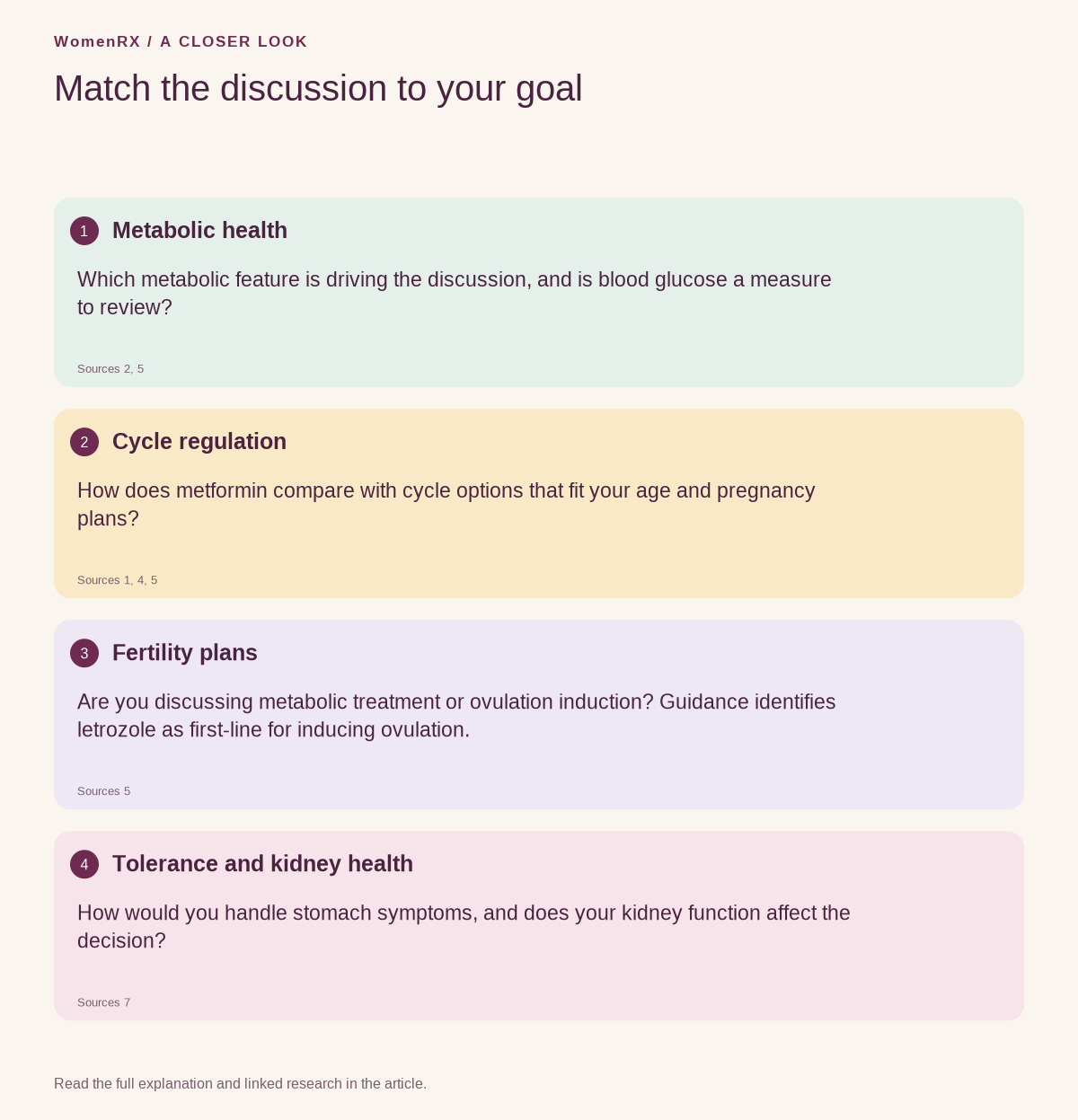
Match the discussion to your goal
Metabolic health: Which metabolic feature is driving the discussion, and is blood glucose a measure to review?25
Cycle regulation: How does metformin compare with cycle options that fit your age and pregnancy plans?145
Fertility plans: Are you discussing metabolic treatment or ovulation induction? Guidance identifies letrozole as first-line for inducing ovulation.5
Tolerance and kidney health: How would you handle stomach symptoms, and does your kidney function affect the decision?7
Read the figure as text
Use these prompts to distinguish why metformin might be discussed and which trade-offs matter to you.- Metabolic health: Which metabolic feature is driving the discussion, and is blood glucose a measure to review?25
- Cycle regulation: How does metformin compare with cycle options that fit your age and pregnancy plans?145
- Fertility plans: Are you discussing metabolic treatment or ovulation induction? Guidance identifies letrozole as first-line for inducing ovulation.5
- Tolerance and kidney health: How would you handle stomach symptoms, and does your kidney function affect the decision?7
More questions, answered
Does having PCOS mean I need metformin?
No. Metformin is one treatment option, and whether it makes sense depends on the goal, relevant health features, and alternatives. Adolescent guidance says it could be considered for metabolic features and cycle regulation, not that every adolescent with PCOS should take it. 1 4
Is metformin the main treatment to help me get pregnant?
Metformin isn’t the recommended first-line medication for inducing ovulation in PCOS. A review of PCOS guidance identifies letrozole for that role, so ask about fertility-specific options if you’re trying to conceive. 5
Sources you can check
- PCOS | Polycystic Ovary Syndrome | MedlinePlusAccessed 2026-09-25Return to first citation
- Metabolic Syndrome | MedlinePlusAccessed 2026-09-25Return to first citation
- Irregular periods - NHSAccessed 2026-09-25Return to first citation
- International evidence-based recommendations for polycystic ovary syndrome in adolescents.Peña AS, Witchel SF, Boivin J, Burgert TS, Ee C, Hoeger KM, Lujan ME, Mousa A, Oberfield S, Tay CT, Teede H. · BMC medicine · 2025Return to first citation
- Update on polycystic ovary syndrome.Kim JJ. · Clinical and experimental reproductive medicine · 2021Return to first citation
- Metformin Exposure in Pregnancy and Fetal Programming: A Focused Review of Contemporary Evidence.Dugalic MG, Dugalic S, Milincic M, Ivanovic K. · Biomedicines · 2026Return to first citation
- GLIPIZIDE AND METFORMIN HYDROCHLORIDE TABLET, FILM COATED [REMEDYREPACK INC.] | US prescribing information and patient instructionsAccessed 2026-09-25Return to first citation