When Long-Term B12 Supplementation Needs a Review
Whether to continue B12 depends less on how long you’ve taken it than on why you started and whether that reason is still present.
Vitamin B12 is generally considered low in toxicity, and no upper intake limit has been set, but that doesn’t mean every high-dose supplement is needed indefinitely. Review the reason you started, whether it still applies, and whether your dose and follow-up fit that reason. Persistent absorption problems or a dietary pattern without reliable B12 sources may mean ongoing supplementation is appropriate. 1
Start with the reason you began
A useful review isn’t simply “How many months have I taken this?” It’s “What problem was B12 meant to address, and is that problem still here?”
If you started after a confirmed deficiency, the next decision depends on its cause. A low intake that has changed is different from an ongoing absorption problem. Pernicious anemia, some stomach or intestinal conditions, and certain gastrointestinal surgeries can interfere with B12 absorption. In those situations, stopping because a blood test improved may not address the underlying reason the deficiency developed. 1
If you started because you eat little or no animal food, check whether your current diet reliably includes B12-fortified foods or a supplement. B12 occurs naturally in animal foods, not unfortified plant foods. A vegan or vegetarian eating pattern can therefore remain relevant even when you feel well. 1
Some medicines can also affect B12 status. Metformin may reduce absorption, and acid-reducing medicines such as proton pump inhibitors and H2 blockers can interfere with absorbing B12 from food. These medicines aren’t a reason to stop treatment on your own; they’re a reason to include medication use in a review of your B12 plan. 1 A case-control study in adults aged 65 and older also found an association between chronic use of these acid-reducing medicines and B12 deficiency, though that result doesn’t establish what will happen to every person taking them. 2
Dose and form: more isn’t automatically better
For adults, the recommended dietary allowance is 2.4 micrograms a day. Supplements can contain much more because the amount listed on the label isn’t the same as the amount your body absorbs. B12 absorption falls at high doses, and supplement amounts used to treat deficiency can be much higher than the amount needed from a usual diet. A treatment dose should be considered in the context of the deficiency and its cause, rather than treated as a general wellness dose. 1
There’s no established tolerable upper intake level for B12 because the National Academies’ Food and Nutrition Board considers it to have low potential for toxicity. NIH guidance describes B12 as generally safe even at high doses. That’s reassuring, but it doesn’t show that everyone benefits from taking a high dose forever. 1
The common supplement forms include cyanocobalamin and methylcobalamin. NIH guidance reports no evidence that absorption differs by form, and evidence suggests sublingual B12 isn’t more effective than oral B12. So a different form or delivery style isn’t automatically a reason to keep taking a supplement or pay more for one. 1
What follow-up can clarify
If you were treated for a deficiency, ask what would count as a successful response and whether your original cause is likely to persist. A clinician may use serum B12 testing; when the result is borderline, methylmalonic acid (MMA) can help clarify status. MMA also rises with reduced kidney function and tends to be higher in older adults, so it isn’t interpreted in isolation. 1
There isn’t one follow-up schedule that fits every reason for supplementation. The useful plan depends on the original test results, symptoms, cause, treatment method, and whether the risk continues. If you take B12 because of a lasting absorption problem or a diet that remains low in B12, ask what ongoing prevention or treatment should look like rather than assuming a normal result means the need has ended. 1
Don’t use a supplement as a substitute for assessment if symptoms persist or appear. B12 deficiency can cause fatigue, anemia, and tingling or numbness in the hands or feet; neurological symptoms can occur even without anemia, and delayed treatment can leave lasting damage. 1
Pregnancy and breastfeeding call for a specific review
B12 needs are slightly higher during pregnancy and lactation: the recommended dietary allowance is 2.6 micrograms a day during pregnancy and 2.8 micrograms during breastfeeding, compared with 2.4 micrograms for other adults. These are intake recommendations, not a message that every woman needs a separate supplement. 1
Pregnancy can also change how a result looks: serum B12 tends to fall during pregnancy and usually returns to normal after delivery. If you’re pregnant or breastfeeding and have a history of deficiency, limited dietary sources, or a possible absorption problem, have the reason for supplementation assessed in that life-stage context. Maternal deficiency can put a breastfed infant at risk, particularly when the mother follows a vegan diet. 1
Review why you started B12 and whether that need remains
Before continuing or changing your supplement, write down three things: why you started it, what form and amount you take, and whether that reason is still present. Bring that information to a review, especially if you began treatment for a confirmed deficiency, take metformin or long-term acid-reducing medication, have had gastrointestinal surgery, or are pregnant or breastfeeding. The aim is a plan that matches your situation, not the highest dose or the longest duration.
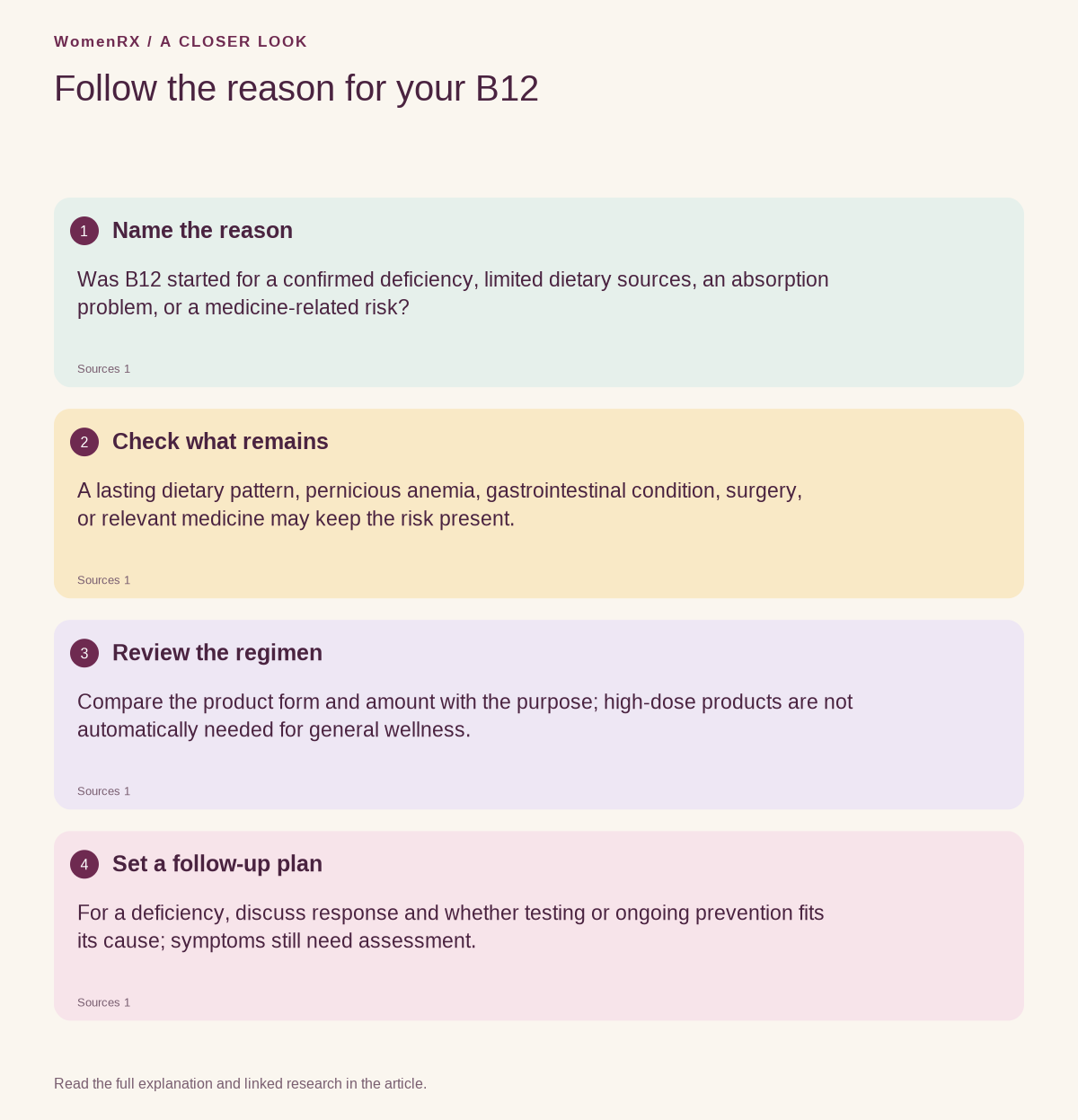
Follow the reason for your B12
Name the reason: Was B12 started for a confirmed deficiency, limited dietary sources, an absorption problem, or a medicine-related risk?1
Check what remains: A lasting dietary pattern, pernicious anemia, gastrointestinal condition, surgery, or relevant medicine may keep the risk present.1
Review the regimen: Compare the product form and amount with the purpose; high-dose products are not automatically needed for general wellness.1
Set a follow-up plan: For a deficiency, discuss response and whether testing or ongoing prevention fits its cause; symptoms still need assessment.1
Read the figure as text
Use the original reason for supplementation to guide whether ongoing use and follow-up still fit.- Name the reason: Was B12 started for a confirmed deficiency, limited dietary sources, an absorption problem, or a medicine-related risk?1
- Check what remains: A lasting dietary pattern, pernicious anemia, gastrointestinal condition, surgery, or relevant medicine may keep the risk present.1
- Review the regimen: Compare the product form and amount with the purpose; high-dose products are not automatically needed for general wellness.1
- Set a follow-up plan: For a deficiency, discuss response and whether testing or ongoing prevention fits its cause; symptoms still need assessment.1
More questions, answered
Does a high B12 dose mean I should stop?
Not by itself. B12 is generally considered low in toxicity, and no upper intake level has been set. But the right reason to continue a high-dose product is a continuing need, such as deficiency treatment or an ongoing dietary or absorption risk. Review that reason before changing a treatment plan. 1
Do methylcobalamin or sublingual B12 work better?
NIH guidance reports no evidence that B12 absorption differs by supplement form, and evidence suggests sublingual products are not more effective than oral forms. 1
Sources you can check
- Vitamin B12 - Health Professional Fact SheetAccessed 2026-09-25Return to first citation
- A case-control study on adverse effects: H2 blocker or proton pump inhibitor use and risk of vitamin B12 deficiency in older adults.Valuck RJ, Ruscin JM. · Journal of clinical epidemiology · 2004Return to first citation