What Watermelon Gives You Besides Water
Watermelon brings a little more than refreshment to your plate, but protein isn’t one of its strengths.
A cup of diced raw watermelon provides about 46 calories, 11.5 grams of carbohydrate, 0.6 grams of fiber, and less than 1 gram of protein. 4 It also contains vitamin B6 and the red pigment lycopene. 13 Enjoy it as fruit, count the carbohydrate if your eating plan calls for that, and pair it with another food when you want a protein-containing snack. 45
What’s in a cup of watermelon?
Watermelon is mostly water, which is part of why a cold slice can be so appealing. One cup of diced raw fruit contains about 139 grams of water. 6 But it isn’t only water. In USDA food-composition data, one cup of diced raw watermelon, weighing 152 grams, provides about 46 calories, 11.5 grams of carbohydrate, 0.6 grams of fiber, and 0.9 grams of protein. These are estimates for raw fruit, not measurements of the melon in your kitchen. 4
Watermelon also contains vitamin B6 and vitamin C. Red watermelon gets its color in part from lycopene, a plant pigment also found in tomatoes and some other red or pink fruits. 123 Those are good reasons to see watermelon as more than flavored water. They aren’t evidence that a serving treats a health condition or has a special effect for women.
Where protein fits, and where it doesn’t
The protein question is easiest to answer with the cup in front of you: at 0.9 grams per cup, fresh watermelon isn’t a useful stand-in for a protein food. For comparison, a 170-gram reference container of plain nonfat Greek yogurt provides about 17 grams of protein. These are ordinary portions of two different foods, not equal-weight servings or promises about a particular brand. 46 Eggs, tofu, beans, and lentils are other examples of foods to consider when protein is the point of the snack or meal. The amount in any particular serving varies by food and product. 5
For example, you could have watermelon alongside plain yogurt, or add it to a meal that includes tofu or beans. That lets the fruit contribute its sweetness and juiciness while the other food does the protein work. Watermelon seed protein concentrate is a different ingredient: a study measured substantial protein in a processed concentrate made from defatted seeds, not in an ordinary serving of fresh flesh. 24
Does its carbohydrate content matter?
It can if you count carbohydrates or plan meals around them. The USDA estimate is 11.5 grams of carbohydrate for one cup of diced raw watermelon. A larger bowl will contain more; a smaller serving will contain less. Its 0.6 grams of fiber per cup doesn’t change the basic point that watermelon contributes carbohydrate to the meal. 4
You don’t need to treat that number as a reason to avoid the fruit. Use it as a portion reference for the eating plan you actually follow. If you’re choosing between a few cubes added to a meal and a large bowl eaten on its own, the carbohydrate contribution won’t be the same. 4
A sensible note about lycopene and cut fruit
Lycopene is present in red watermelon, but its presence alone doesn’t establish that eating watermelon prevents or treats a disease. It’s a feature of the fruit, not a promise attached to a serving. 3
If you’re pregnant, watermelon doesn’t need a separate nutritional sales pitch. Cut-melon handling is more useful to know: CDC lists freshly cut melon or cut melon kept refrigerated for seven days or fewer as safer choices during pregnancy. It advises against cut melon left out for more than two hours, or more than one hour when the temperature is above 90°F. 7
Fruit and protein, side by side
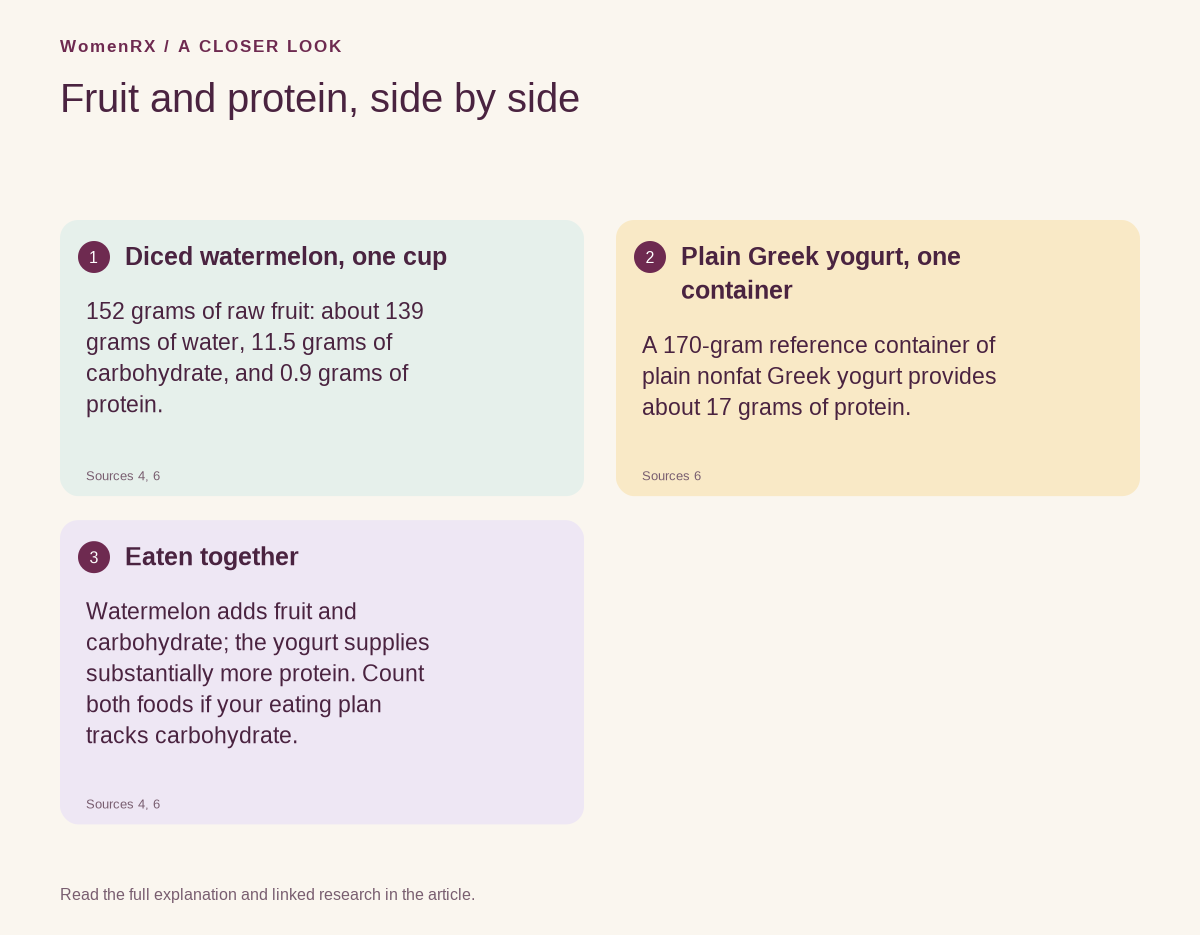
Diced watermelon, one cup: 152 grams of raw fruit: about 139 grams of water, 11.5 grams of carbohydrate, and 0.9 grams of protein.46
Plain Greek yogurt, one container: A 170-gram reference container of plain nonfat Greek yogurt provides about 17 grams of protein.6
Eaten together: Watermelon adds fruit and carbohydrate; the yogurt supplies substantially more protein. Count both foods if your eating plan tracks carbohydrate.46
Read the figure as text
These USDA reference portions show what watermelon contributes and why yogurt plays a different role in a snack. They aren’t equal-weight servings.- Diced watermelon, one cup: 152 grams of raw fruit: about 139 grams of water, 11.5 grams of carbohydrate, and 0.9 grams of protein.46
- Plain Greek yogurt, one container: A 170-gram reference container of plain nonfat Greek yogurt provides about 17 grams of protein.6
- Eaten together: Watermelon adds fruit and carbohydrate; the yogurt supplies substantially more protein. Count both foods if your eating plan tracks carbohydrate.46
More questions, answered
Do the seeds make fresh watermelon a protein-rich food?
No. Research on protein concentrated from processed watermelon seeds describes a different ingredient from diced fresh watermelon. A cup of the raw fruit contains about 0.9 grams of protein. 24
Sources you can check
- Dietary Supplements and Life Stages: Pregnancy - Health Professional Fact SheetAccessed 2026-09-25Return to first citation
- Preliminary Data of the Nutritive, Antioxidative, and Functional Properties of Watermelon (Citrullus lanatus L.) Flour and Seed Protein Concentrate.Hahn A, Liszka J, Maksym J, Nemś A, Miedzianka J. · Molecules (Basel, Switzerland) · 2025Return to first citation
- Lycopene: A Natural Arsenal in the War against Oxidative Stress and Cardiovascular Diseases.Bin-Jumah MN, Nadeem MS, Gilani SJ, Mubeen B, Mubeen B, Ullah I, Alzarea SI, Ghoneim MM, Alshehri S, Al-Abbasi FA, Kazmi I. · Antioxidants (Basel, Switzerland) · 2022Return to first citation
- USDA SR Legacy: Watermelon, raw (FDC 167765)Accessed 2026-09-25Return to first citation
- MedlinePlus: Protein in diet, including tofu and other plant sourcesAccessed 2026-09-25Return to first citation
- USDA SR Legacy: watermelon reference food comparisonAccessed 2026-09-25Return to first citation
- Safer Food Choices for Pregnant Women | Food Safety | CDCAccessed 2026-09-25Return to first citation