What to Have Ready for an Online Health Appointment
A few notes about your concern, medicines, questions, and connection can make it easier to use the time in a video, phone, or messaging visit.
You don’t need to assemble a complete medical file. Before the visit, jot down what you want help with, when it started, what has changed, and your main questions. Have a current medication list and any records that seem directly related or that the clinic requested. Then check the visit link, device, and privacy you’ll need for the format. Virtual-care guidance supports preparation and clear communication, but doesn’t establish one checklist for every visit. 2
Start with the reason you booked
Write one sentence that says what you most want help with. For example: “I’d like to understand why this headache keeps returning and what to do next.” That gives you a starting point if you feel rushed or lose your train of thought.
Add a short timeline: when the concern began, what has changed, and anything you’ve noticed that seems connected. Include only details relevant to this visit. If you’ve already tried something, note what it was and what happened. These are prompts to organize what you want to say, not a required medical form.
A telemedicine training study had medical students practice online history-taking and patient communication with simulated patients. It assessed students’ self-reported confidence, not whether a particular patient checklist improves care. 1
Bring the details that fit your concern
Medicines: Keep an up-to-date list of prescription medicines, over-the-counter products, and supplements you take. If you can, include the name and the directions shown on the label. Mention any recent changes or medicines you stopped, if they’re relevant. You don’t need to gather every package if a written list or clear photo will do.
Related records: Have test results, visit summaries, or relevant photos handy if you already have them and think they matter. Bring records the clinic specifically requested. You don’t need to track down your entire medical history for a routine question; if a record is missing, say so rather than delaying the visit to find it.
Questions: Write down the questions you most want answered. If you have several, mark the ones you’d be disappointed to leave without discussing. You might ask what the clinician thinks could be causing the concern, what options are available, or what would make the plan change.
Add reproductive details only when they matter
Menstrual-cycle timing, a possible or confirmed pregnancy, recent birth, breastfeeding, or menopause-related changes may be useful context for some concerns and irrelevant to others. Mention the details that connect to your reason for care; you don’t have to share unrelated personal information just because the visit is online.
Match the setup to the visit format
For video: Open the link ahead of time, check that your camera and microphone work, and charge your device. Choose a place where you can speak privately and hear the clinician. If you may need to show a rash, swelling, or another visible concern, think about lighting and whether you can position the camera comfortably.
For a phone call: Keep your phone charged and nearby, and choose a spot where you can hear and speak without being overheard if possible. Keep your notes and medication list within reach.
For messaging: Put the main question near the beginning and use short, clear details. Include a timeline or relevant image if the service allows it and it helps explain the concern. Check how the clinic says it will respond; a message may not be answered during the time you send it.
Virtual-care guidance commonly addresses preparation, clear communication, technology setup, and confidentiality, though the systematic review found the overall quality of included guidelines was poor. Its findings support these as general considerations, not a single validated checklist for every patient or visit. 2
A quick note to copy
Before the visit, you can fill in just the parts that apply:
- I want help with:
- It started / changed:
- What I’ve tried:
- Medicines or supplements relevant to this:
- Records or photos I have:
- My top questions:
- Relevant cycle, pregnancy, postpartum, or menopause details:
- My connection and privacy plan:
You can read from your notes, correct yourself, or say that you’re not sure. The goal isn’t to present a perfect history. It’s to make the details you think matter easier to share.
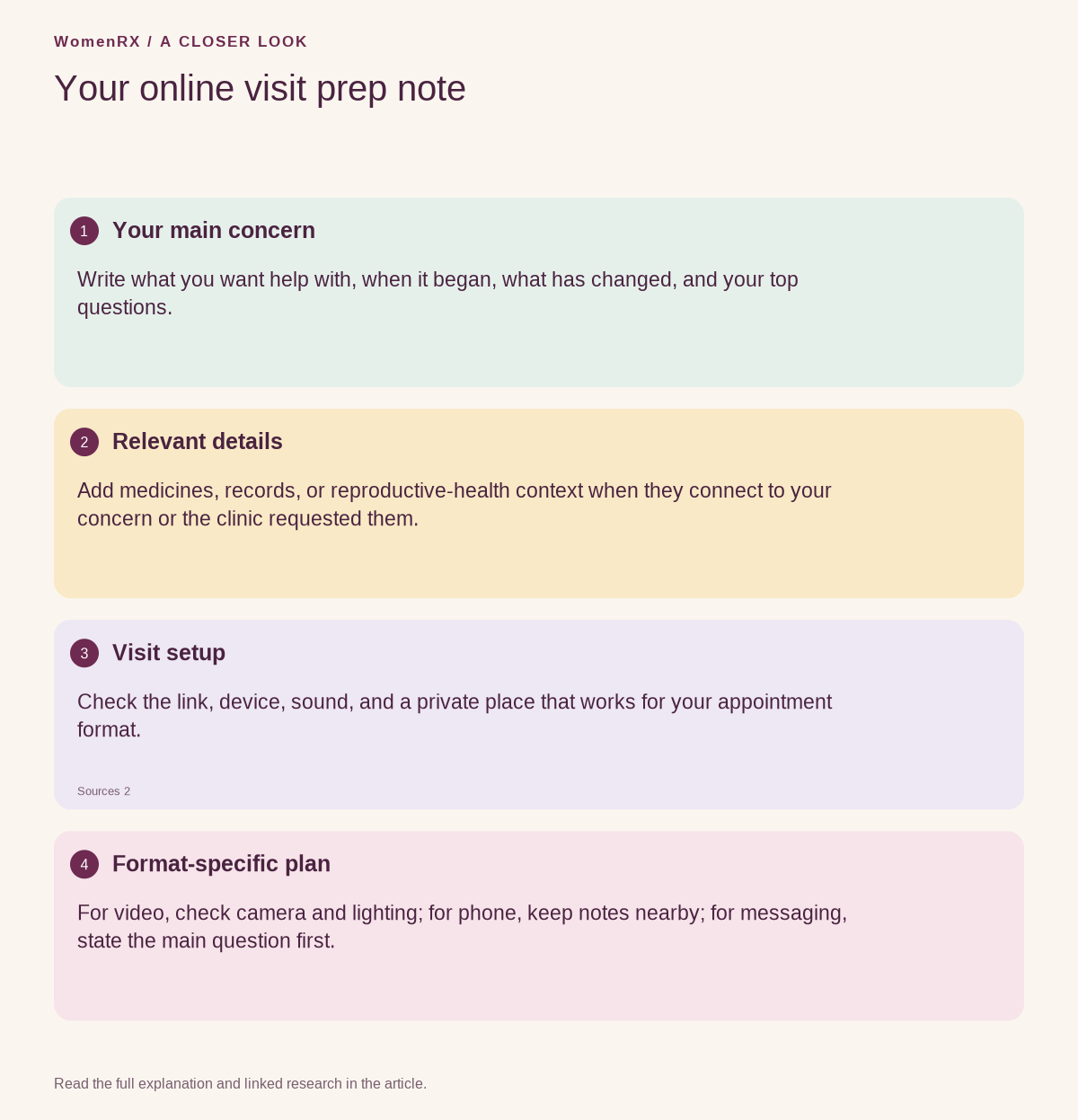
Your online visit prep note
Your main concern: Write what you want help with, when it began, what has changed, and your top questions.
Relevant details: Add medicines, records, or reproductive-health context when they connect to your concern or the clinic requested them.
Visit setup: Check the link, device, sound, and a private place that works for your appointment format.2
Format-specific plan: For video, check camera and lighting; for phone, keep notes nearby; for messaging, state the main question first.
Read the figure as text
A short checklist to help sort the information you want to share from the setup each visit format may need.- Your main concern: Write what you want help with, when it began, what has changed, and your top questions.
- Relevant details: Add medicines, records, or reproductive-health context when they connect to your concern or the clinic requested them.
- Visit setup: Check the link, device, sound, and a private place that works for your appointment format.2
- Format-specific plan: For video, check camera and lighting; for phone, keep notes nearby; for messaging, state the main question first.
More questions, answered
What if I don’t have the records the clinic asked for?
Contact the clinic before the visit and ask whether the appointment can go ahead without those records or whether it should be rescheduled. Tell them which records you couldn’t get so they can advise you.
Do I need to use video?
Use the format the clinic arranged. If you have a privacy, device, or connection problem, tell the clinic; don’t assume you must solve it before asking whether another format is available.
Sources you can check
- Telemedicine in medical education: An example of a digital preparatory course for the clinical traineeship - a pre-post comparison.Vogt L, Schmidt M, Follmann A, Lenes A, Klasen M, Sopka S. · GMS journal for medical education · 2022Return to first citation
- Best Practices for the Provision of Virtual Care: A Systematic Review of Current Guidelines.Anvari S, Neumark S, Jangra R, Sandre A, Pasumarthi K, Xenodemetropoulos T. · Telemedicine journal and e-health : the official journal of the American Telemedicine Association · 2023Return to first citation