What to Eat When You Feel Bloated, and When to Get Checked
A few targeted food changes can help you spot a pattern without cutting out whole food groups.
If bloating seems tied to meals, first notice whether fizzy drinks or foods like beans, lentils, or cabbage show up around the same time. If constipation is part of the pattern, oats or linseed are fiber-rich options to consider. Increase fiber gradually, since a quick increase can cause gas and bloating. Frequent or persistent symptoms, especially with weight loss or blood in your stool, need medical evaluation. 1 2
Start with the pattern you actually notice
Bloating often involves gas, and some foods and drinks can contribute. Fizzy drinks are one possibility; cabbage, beans, and lentils are examples of foods that can cause gas for some people. Swallowing air while eating and digestive conditions such as irritable bowel syndrome (IBS) can also play a part. These examples aren’t a list of foods everyone needs to avoid. 2
As a practical experiment, keep a brief note of what you ate and drank, when bloating started, whether you were constipated or had diarrhea, and whether the same pattern has happened before. If you notice a possible link, try changing that one food or drink while keeping the rest of your routine fairly steady. That makes the comparison easier to interpret than changing several things at once. This is a simple way to organize your observations, not a diagnostic test.
For example, if fizzy drinks repeatedly appear before symptoms, you could try having fewer of them and see whether the pattern changes. If beans seem connected, note how often that happens rather than automatically removing all legumes. Individualized dietary guidance may help people with IBS; broad food restriction isn’t the only way to approach symptoms. 2 4
If constipation is part of it, think about fiber carefully
When bloating comes with constipation, foods such as oats or linseed are practical fiber-containing options to consider. Fiber can help digestion and prevent constipation, but adding a lot quickly can cause gas, bloating, or cramps. Make changes gradually and notice how your symptoms respond. 1 2
The type of fiber may matter, particularly for someone with IBS. A review describes how some highly fermentable fibers can produce gas, while soluble fibers such as psyllium have been associated with improvement in overall IBS symptoms. That doesn’t mean all fiber is a problem, or that one type will suit everyone. A blanket “eat more fiber” rule may not fit your symptoms. 3
Keep your menstrual cycle in view, but don’t assume it explains everything
Some people notice bloating around the time of their period. If you see a cycle-related pattern, include menstrual timing in your notes alongside meals and bowel changes. But recurring, severe, or persistent bloating shouldn’t automatically be put down to hormones; bloating can have other causes, including digestive conditions. 2
When a food trial isn’t enough
Arrange medical evaluation if you’re bloated regularly, the bloating doesn’t go away, or it continues despite reasonable food changes. Get checked if it comes with unintentional weight loss or blood in your stool. Severe, sudden abdominal pain or vomiting blood alongside bloating calls for urgent care. 2
The goal is not a perfect anti-bloating menu. It’s to see whether a specific pattern is worth a modest food trial, while recognizing when symptoms deserve assessment instead.
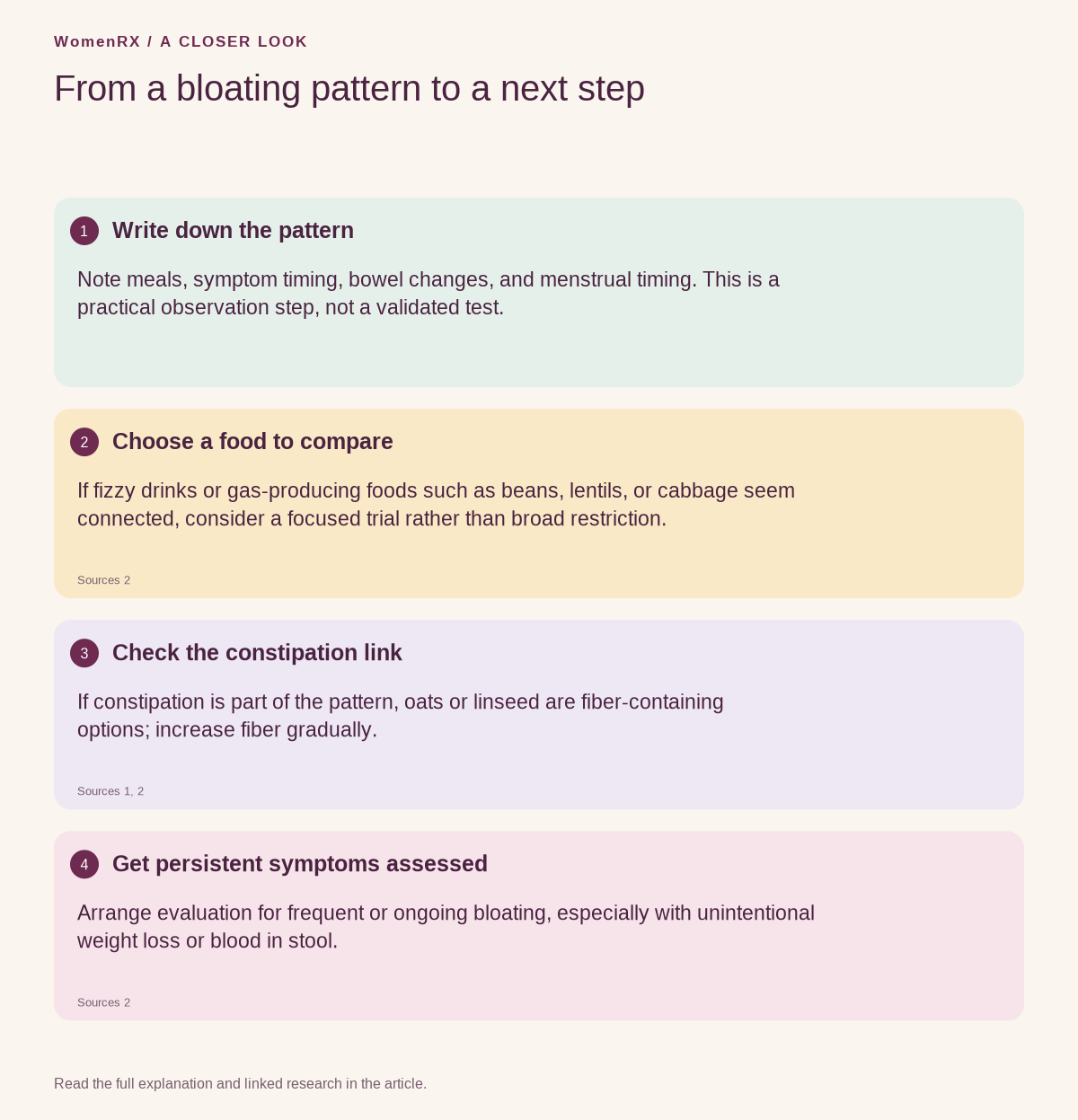
From a bloating pattern to a next step
Write down the pattern: Note meals, symptom timing, bowel changes, and menstrual timing. This is a practical observation step, not a validated test.
Choose a food to compare: If fizzy drinks or gas-producing foods such as beans, lentils, or cabbage seem connected, consider a focused trial rather than broad restriction.2
Check the constipation link: If constipation is part of the pattern, oats or linseed are fiber-containing options; increase fiber gradually.12
Get persistent symptoms assessed: Arrange evaluation for frequent or ongoing bloating, especially with unintentional weight loss or blood in stool.2
Read the figure as text
Use this flow to connect what you notice with a modest food trial or medical evaluation.- Write down the pattern: Note meals, symptom timing, bowel changes, and menstrual timing. This is a practical observation step, not a validated test.
- Choose a food to compare: If fizzy drinks or gas-producing foods such as beans, lentils, or cabbage seem connected, consider a focused trial rather than broad restriction.2
- Check the constipation link: If constipation is part of the pattern, oats or linseed are fiber-containing options; increase fiber gradually.12
- Get persistent symptoms assessed: Arrange evaluation for frequent or ongoing bloating, especially with unintentional weight loss or blood in stool.2
More questions, answered
Should I avoid all high-fiber foods if they make me gassy?
Not necessarily. Fiber types can affect people with IBS differently, and increasing fiber too quickly can itself cause gas and bloating. Notice which changes seem connected to your symptoms rather than cutting out all fiber. 1 3
Does bloating around my period mean it’s hormonal?
Not by itself. Some people experience bloating around their period, but recurring or persistent symptoms can have other causes and shouldn’t automatically be attributed to the cycle. 2
Sources you can check
- Dietary Fiber: MedlinePlusAccessed 2026-09-25Return to first citation
- Bloating - NHSAccessed 2026-09-25Return to first citation
- Dietary fiber in irritable bowel syndrome (Review).El-Salhy M, Ystad SO, Mazzawi T, Gundersen D. · International journal of molecular medicine · 2017Return to first citation
- Effect of diet and individual dietary guidance on gastrointestinal endocrine cells in patients with irritable bowel syndrome (Review).Mazzawi T, El-Salhy M. · International journal of molecular medicine · 2017Return to first citation