Bloating During Menopause: Which Food Changes Are Worth Trying?
A small change can help you check a possible food pattern without cutting out foods you may not need to avoid.
Start with one manageable change, such as having fewer fizzy drinks or eating smaller meals, rather than cutting out several foods at once. If you still have periods, note whether bloating also follows your cycle. Seek medical assessment if bloating is frequent, doesn’t go away, or comes with other concerning symptoms. 1
First, notice what happens alongside the bloating
Bloating often feels like fullness or discomfort in your abdomen. Gas is a common reason, and fizzy drinks, some foods, and swallowed air can contribute. Some people also feel bloated around their period. That makes timing worth noticing if you’re in perimenopause and still have periods, even irregular ones. It doesn’t mean a food or a hormonal change must be the cause. 1
For a brief check, jot down when bloating happens, what you ate and drank, whether you’re constipated, and, if relevant, where you are in your cycle. Look for a repeated pattern rather than blaming the most recent meal. Notes can help you choose what to try, but they can’t diagnose a food intolerance.
Pick a change that fits the pattern
If fizzy drinks are a regular part of your day, try having fewer while leaving the rest of your eating routine much the same. If discomfort tends to follow large meals, try smaller, more frequent meals. Eating with your mouth closed may also help you swallow less air. These are general approaches to bloating, not menopause-specific treatments. 1
Constipation points to a different starting place: foods with soluble fiber, such as oats or linseed (flaxseed), are an option when you’re constipated. 1 Make one change at a time so you can tell what, if anything, seems to help. If there’s no clear improvement, you don’t need to keep removing foods to make the experiment more convincing.
When a low-FODMAP diet enters the conversation
A low-FODMAP diet changes the intake of multiple types of fermentable carbohydrates. Its strongest relevance here is for people with irritable bowel syndrome (IBS), not for everyone who notices bloating around menopause. In a 2025 review of randomized IBS trials, a low-FODMAP diet performed better than a habitual diet for abdominal bloating or distension. Confidence in most comparisons between diets was low or very low. The review did not establish a treatment for menopause-related bloating. 2
Because low-FODMAP eating is restrictive and may affect nutrition and gut microbes, it’s better considered with a dietitian experienced in digestive conditions than used as an open-ended, do-it-yourself elimination diet. Simpler changes may be enough for some people. 3
Don’t keep experimenting if bloating persists
Arrange medical assessment if bloating happens often, is very uncomfortable, or doesn’t go away, including after you’ve tried a reasonable diet change. Unintentional weight loss or blood in your stool alongside bloating also calls for assessment. 1
Get prompt medical advice if bloating comes with vomiting, diarrhea or constipation, abdominal pain, or fever. A swollen abdomen with severe pain that starts suddenly needs emergency care. 1 These are reasons to look beyond food, whether you still have periods or are postmenopausal.
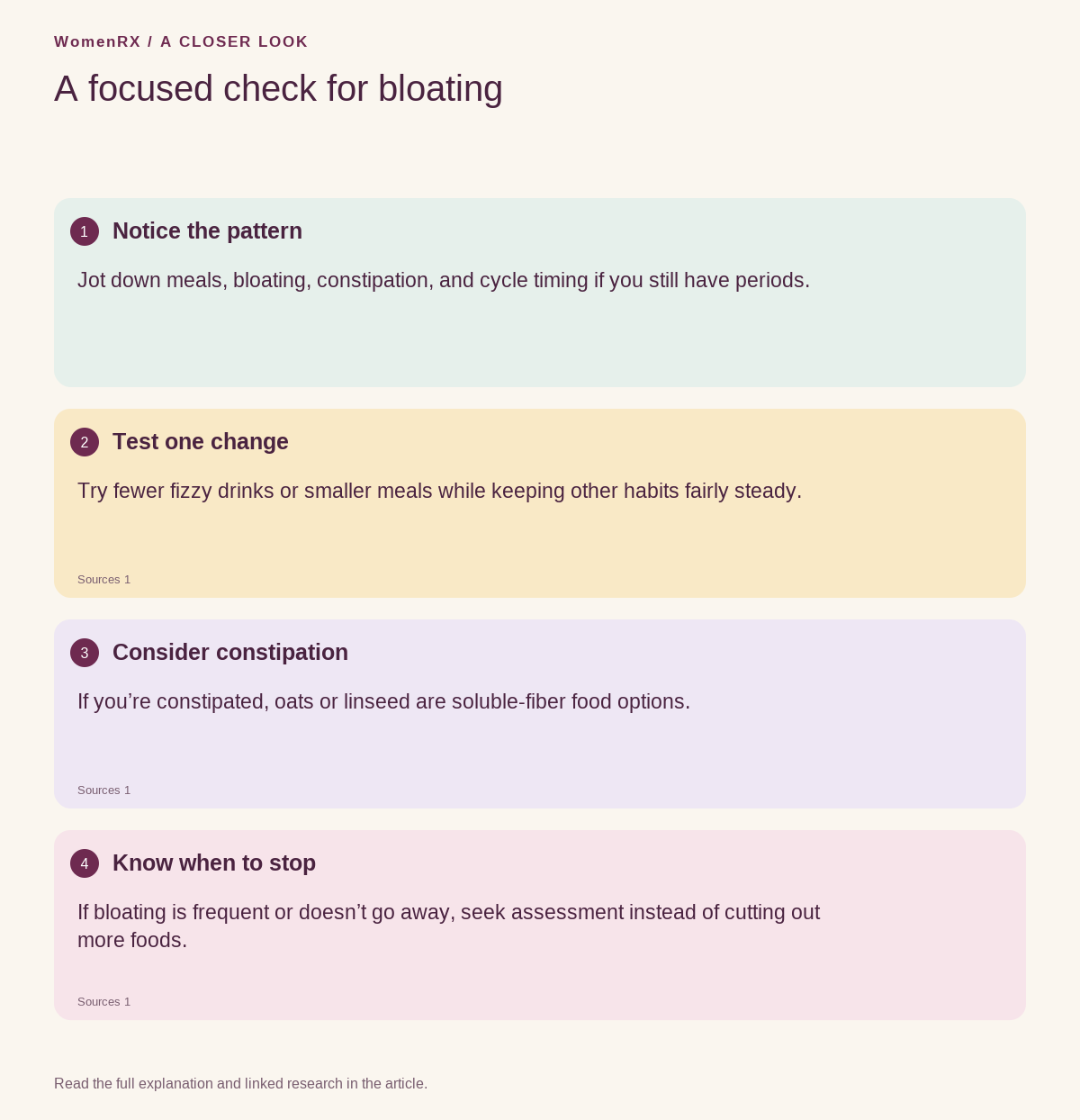
A focused check for bloating
Notice the pattern: Jot down meals, bloating, constipation, and cycle timing if you still have periods.
Test one change: Try fewer fizzy drinks or smaller meals while keeping other habits fairly steady.1
Consider constipation: If you’re constipated, oats or linseed are soluble-fiber food options.1
Know when to stop: If bloating is frequent or doesn’t go away, seek assessment instead of cutting out more foods.1
Read the figure as text
A way to choose a small change without overlooking symptoms that need assessment.- Notice the pattern: Jot down meals, bloating, constipation, and cycle timing if you still have periods.
- Test one change: Try fewer fizzy drinks or smaller meals while keeping other habits fairly steady.1
- Consider constipation: If you’re constipated, oats or linseed are soluble-fiber food options.1
- Know when to stop: If bloating is frequent or doesn’t go away, seek assessment instead of cutting out more foods.1
Sources you can check
- Bloating - NHSAccessed 2026-09-25Return to first citation
- Efficacy of dietary interventions in irritable bowel syndrome: a systematic review and network meta-analysis.Cuffe MS, Staudacher HM, Aziz I, Adame EC, Krieger-Grubel C, Madrid AM, Ohlsson B, Black CJ, Ford AC. · The lancet. Gastroenterology & hepatology · 2025Return to first citation
- Efficacy of a Low-FODMAP Diet on the Severity of Gastrointestinal Symptoms and Quality of Life in the Treatment of Gastrointestinal Disorders-A Systematic Review of Randomized Controlled Trials.Kuźmin L, Kubiak K, Lange E. · Nutrients · 2025Return to first citation