Bloating Around Menopause: Do Supplements Help?
A probiotic may help some kinds of bloating, but the pattern of your symptoms matters more than a menopause label.
A synbiotic improved bloating in one trial, but the trial did not report a menopause-specific group, so it can’t show whether it helps bloating around menopause. Probiotic findings vary by product and condition. Peppermint oil may help when bloating comes with IBS-type cramps, but it can cause heartburn. Bloating with pain, constipation, vomiting, diarrhea, or fever calls for prompt medical advice, not a supplement trial. 1234
Bloating can mean an uncomfortable feeling of fullness, whether or not your abdomen looks larger. That visible enlargement is called distension. The distinction matters because the feeling isn’t always explained by excess gas: gut sensitivity and the way the intestines and abdominal muscles respond can play a part too. 5
Start with the pattern, not the supplement
If you’re still having periods, you might notice bloating around one. But period timing isn’t a reason to dismiss bloating that becomes frequent or doesn’t go away. Menopause isn’t the only possible explanation. 2
Consider what happens alongside the bloating. Does it follow fizzy drinks, particular foods, or large meals? Is constipation part of the picture? Does it come with cramps or other bowel symptoms? Food and drinks, swallowed air, constipation, and irritable bowel syndrome (IBS) can all be relevant. None of these patterns diagnoses the cause on its own, but each points to a different question than simply “Which menopause supplement should I buy?” 2
For example, if bloating tends to follow meals, smaller meals or less fizzy drink may be more relevant than a probiotic. If constipation is part of it, soluble-fiber foods such as oats or linseed are suggested options. But bloating with constipation, abdominal pain, vomiting, diarrhea, or fever is a reason to seek prompt medical advice before trying to manage it with fiber or a supplement. 2
How the supplement options compare
Probiotics: Evidence for IBS suggests that some strains or combinations may improve bloating, but the studies summarized by the NIH Office of Dietary Supplements were low quality, and no particular combination stood out as best. Products differ in their strains and amounts, and many products on store shelves haven’t been studied. A higher number of colony-forming units (CFU) or a “women’s” label doesn’t establish that a product will help your symptoms. 1
There is a more specific finding worth knowing about. In a randomized, placebo-controlled trial involving 350 people who reported bloating or indigestion, one multi-species synbiotic, a product combining probiotics with a prebiotic component, improved bloating and gas scores compared with placebo after six weeks. That’s evidence about the formulation tested in those participants. The trial did not establish a benefit specifically for women around menopause or for probiotics as a category. 4
Peppermint oil: This works differently. It relaxes bowel muscle and may ease cramps, bloating, and gas, particularly in people with IBS. Heartburn and indigestion are possible side effects, so it may be an unappealing choice if those already bother you. Peppermint oil capsules can interfere with indigestion medicines: leave at least two hours between taking peppermint oil and an indigestion medicine, and check with a pharmacist if you’re unsure about a particular product. 3
When bloating needs a closer look
Arrange medical assessment if you’re often bloated, it doesn’t go away, or changes aimed at an apparent food or bowel pattern aren’t helping. Bloating with unintentional weight loss or blood in your stool also needs assessment. Persistent bloating can occasionally be a sign of a more serious condition, including ovarian cancer, which is why it’s worth checking rather than repeatedly trying new supplements. 2
Seek prompt medical advice if bloating comes with vomiting, diarrhea or constipation, abdominal pain, or fever. If your abdomen is swollen and you develop severe pain that starts suddenly, seek emergency care. 2
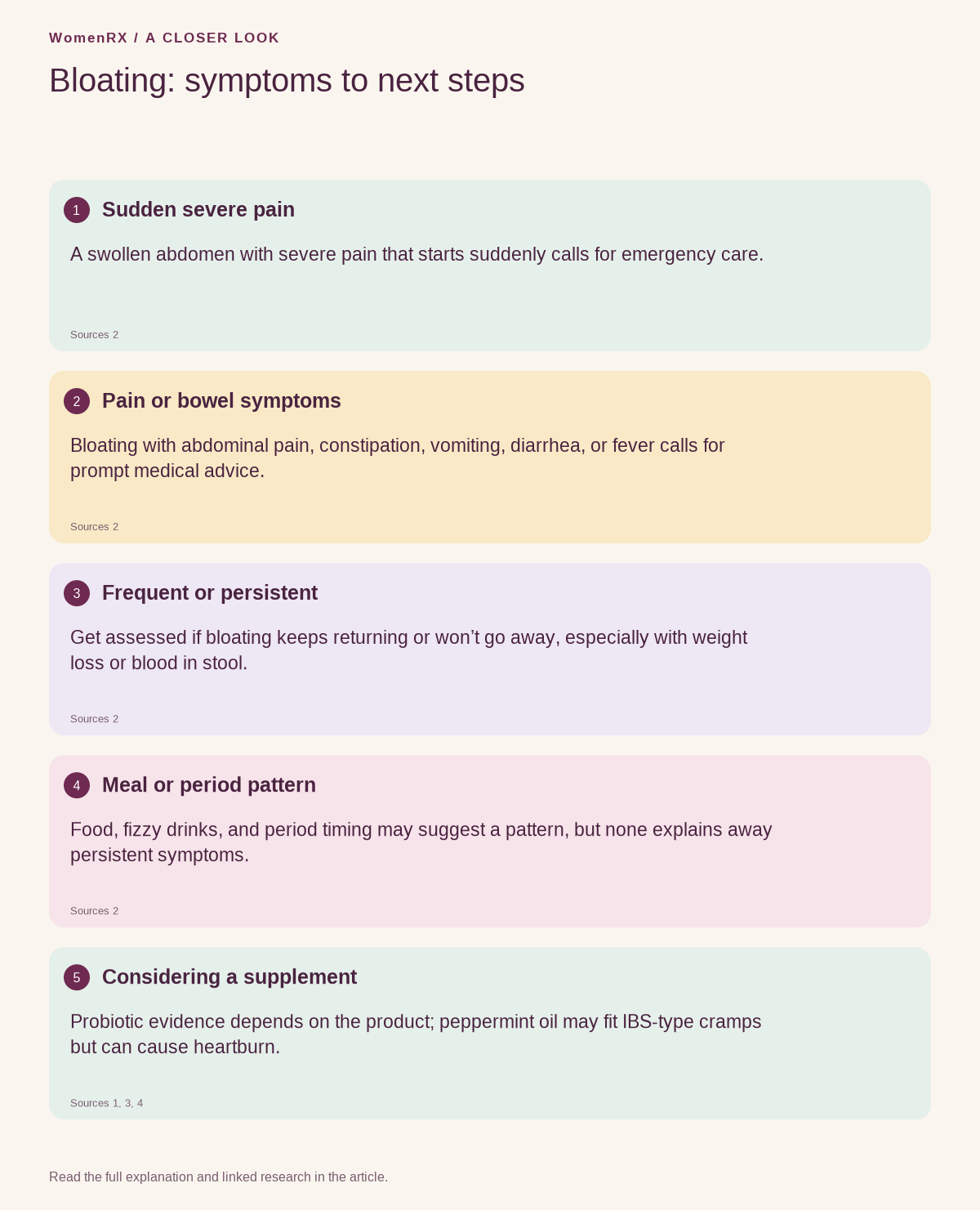
Bloating: symptoms to next steps
Sudden severe pain: A swollen abdomen with severe pain that starts suddenly calls for emergency care.2
Pain or bowel symptoms: Bloating with abdominal pain, constipation, vomiting, diarrhea, or fever calls for prompt medical advice.2
Frequent or persistent: Get assessed if bloating keeps returning or won’t go away, especially with weight loss or blood in stool.2
Meal or period pattern: Food, fizzy drinks, and period timing may suggest a pattern, but none explains away persistent symptoms.2
Considering a supplement: Probiotic evidence depends on the product; peppermint oil may fit IBS-type cramps but can cause heartburn.134
Read the figure as text
Check for symptoms that change the urgency first. Only then use meal, period, or bowel patterns to shape a supplement question.- Sudden severe pain: A swollen abdomen with severe pain that starts suddenly calls for emergency care.2
- Pain or bowel symptoms: Bloating with abdominal pain, constipation, vomiting, diarrhea, or fever calls for prompt medical advice.2
- Frequent or persistent: Get assessed if bloating keeps returning or won’t go away, especially with weight loss or blood in stool.2
- Meal or period pattern: Food, fizzy drinks, and period timing may suggest a pattern, but none explains away persistent symptoms.2
- Considering a supplement: Probiotic evidence depends on the product; peppermint oil may fit IBS-type cramps but can cause heartburn.134
Sources you can check
- Probiotics - Health Professional Fact SheetAccessed 2026-09-25Return to first citation
- Bloating - NHSAccessed 2026-09-25Return to first citation
- About peppermint oil - NHSAccessed 2026-09-25Return to first citation
- A Randomized, Placebo-Controlled Trial Evaluating Multi-Species Synbiotic Supplementation for Bloating, Gas, and Abdominal Discomfort.Allegretti JR, Kassam Z, Kelly CR, Grinspan A, El-Nachef N, Van Den Elzen C, Jäger R, Feuerstadt P. · Nutrients · 2026Return to first citation
- European Consensus on Functional Bloating and Abdominal Distension-An ESNM/UEG Recommendations for Clinical Management.Melchior C, Hammer H, Bor S, Barba E, Horvat IB, Celebi A, Drug V, Dumitrascu D, Kalkan IH, Hauser G, Lionis C, Livovsky D, Mari A, Mulak A, Surdea-Blaga T, Tack J, Vanuytsel T, Sa... · United European gastroenterology journal · 2025Return to first citation