Bloating Around Menopause: What to Watch For
Bloating often has a digestive explanation, but a new pattern that persists or worsens deserves an evaluation.
Bloating during perimenopause isn’t necessarily caused by changing hormones. Gas, foods and drinks, swallowed air, constipation, and IBS can all play a part. Notice whether it settles, follows a bowel pattern, or keeps returning. Arrange an evaluation if it persists or worsens, especially with pelvic or abdominal pain or feeling full quickly. 1 2 4
First, notice what kind of bloating you mean
Bloating can feel like an uncomfortably full belly, sometimes with more gas. Gas in the gut is a common reason. Foods or fizzy drinks, swallowing air while eating, and irritable bowel syndrome (IBS) are among the possible contributors. Constipation can occur alongside bloating, too. These possibilities are useful to consider, but none can be confirmed just by how bloating feels. 1 5
If an episode is mild and settles, pay attention to what happens around it. For example, does it follow a fizzy drink, or occur alongside constipation? If you still have periods, does it recur around the same point in your cycle? Some people feel bloated around their period. A short note of when symptoms start and ease, meals or drinks that seem relevant, bowel changes, pain, and whether you’re getting full unusually quickly can help you see whether a pattern is settling or becoming more frequent. 1
You don’t need to eliminate a long list of foods on the strength of one episode. If you suspect a particular food, look for a repeated connection. Regular movement may help digestion, and chewing with your mouth closed can reduce swallowed air. 1
Where menopause fits, and where it doesn’t
Digestive symptoms have been reported during perimenopause, and researchers have explored whether changes in ovarian hormones contribute. That connection is not settled. A review of research on gastrointestinal symptoms in natural perimenopause and postmenopause found gaps in how studies identified menopause stages and measured symptoms. An earlier review suggested a possible hormone-related contribution, while calling for more research to confirm it. 3 4
So it’s reasonable to note a cycle-related pattern during perimenopause, but not to assume that new or worsening bloating is simply hormonal. After menopause, a new persistent pattern also deserves attention rather than a menopause label. The useful question at either stage is whether the bloating goes away or is becoming persistent or progressive. 1 2
When the pattern changes your next step
Arrange an evaluation if you’re often bloated, it doesn’t go away, or it’s getting worse. Mention persistent pelvic or abdominal pain, difficulty eating, or feeling full quickly if these are happening too. Persistent or progressive symptoms like these should be assessed; they do not, on their own, point to a particular diagnosis. Also arrange care for bloating with unintentional weight loss or blood in your stool. 1 2
Seek prompt medical advice rather than continuing to monitor if bloating comes with vomiting, diarrhea or constipation, stomach pain, or fever. 1
Get emergency care for a swollen abdomen with severe pain that begins suddenly, vomiting blood or material that looks like coffee grounds, or severe difficulty breathing. 1
Most bloating is not a sign of ovarian cancer. Still, evaluating persistent or progressive bloating matters because a clinician may need to consider causes beyond the bowel, including ovarian disease. An evaluation starts with the symptoms and an examination; further testing depends on what those reveal. 1 2
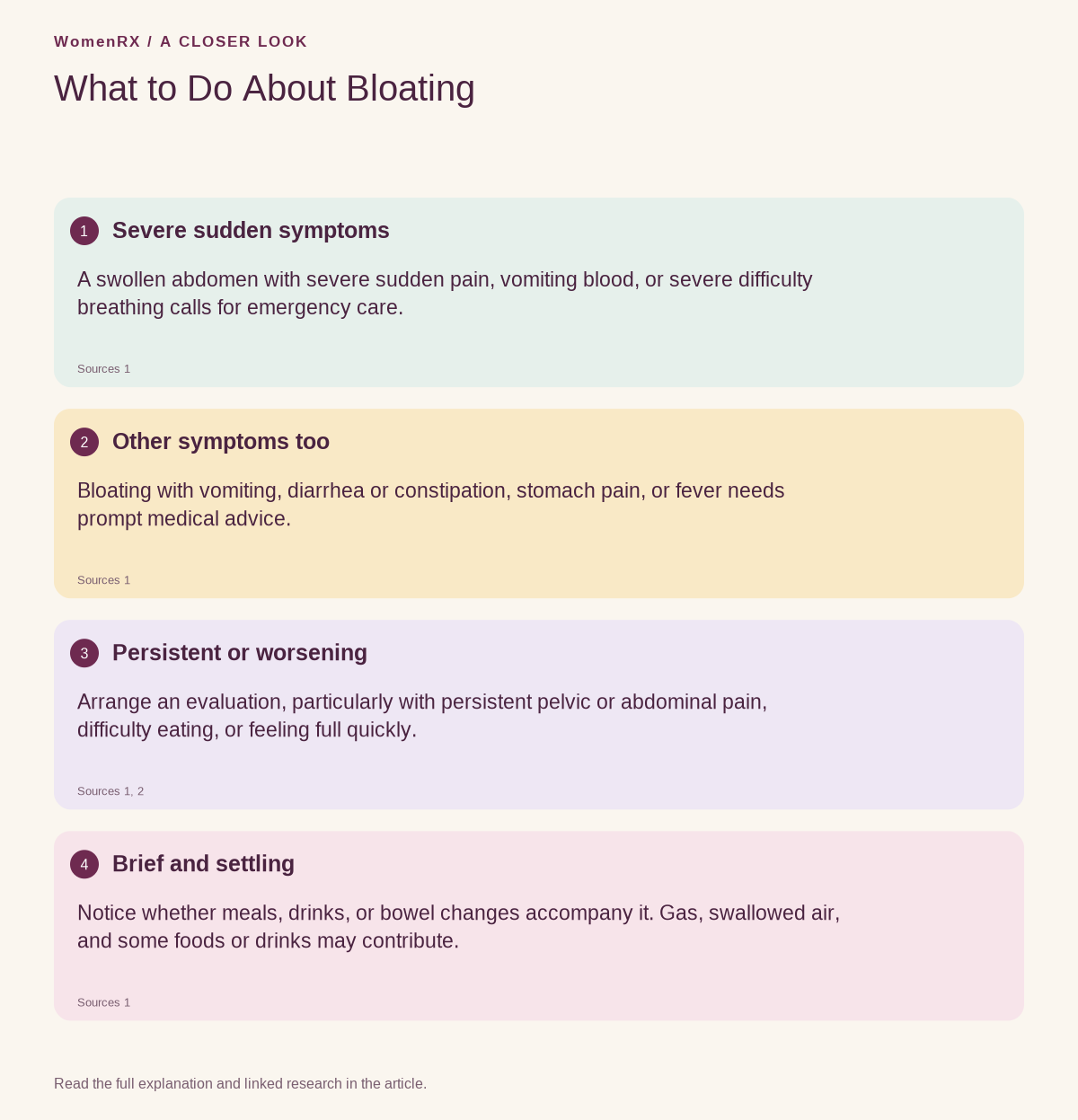
What to Do About Bloating
Severe sudden symptoms: A swollen abdomen with severe sudden pain, vomiting blood, or severe difficulty breathing calls for emergency care.1
Other symptoms too: Bloating with vomiting, diarrhea or constipation, stomach pain, or fever needs prompt medical advice.1
Persistent or worsening: Arrange an evaluation, particularly with persistent pelvic or abdominal pain, difficulty eating, or feeling full quickly.12
Brief and settling: Notice whether meals, drinks, or bowel changes accompany it. Gas, swallowed air, and some foods or drinks may contribute.1
Read the figure as text
Check for severe accompanying symptoms first, then consider whether the bloating is settling or becoming persistent.- Severe sudden symptoms: A swollen abdomen with severe sudden pain, vomiting blood, or severe difficulty breathing calls for emergency care.1
- Other symptoms too: Bloating with vomiting, diarrhea or constipation, stomach pain, or fever needs prompt medical advice.1
- Persistent or worsening: Arrange an evaluation, particularly with persistent pelvic or abdominal pain, difficulty eating, or feeling full quickly.12
- Brief and settling: Notice whether meals, drinks, or bowel changes accompany it. Gas, swallowed air, and some foods or drinks may contribute.1
Sources you can check
- Bloating - NHSAccessed 2026-09-25Return to first citation
- Committee Opinion No. 477: the role of the obstetrician-gynecologist in the early detection of epithelial ovarian cancer.Obstetrics and gynecology · 2011Return to first citation
- The volume and characteristics of research on gastrointestinal symptoms in 'natural' peri- and postmenopause: A scoping review.Shaw N, Abbott R, Pettinger C. · Women's health (London, England) · 2025Return to first citation
- Do fluctuations in ovarian hormones affect gastrointestinal symptoms in women with irritable bowel syndrome?Heitkemper MM, Chang L. · Gender medicine · 2009Return to first citation
- Irritable Bowel Syndrome with Constipation: Diagnosis and Multisymptom Management Beyond Abdominal Pain and Bowel Movement Frequency: A Review.Shah ED, Sharma A, Curren N, Laitman AP, Staller K. · Advances in therapy · 2026Return to first citation