Bloating: Which Changes Need Medical Assessment?
A brief episode that settles is different from bloating that keeps returning, worsens, or comes with other symptoms.
Bloating is common and can have many causes; by itself, it does not mean ovarian cancer. Arrange an assessment if it keeps returning or does not go away, especially if it is frequent or worsening. Bloating with certain symptoms, including vomiting, fever, abdominal pain, or being unable to pass urine, stool, or gas, needs urgent medical attention. 2 3
Look at the pattern, not just one episode
Bloating can feel like fullness or discomfort, or make your abdomen feel or look bigger. It’s common, and some people notice it around their period. A single episode that settles is different from a change that keeps returning or does not go away. 3
Ovarian cancer is one possible cause of persistent bloating, but bloating alone is not a diagnosis. The symptoms linked with ovarian cancer are common and can have many other causes. 1 2
When to arrange an assessment
Make an appointment if you’re often bloated or the bloating does not go away. Ovarian cancer symptom guidance describes frequent bloating or a swollen-feeling abdomen, and needing to pee urgently or more often, as symptoms that occur roughly 12 or more times a month. That frequency describes those symptoms, not indigestion. Indigestion is also listed as a possible symptom, but without the same frequency figure. These patterns are reasons to get assessed, not a test for cancer. 2 3
Get back in touch if symptoms continue after an earlier visit, worsen, or happen more often. Also mention bloating accompanied by unintended weight loss or blood in your stool. 2 3
Your history can help shape the assessment. Tell the clinician if a family member has had ovarian or breast cancer. Older age, family history of breast or ovarian cancer, and endometriosis are among the risk factors described in a review; none of them, on its own, explains what is causing your symptoms. 2 4
A new or persistent pattern shouldn’t automatically be attributed to menopause. Bloating has many possible causes, and an assessment can help sort through them. 2 3
When bloating needs urgent attention
Seek urgent medical assessment if bloating comes with vomiting; diarrhea or constipation; abdominal pain; a fever; a lump or swelling in your abdomen; acid reflux; or if you cannot pee, have a bowel movement, or pass gas. These combinations call for more than simply watching to see whether the bloating passes. 3
Get emergency help if you have a swollen abdomen with sudden, severe abdominal pain, vomit blood or material that looks like coffee grounds, or have severe difficulty breathing. 3
What an initial evaluation may involve
A clinician may ask when the bloating started, how often it happens, whether it is changing, and what else you’ve noticed. They may ask about your family history and examine you. Depending on your symptoms and findings, evaluation may include a blood test for CA125, a protein sometimes linked to ovarian cancer, and an ultrasound of the abdomen and pelvis. A raised CA125 can lead to ultrasound; neither a symptom nor a test result alone establishes a diagnosis. 2 4
For a brief episode that settles and has no urgent accompanying symptoms, it’s reasonable to see whether it returns. If it does, persists, or worsens, arrange an assessment rather than assuming it’s part of menopause. 2 3
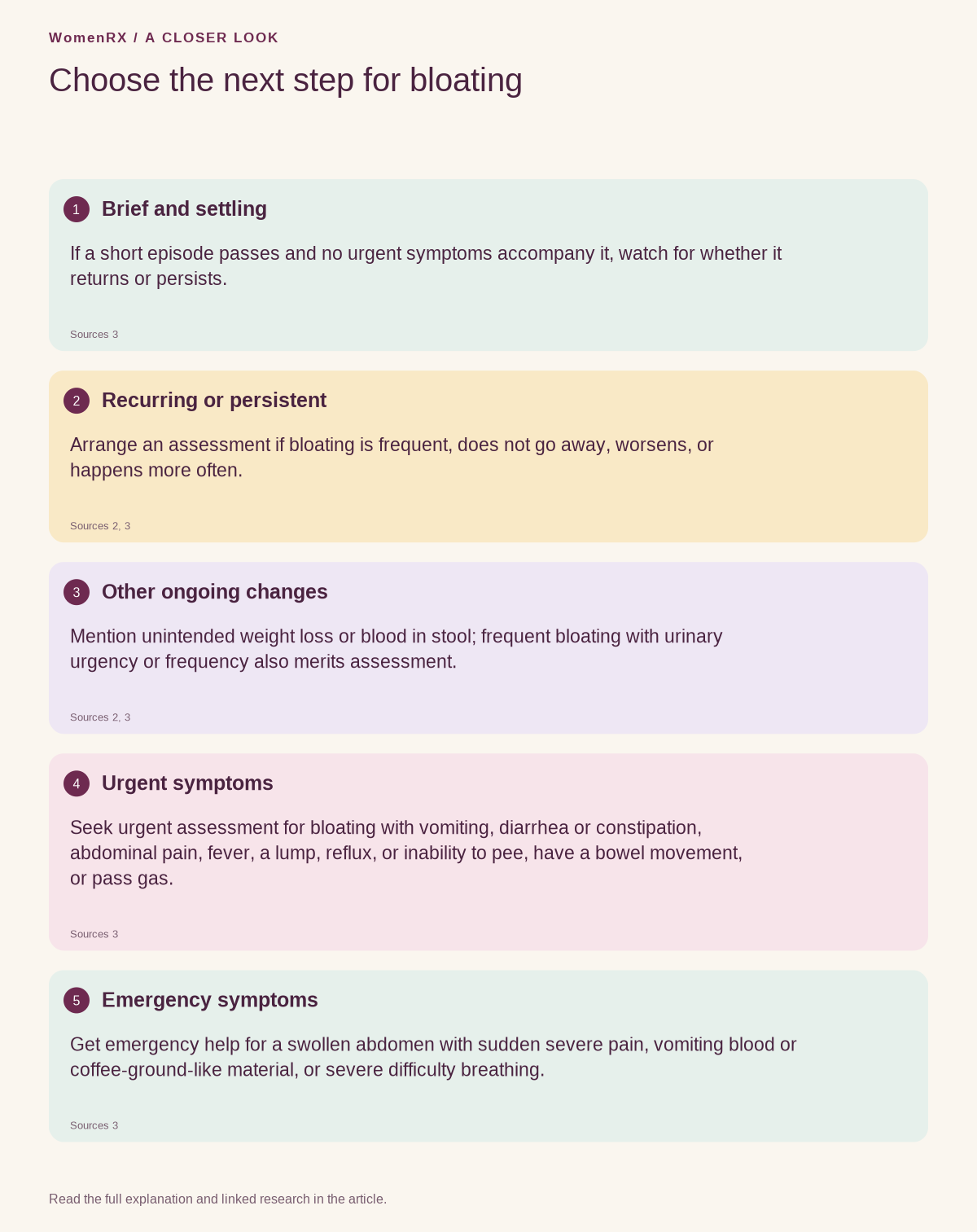
Choose the next step for bloating
Brief and settling: If a short episode passes and no urgent symptoms accompany it, watch for whether it returns or persists.3
Recurring or persistent: Arrange an assessment if bloating is frequent, does not go away, worsens, or happens more often.23
Other ongoing changes: Mention unintended weight loss or blood in stool; frequent bloating with urinary urgency or frequency also merits assessment.23
Urgent symptoms: Seek urgent assessment for bloating with vomiting, diarrhea or constipation, abdominal pain, fever, a lump, reflux, or inability to pee, have a bowel movement, or pass gas.3
Emergency symptoms: Get emergency help for a swollen abdomen with sudden severe pain, vomiting blood or coffee-ground-like material, or severe difficulty breathing.3
Read the figure as text
Use how long the bloating lasts, whether it returns or worsens, and any accompanying symptoms to decide what kind of care to seek.- Brief and settling: If a short episode passes and no urgent symptoms accompany it, watch for whether it returns or persists.3
- Recurring or persistent: Arrange an assessment if bloating is frequent, does not go away, worsens, or happens more often.23
- Other ongoing changes: Mention unintended weight loss or blood in stool; frequent bloating with urinary urgency or frequency also merits assessment.23
- Urgent symptoms: Seek urgent assessment for bloating with vomiting, diarrhea or constipation, abdominal pain, fever, a lump, reflux, or inability to pee, have a bowel movement, or pass gas.3
- Emergency symptoms: Get emergency help for a swollen abdomen with sudden severe pain, vomiting blood or coffee-ground-like material, or severe difficulty breathing.3
More questions, answered
Does bloating by itself mean ovarian cancer?
No. Bloating is common and can have many causes. What matters is whether it persists or happens frequently, whether it is worsening, and whether other symptoms are present. 2 3
What family history should I mention?
Tell the clinician if anyone in your family has had ovarian or breast cancer. A review also lists older age and endometriosis among ovarian cancer risk factors, which can help put symptoms in context. 2 4
Sources you can check
- Ovarian cancer - NHSAccessed 2026-09-25Return to first citation
- Ovarian cancer - Symptoms - NHSAccessed 2026-09-25Return to first citation
- Bloating - NHSAccessed 2026-09-25Return to first citation
- Ovarian Cancer: A Review.Caruso G, Weroha SJ, Cliby W. · JAMA · 2025Return to first citation