Why You Might Feel Bloated in Midlife
Gas, bowel changes, and period timing can all offer clues, but bloating that persists deserves attention.
Bloating may feel like fullness, look like visible abdominal swelling, or involve both. Gas, certain foods and drinks, swallowed air, and changes in bowel habits are worth considering. Some people also notice bloating around their period. Midlife timing alone doesn’t establish a menopause cause. If bloating is frequent, doesn’t go away, or is getting worse, seek medical assessment. 1 2 3
Is it a feeling, visible swelling, or both?
You can feel uncomfortably full even when your abdomen looks the same. At other times, your abdomen may visibly swell. Clinical descriptions distinguish the sensation of bloating from visible distension, though the two can occur together. 2
That distinction won’t tell you the cause on its own. It can, however, make a change easier to describe: Is the fullness coming and going, or is your abdomen staying swollen? Is this a familiar pattern or something new?
Start with the everyday possibilities
Gut gas is the most common reason for bloating. Some foods and fizzy drinks can contribute to gas, and swallowing air while eating can add to the feeling. Constipation is another bowel change worth noticing when you’re bloated. If a food reliably brings on symptoms, food intolerance may also be relevant. 1
Rather than cutting out several foods at once, look for a repeatable connection. For example, does bloating follow fizzy drinks, or does it occur on days when you’re constipated? Eating without swallowing as much air and regular movement are simple measures that may ease bloating. If you know you’re intolerant to a food, avoiding it may help. 1
Bloating alongside abdominal pain and a change in bowel habits may point toward a gastrointestinal issue that needs a closer look, rather than a single food or hormone explanation. Irritable bowel syndrome, for example, involves abdominal pain and altered bowel habits, but those symptoms alone aren’t a diagnosis. 3
Where periods and menopause fit
Some people feel bloated around the time of their period. If you still have periods, notice whether the same pattern appears around them or whether bloating seems more closely tied to meals or constipation. A pattern is a clue, not proof of a cause. 1
Research on gastrointestinal symptoms across perimenopause and postmenopause has produced mixed findings overall. One study cited in a 2025 scoping review found no significant difference in bloating across menopausal stages. The review also found that studies often differed in how they defined those stages and assessed symptoms. That leaves the role of menopause in bloating uncertain. 3 Changing ovarian hormones have been proposed as one possible influence on gut symptoms, but that explanation still needs stronger confirmation. 4
If your periods have stopped, a new bloating pattern shouldn’t automatically be filed under menopause. Gastrointestinal causes can still matter, and persistent bloating can sometimes be a sign of a more serious condition, including ovarian cancer. 1
When the pattern calls for care
Seek medical assessment if you’re often bloated, it doesn’t go away, or it’s getting worse. Make a point of getting assessed if bloating comes with unintentional weight loss or blood in your stool. 1
Bloating with vomiting, a stomach ache, fever, diarrhea, or constipation also calls for prompt medical advice, particularly when these symptoms are new or significant. If your abdomen is swollen and you develop severe pain that comes on suddenly, seek emergency care. 1
When you describe what’s happening, focus on what has changed: fullness or visible swelling, when it started, whether it comes and goes, and any bowel changes or pain. Those details are more useful than trying to decide for yourself whether the cause is hormonal.
Four clues to describe your bloating
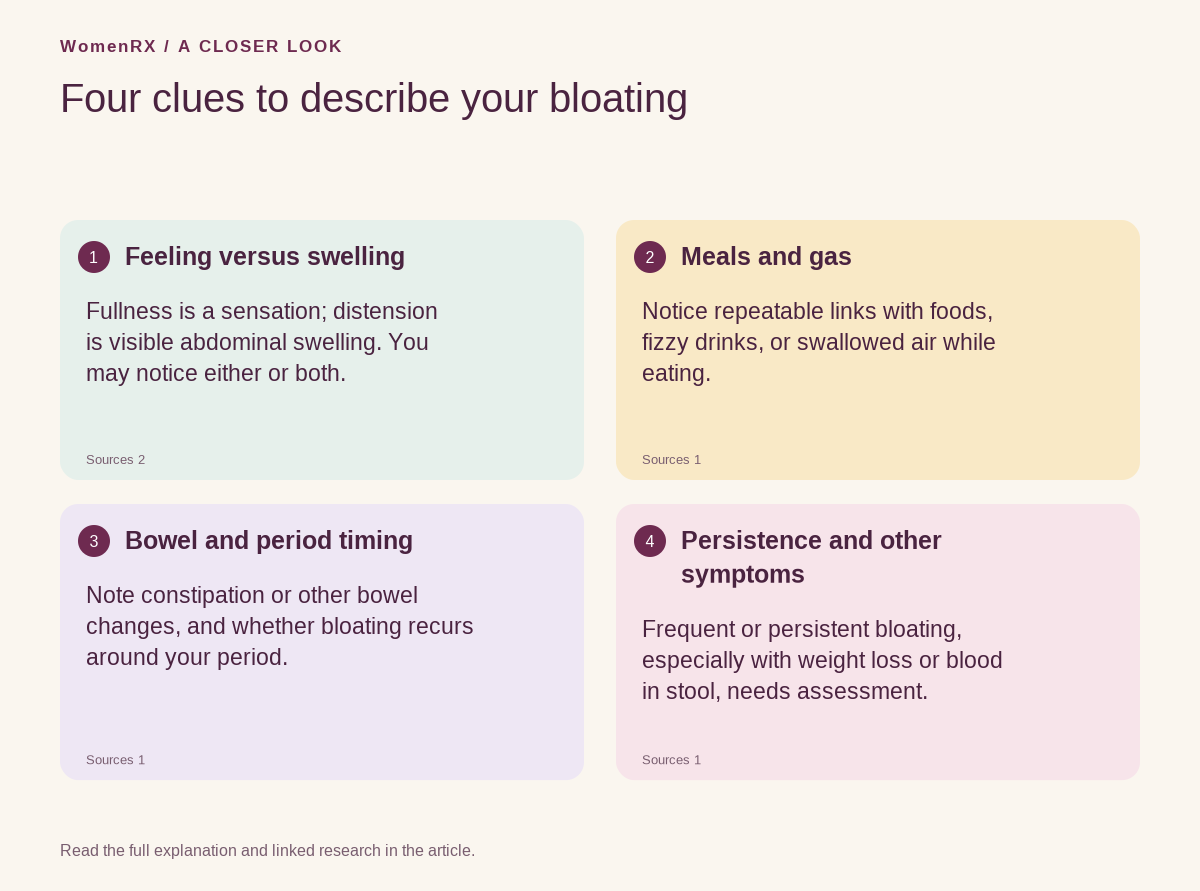
Feeling versus swelling: Fullness is a sensation; distension is visible abdominal swelling. You may notice either or both.2
Meals and gas: Notice repeatable links with foods, fizzy drinks, or swallowed air while eating.1
Bowel and period timing: Note constipation or other bowel changes, and whether bloating recurs around your period.1
Persistence and other symptoms: Frequent or persistent bloating, especially with weight loss or blood in stool, needs assessment.1
Read the figure as text
These distinctions help describe a symptom pattern. None identifies the cause by itself.- Feeling versus swelling: Fullness is a sensation; distension is visible abdominal swelling. You may notice either or both.2
- Meals and gas: Notice repeatable links with foods, fizzy drinks, or swallowed air while eating.1
- Bowel and period timing: Note constipation or other bowel changes, and whether bloating recurs around your period.1
- Persistence and other symptoms: Frequent or persistent bloating, especially with weight loss or blood in stool, needs assessment.1
Sources you can check
- Bloating - NHSAccessed 2026-09-25Return to first citation
- The clinical significance of gut microbiota of chronic obstructive pulmonary disease with functional abdominal bloating and distension.Lu X, Dai H, Gu X, Xie J, Zhong X, Dong X, Su B, Su J, Wang L, Sun T, Geng L. · PeerJ · 2025Return to first citation
- The volume and characteristics of research on gastrointestinal symptoms in 'natural' peri- and postmenopause: A scoping review.Shaw N, Abbott R, Pettinger C. · Women's health (London, England) · 2025Return to first citation
- Do fluctuations in ovarian hormones affect gastrointestinal symptoms in women with irritable bowel syndrome?Heitkemper MM, Chang L. · Gender medicine · 2009Return to first citation