Can Semaglutide Make You Feel Bloated?
Semaglutide can be linked with digestive symptoms that feel like bloating, but fullness, gas, indigestion, and constipation are different clues.
Yes. Semaglutide has been associated with abdominal distension, gas, indigestion, and constipation, which can overlap with a feeling of bloating. 3 4 The reported rates for oral semaglutide tablets shouldn’t be treated as your personal odds with Ozempic injections. Note when symptoms began, any recent dose change, and whether your bowel habits changed. Get medical advice for severe or persistent symptoms. 2
Bloating is a sensation, not a diagnosis
Bloating usually means your abdomen feels full or uncomfortable, sometimes with visible enlargement. 1 That sensation can overlap with gas, indigestion, or constipation, but it doesn’t tell you which one is responsible.
Semaglutide is associated with gastrointestinal side effects. The US prescribing information for semaglutide tablets lists abdominal distension, flatulence (gas), and dyspepsia (indigestion). 3 Constipation is also among the gastrointestinal effects reported in a review of trials of semaglutide for weight reduction. 4 These effects can feel different: distension is a sense of swelling or enlargement, gas may feel like pressure or bring burping, and indigestion can feel like discomfort after eating.
Semaglutide can delay stomach emptying, which may contribute to a feeling of fullness. That offers a possible explanation for some digestive discomfort, not proof that the medicine caused your particular symptoms. 4 Also, the adverse-event rates in the tablet prescribing information are for semaglutide tablets. They shouldn’t be used to estimate your personal risk with Ozempic injections. 3
Look for timing and bowel changes
Notice whether symptoms appeared after starting semaglutide or around a dose increase. In trials of oral semaglutide, most reports of nausea, vomiting, and diarrhea occurred during dose escalation. That timing may be useful context, but it doesn’t establish that bloating follows the same pattern. 3
Bowel changes can add another clue. Note whether you’re having bowel movements less often or they’re harder than usual; constipation is a reported semaglutide gastrointestinal effect. 4 You can also describe whether the main problem is uncomfortable fullness, visible swelling, gas, or discomfort after eating. These distinctions are more useful than recording only “bloating.”
If the sensation comes and goes around your period, that timing may matter too. Some people experience bloating around menstruation, so a cycle-related pattern doesn’t necessarily point to semaglutide. 1
When abdominal symptoms need attention
Contact your prescriber if gastrointestinal symptoms are severe or persistent. Wegovy’s US prescribing information gives this advice for severe or persistent gastrointestinal symptoms. 2 Persistent or severe abdominal pain, sometimes spreading to the back and sometimes accompanied by nausea or vomiting, can be a sign of acute pancreatitis and needs prompt medical assessment. Don’t write off that kind of pain as ordinary bloating. 2
Repeated vomiting or diarrhea can also contribute to dehydration. The oral semaglutide prescribing information describes postmarketing kidney-injury reports, most of which occurred in people whose gastrointestinal symptoms led to dehydration. 3 If symptoms are continuing or worsening, contact your prescriber rather than assuming they’re just a temporary change in digestion.
A quick symptom snapshot
Before contacting your prescriber, note when symptoms began, whether a dose change came first, what the discomfort feels like, and whether your bowel habits changed. Include any severe or persistent pain, vomiting, or diarrhea. This isn’t a way to diagnose the cause; it helps make the pattern clearer.
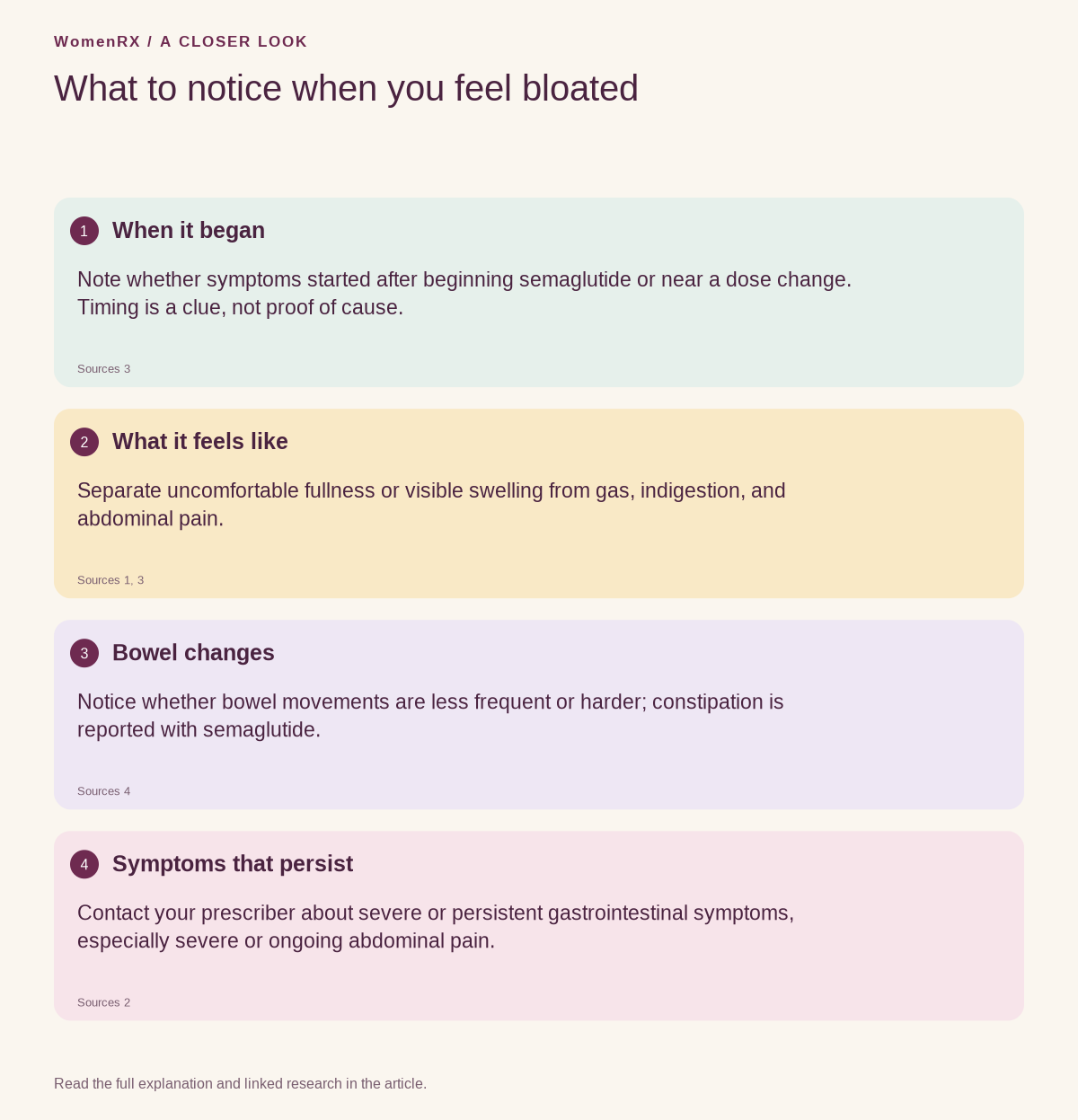
What to notice when you feel bloated
When it began: Note whether symptoms started after beginning semaglutide or near a dose change. Timing is a clue, not proof of cause.3
What it feels like: Separate uncomfortable fullness or visible swelling from gas, indigestion, and abdominal pain.13
Bowel changes: Notice whether bowel movements are less frequent or harder; constipation is reported with semaglutide.4
Symptoms that persist: Contact your prescriber about severe or persistent gastrointestinal symptoms, especially severe or ongoing abdominal pain.2
Read the figure as text
These observations can help you describe the pattern and distinguish overlapping digestive symptoms from symptoms that need prompt assessment.- When it began: Note whether symptoms started after beginning semaglutide or near a dose change. Timing is a clue, not proof of cause.3
- What it feels like: Separate uncomfortable fullness or visible swelling from gas, indigestion, and abdominal pain.13
- Bowel changes: Notice whether bowel movements are less frequent or harder; constipation is reported with semaglutide.4
- Symptoms that persist: Contact your prescriber about severe or persistent gastrointestinal symptoms, especially severe or ongoing abdominal pain.2
Sources you can check
- Bloating - NHSAccessed 2026-09-25Return to first citation
- WEGOVY (SEMAGLUTIDE) INJECTION, SOLUTION WEGOVY (SEMAGLUTIDE) TABLET [NOVO NORDISK PHARMACEUTICAL INDUSTRIES, LP] | US prescribing information and patient instructionsAccessed 2026-09-25Return to first citation
- OZEMPIC (ORAL SEMAGLUTIDE) TABLET RYBELSUS (ORAL SEMAGLUTIDE) TABLET [NOVO NORDISK PHARMACEUTICAL INDUSTRIES, LP] | US prescribing information and patient instructionsAccessed 2026-09-25Return to first citation
- Effectiveness & safety of semaglutide in weight reduction in obese nondiabetic patients: A systematic review and meta-analysis.Naz F, Qaiser F, Mumtaz A, Din SU, Mustafa A, Ullah A, Perveen A, Malik J. · Medicine · 2026Return to first citation