What to Check Before Taking Chromium
Chromium supplements aren’t established routine diabetes care, and they can matter if you take certain medicines.
Before taking chromium, pin down what you hope it will do, check the amount of elemental chromium on the label, and review it with your medicines and health conditions in mind. Evidence doesn’t support routine chromium use to manage blood sugar, and it may affect insulin or other diabetes medicines and levothyroxine. Pregnancy and breastfeeding intake references don’t establish that extra supplements are safe. 1
Chromium is found in a range of foods, but that alone doesn’t tell you whether a supplement is useful for a particular goal. Before starting one, separate a possible need to meet nutritional requirements from a hoped-for treatment effect, then check how the product fits with your medicines and health situation.
Start with the reason you’re considering it
In U.S. nutrition references, chromium has an Adequate Intake (AI), not a Recommended Dietary Allowance. The AI was set because there wasn’t enough evidence to establish an Estimated Average Requirement. It’s a reference for usual intake, not a test result or a diagnosis of deficiency. Researchers also continue to debate how essential chromium is and whether a clear deficiency can be identified in people. 1 2
That distinction matters: a nutrient reference value doesn’t show that taking more will improve a health outcome. Research on chromium supplements for blood sugar has produced mixed results. A review of eight meta-analyses and systematic reviews covering 58 clinical trials found small average reductions in fasting glucose and HbA1c when chromium was used alongside other treatment in people with diabetes, but the clinical importance was unclear. The evidence isn’t strong enough to support routine chromium supplementation for diabetes. 1
If your goal is to manage diabetes, don’t treat chromium as a replacement for your established care. If you’re considering it for another specific reason, such as PCOS, the evidence is also mixed and doesn’t establish a dependable benefit. 1
Check the actual amount on the label
Many multivitamins contain chromium, while standalone products commonly provide more. The NIH Office of Dietary Supplements reports that standalone supplements often contain 200 to 500 micrograms, with some products providing up to 1,000 micrograms. The label’s Supplement Facts panel lists elemental chromium, not the weight of the entire chromium compound. Check that amount and whether chromium is also included in a multivitamin or another product you take. 1
There’s no established upper intake limit for chromium. That isn’t proof that any amount is safe: the evidence on high intakes is limited, and the National Academies’ expert committee advised caution. People with kidney or liver disease may be more vulnerable to adverse effects from high intakes. Isolated case reports have described problems including low blood sugar, kidney or liver injury, anemia, and skin reactions; case reports can raise a safety signal but can’t tell you how often a problem happens or prove the supplement caused it. 1
Review these medicine interactions
Bring the product label, including the amount of chromium per serving, when you review it with the clinician or pharmacist who manages your medicines. Focus especially on:
- Insulin, metformin, or other diabetes medicines: Chromium might add to blood-sugar-lowering effects and increase the risk of hypoglycemia, or low blood sugar. Don’t change a prescribed medicine to make room for a supplement. 1
- Levothyroxine: A small study found that taking chromium picolinate at the same time reduced levothyroxine absorption over six hours. Ask the prescriber or pharmacist how to handle the combination rather than guessing at a timing change. 1
- Kidney or liver disease: High chromium intake may pose more risk for people with these conditions, so include them in the review. 1
Also mention any other regular medicines and supplements. The point isn’t that chromium interacts with every treatment, but that these specific checks can change whether a product is a sensible choice.
Pregnancy and breastfeeding call for a different check
The U.S. reference values for chromium intake differ during pregnancy and breastfeeding. Those intake references describe amounts used for nutrition planning; they do not establish that taking an extra chromium supplement is safe or beneficial at these stages. If you’re pregnant, trying to conceive, or breastfeeding, review the specific product with your maternity care team before adding it. 1
A useful bottom line: decide what outcome you expect, check the elemental chromium amount and overlap with other products, then review the exact label against your medicines and health conditions. If the goal is blood sugar management, current evidence doesn’t make chromium a proven substitute for treatments with established benefits. 1
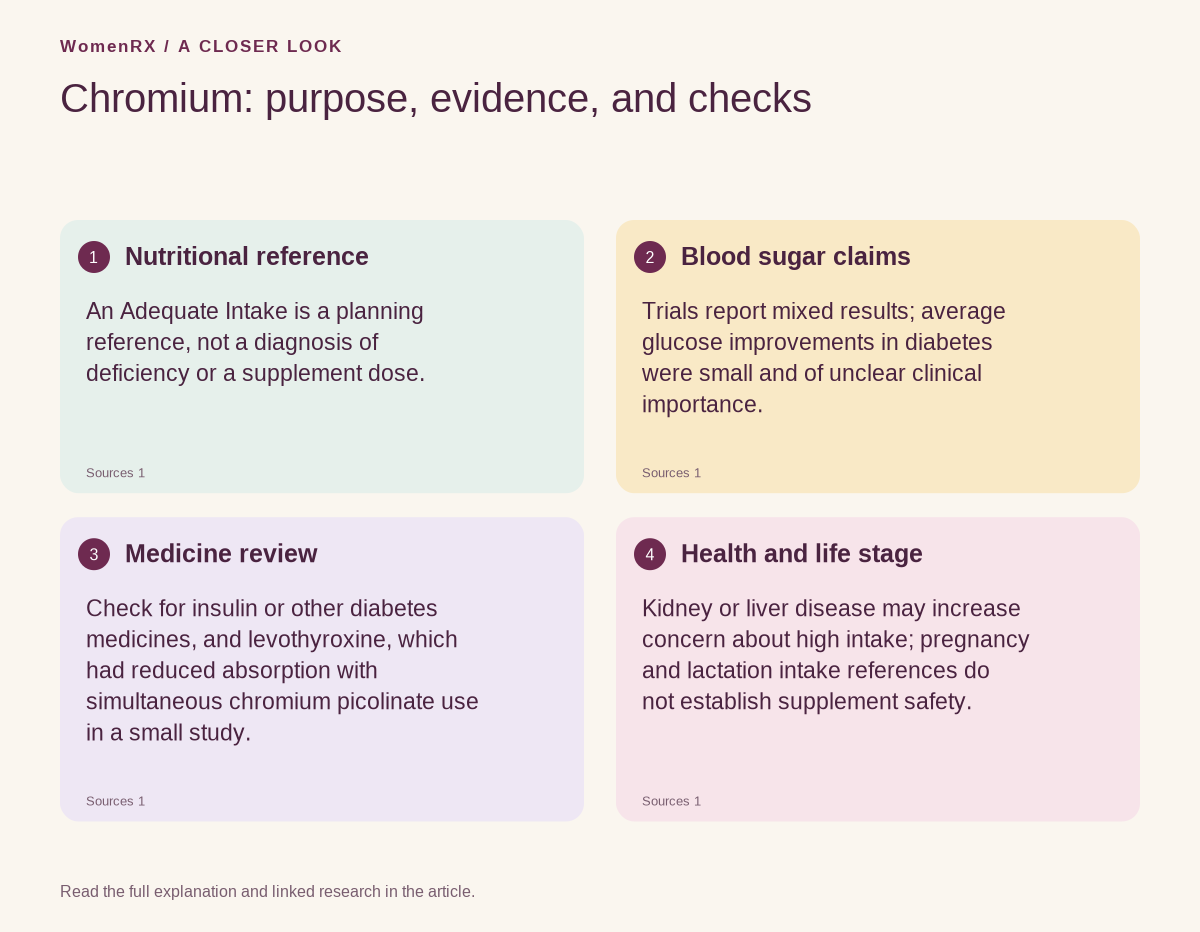
Chromium: purpose, evidence, and checks
Nutritional reference: An Adequate Intake is a planning reference, not a diagnosis of deficiency or a supplement dose.1
Blood sugar claims: Trials report mixed results; average glucose improvements in diabetes were small and of unclear clinical importance.1
Medicine review: Check for insulin or other diabetes medicines, and levothyroxine, which had reduced absorption with simultaneous chromium picolinate use in a small study.1
Health and life stage: Kidney or liver disease may increase concern about high intake; pregnancy and lactation intake references do not establish supplement safety.1
Read the figure as text
Separate nutritional reference values from supplement claims, then identify the checks that may affect a decision.- Nutritional reference: An Adequate Intake is a planning reference, not a diagnosis of deficiency or a supplement dose.1
- Blood sugar claims: Trials report mixed results; average glucose improvements in diabetes were small and of unclear clinical importance.1
- Medicine review: Check for insulin or other diabetes medicines, and levothyroxine, which had reduced absorption with simultaneous chromium picolinate use in a small study.1
- Health and life stage: Kidney or liver disease may increase concern about high intake; pregnancy and lactation intake references do not establish supplement safety.1
More questions, answered
Does chromium picolinate work better than other forms?
The NIH Office of Dietary Supplements reports that absorption across commonly used chromium forms is broadly similar. The form on the label doesn’t establish that a product will improve blood sugar. 1
Does having no upper limit mean chromium is safe at any dose?
No. An upper intake limit wasn’t set because evidence was insufficient to link high intakes with adverse effects, not because every amount has been shown safe. The expert committee advised caution, particularly for people with kidney or liver disease. 1
Sources you can check
- Chromium - Health Professional Fact SheetAccessed 2026-09-25Return to first citation
- Chromium Supplementation in Human Health, Metabolic Syndrome, and Diabetes.Maret W. · Metal ions in life sciences · 2019Return to first citation