Chromium Supplements: What to Check Before Long-Term Use
Before continuing chromium, check the form and elemental amount on the label, why you take it, and whether it could affect a medicine or health condition.
A missing upper limit for chromium isn’t proof that every dose is safe for years. Human long-term safety is uncertain, and reported harms come from isolated cases. Check the product’s form and labeled elemental chromium, then review the reason for use, your health conditions, and medicines. Diabetes drugs and levothyroxine raise specific questions. 1 2

Start with the label, not just the word “chromium”
Chromium supplements come in forms such as picolinate, chloride, and nicotinate. The Supplement Facts panel lists the amount of elemental chromium, not the total weight of the compound. Standalone products commonly contain 200 to 500 micrograms, and some contain up to 1,000 micrograms; multivitamins often contain less. If you take more than one supplement, check each label. 1
The form and amount are useful details for a medicine or supplement review. They don’t, by themselves, establish that one product is safer for long-term use than another. Chromium’s different forms have been studied, but long-term human safety remains uncertain. 1 2
No established upper limit is not a safety guarantee
The Food and Nutrition Board did not set a tolerable upper intake level for chromium because it had not linked high intakes to adverse effects. The same assessment cautioned that the data were limited and high intakes could cause harm. So, “no upper limit” means there wasn’t enough basis to set one, not that any amount has been shown safe. 1
A 2014 review reported that it found no studies of long-term chromium safety in people and that clinical trials had relatively short follow-up. That finding reflects what the review identified at that time; it doesn’t prove that no later or unreviewed study exists. The practical point is that the cited research does not provide assurance about years of use. 2
The NIH Office of Dietary Supplements describes isolated case reports involving problems such as low blood sugar, kidney failure, liver dysfunction, anemia, and muscle injury. Case reports can raise a safety concern, but they can’t tell us how often a problem occurs or establish that chromium caused it. The Food and Nutrition Board also cautioned that people with kidney or liver disease might be more susceptible to adverse effects from high intake. 1
Consider what you’re taking it for
If your reason is blood sugar, don’t assume chromium provides a dependable benefit. Studies of glucose control have had inconsistent findings, and the clinical importance of reported improvements is unclear. That uncertainty matters when weighing continued use, particularly if you already take medicine that lowers blood sugar. 1
If you’re considering chromium for PCOS, the research has included women, but it doesn’t settle long-term safety. One review summarized trials using 200 to 1,000 micrograms daily for 8 to 24 weeks; findings across reviews were mixed. Short trials can’t answer what happens after years of use. 1
Pregnancy and breastfeeding are separate situations to raise during a review. The NIH fact sheet lists adequate intake values for these life stages, but intake reference values aren’t findings that chromium supplements are safe during pregnancy or breastfeeding. 1
Check medicines and health conditions
Insulin, metformin, and other diabetes medicines: Chromium could add to the blood-sugar-lowering effects of these medicines and increase the risk of hypoglycemia, or low blood sugar. If you use one, include chromium in a review of your diabetes medicines rather than changing your medication based on supplement use. 1
Levothyroxine: A small study found that taking chromium picolinate at the same time as levothyroxine reduced levothyroxine absorption over six hours. If you take both, ask your pharmacist or prescriber how to handle the combination rather than guessing at a timing change. 1
Kidney or liver disease: The Food and Nutrition Board noted that people with these conditions might be more susceptible to adverse effects from high chromium intake. Make sure the person reviewing your supplements knows about the condition and the amount you take. 1
A useful review of ongoing use
Have the bottle or a clear photo of its Supplement Facts panel ready. Note the chromium form, the elemental amount per serving, any other products that contain chromium, and the reason and length of use. Then consider the relevant questions together: Is the intended benefit established for your situation? Could chromium add to a medicine’s effect or pose a concern with a health condition? What is known, and not known, about use over time?
That review is more informative than relying on the absence of an upper limit. It connects the actual product and dose to your reason for taking it and the medicines or conditions that may change the safety question. 1 2
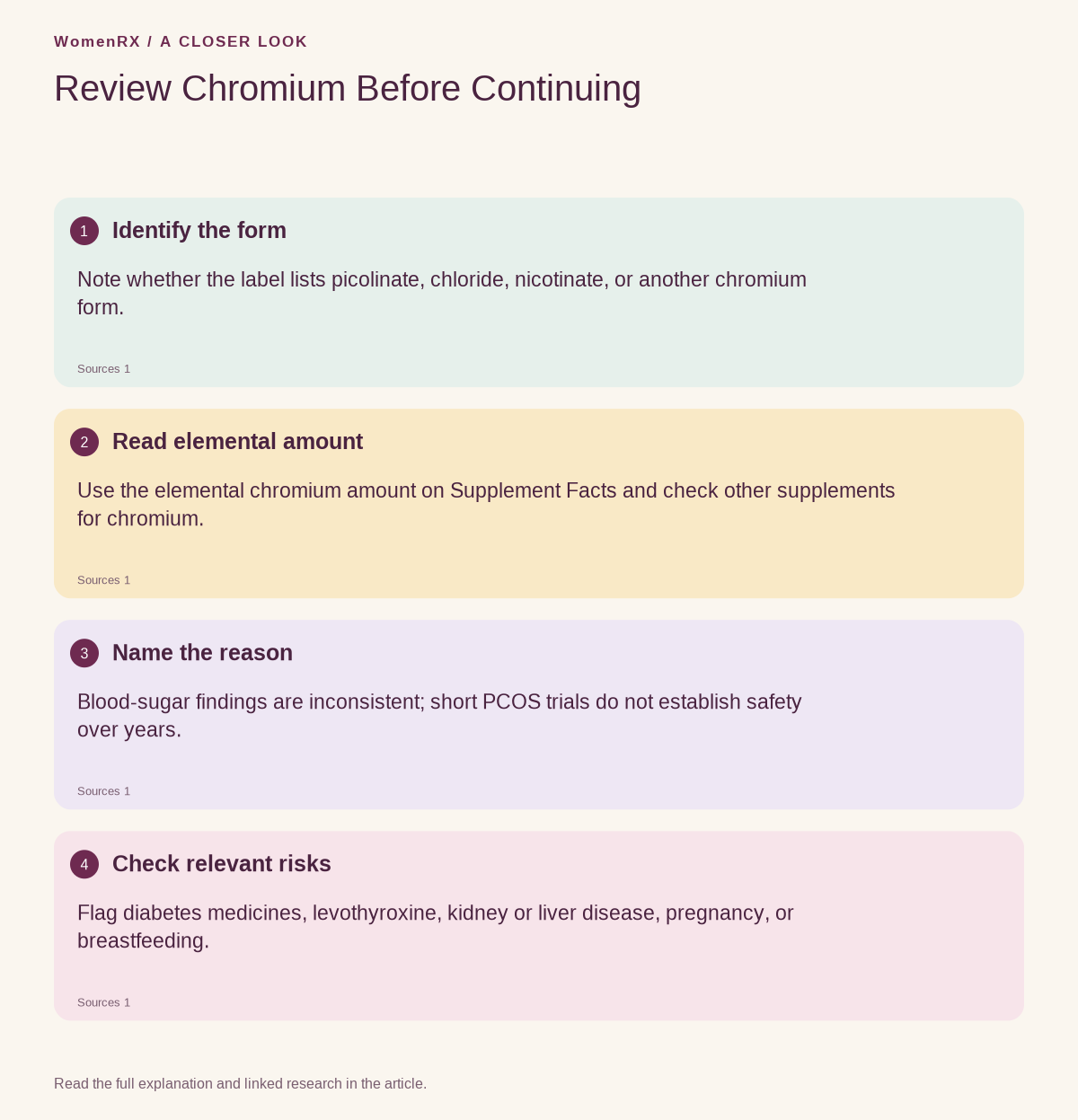
Review Chromium Before Continuing
Identify the form: Note whether the label lists picolinate, chloride, nicotinate, or another chromium form.1
Read elemental amount: Use the elemental chromium amount on Supplement Facts and check other supplements for chromium.1
Name the reason: Blood-sugar findings are inconsistent; short PCOS trials do not establish safety over years.1
Check relevant risks: Flag diabetes medicines, levothyroxine, kidney or liver disease, pregnancy, or breastfeeding.1
Read the figure as text
Use these checks to connect the product you take with your reason for using it and the safety questions that apply to you.- Identify the form: Note whether the label lists picolinate, chloride, nicotinate, or another chromium form.1
- Read elemental amount: Use the elemental chromium amount on Supplement Facts and check other supplements for chromium.1
- Name the reason: Blood-sugar findings are inconsistent; short PCOS trials do not establish safety over years.1
- Check relevant risks: Flag diabetes medicines, levothyroxine, kidney or liver disease, pregnancy, or breastfeeding.1
More questions, answered
Does chromium picolinate have a proven long-term safety advantage?
The cited information does not establish that chromium picolinate is safer for long-term use than other chromium forms. A form name alone can’t settle the question of years-long safety. 1 2
Does the label show the weight of the whole chromium compound?
No. Supplement Facts lists elemental chromium, not the total weight of the chromium compound. Use the labeled elemental amount when reviewing the product. 1
Sources you can check
- Chromium - Health Professional Fact SheetAccessed 2026-09-25Return to first citation
- Chromium does not belong in the diabetes treatment arsenal: Current evidence and future perspectives.Landman GW, Bilo HJ, Houweling ST, Kleefstra N. · World journal of diabetes · 2014Return to first citation