Chromium Supplements: Side Effects and Medicine Interactions
Before trying chromium, check your medicines, health conditions, and the elemental chromium amount on the label.
Chromium supplements may add to the effects of diabetes medicines and may reduce levothyroxine absorption when taken at the same time. Isolated reports describe other possible harms, but they don’t show how often those problems occur. There’s no established safe upper limit for supplemental chromium. The product’s amount and form matter, especially if you have kidney or liver disease. 1
Start with the medicines you take
Chromium might add to the blood-sugar-lowering effects of insulin, metformin, or other diabetes medicines, increasing the risk of low blood sugar. If you take one of these medicines, have a pharmacist or prescriber check the specific chromium product before you use it. 1
Levothyroxine raises a different concern. A small study found that taking it at the same time as chromium picolinate reduced levothyroxine absorption over six hours. That finding doesn’t establish whether other chromium forms have the same effect, or provide a timing plan for your medicines. Bring the product label to your pharmacist rather than guessing at a schedule. 1
What reported side effects can tell you
Isolated case reports have linked chromium supplements with low blood sugar, liver dysfunction, kidney failure, anemia, low platelets, muscle breakdown, dermatitis, and weight loss. These are warning signals, not a list of effects you’re likely to experience: case reports can’t establish how often a problem happens or prove chromium caused it. 1
No tolerable upper intake level was established for chromium because adverse effects hadn’t been linked to high intakes in the evidence assessed. But the data were limited, and high intakes could still have adverse effects. No established upper limit doesn’t mean any dose is safe. 1
One trial offers a narrow piece of safety information. Sixty overweight adults without diabetes tested a drink containing chromium picolinate and five amino acids. Researchers reported no severe adverse events; three mild-to-moderate events were considered possibly related to the drink. Because it combined ingredients, the trial can’t tell you the long-term safety of chromium alone. 2
Why the label amount and form matter
The Supplement Facts label gives the amount of elemental chromium, not the weight of the entire chromium compound. Standalone chromium supplements commonly provide 200 to 500 micrograms, with some containing up to 1,000 micrograms. Multivitamins commonly provide 35 to 120 micrograms. Those are product amounts, not recommended doses or safety cutoffs. If you use more than one supplement, check each label for chromium. 1
Forms include chromium picolinate, nicotinate, polynicotinate, chloride, and histidinate. Their absorption is broadly similar, but that doesn’t prove their safety or interaction evidence is interchangeable. For example, the levothyroxine finding involved picolinate. The form and elemental amount together give a pharmacist more useful information than the word “chromium” alone. 1
When your health or life stage changes the decision
People with kidney or liver disease might be more susceptible to adverse effects from high chromium intakes. This calls for a product-specific review, not a claim that everyone with either condition must avoid chromium. 1
Pregnancy and breastfeeding have their own Adequate Intake values for chromium. Those values describe nutritional intake; they don’t establish that a chromium supplement is safe during either period. If you’re pregnant or breastfeeding, have your care team review the exact product rather than assuming a general adult supplement amount applies. 1
If you’re considering chromium for blood-sugar control or weight loss, weigh the proposed benefit against these safety questions. Research on blood-sugar outcomes has been inconsistent, and the clinical significance of small improvements seen in some studies is unclear. A supplement shouldn’t be treated as a substitute for your diabetes treatment. 1
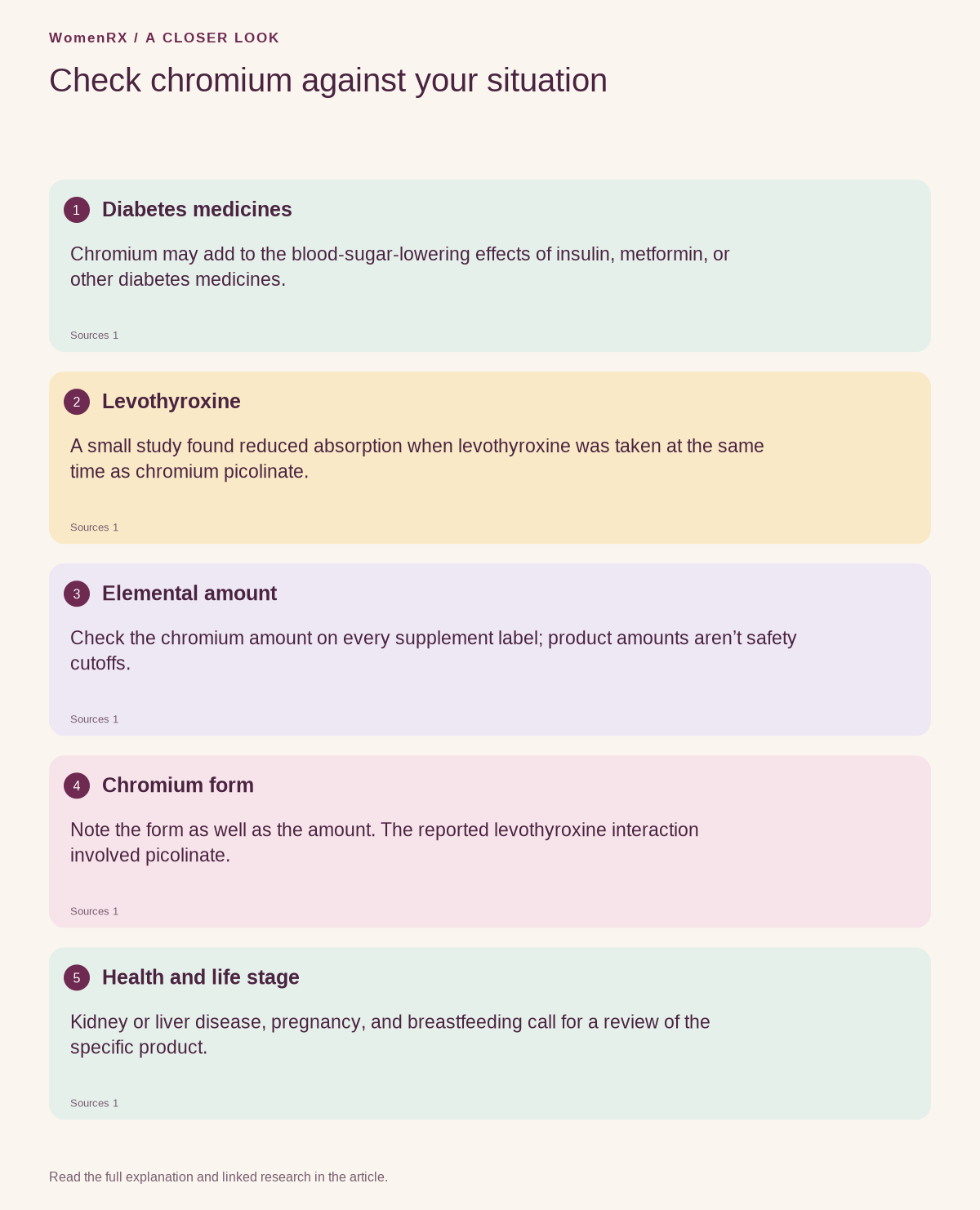
Check chromium against your situation
Diabetes medicines: Chromium may add to the blood-sugar-lowering effects of insulin, metformin, or other diabetes medicines.1
Levothyroxine: A small study found reduced absorption when levothyroxine was taken at the same time as chromium picolinate.1
Elemental amount: Check the chromium amount on every supplement label; product amounts aren’t safety cutoffs.1
Chromium form: Note the form as well as the amount. The reported levothyroxine interaction involved picolinate.1
Health and life stage: Kidney or liver disease, pregnancy, and breastfeeding call for a review of the specific product.1
Read the figure as text
These are reasons to review a specific product before use, not a diagnostic score or a definitive avoid list.- Diabetes medicines: Chromium may add to the blood-sugar-lowering effects of insulin, metformin, or other diabetes medicines.1
- Levothyroxine: A small study found reduced absorption when levothyroxine was taken at the same time as chromium picolinate.1
- Elemental amount: Check the chromium amount on every supplement label; product amounts aren’t safety cutoffs.1
- Chromium form: Note the form as well as the amount. The reported levothyroxine interaction involved picolinate.1
- Health and life stage: Kidney or liver disease, pregnancy, and breastfeeding call for a review of the specific product.1
Sources you can check
- Chromium - Health Professional Fact SheetAccessed 2026-09-25Return to first citation
- A novel nutritional supplement containing amino acids and chromium decreases postprandial glucose response in a randomized, double-blind, placebo-controlled study.Östman E, Samigullin A, Heyman-Lindén L, Andersson K, Björck I, Öste R, Humpert PM. · PloS one · 2020Return to first citation