Chromium Supplements: What They’ve Been Studied For
Chromium is sold for blood sugar and weight, but the human findings depend on the outcome and the people studied.
Chromium supplements have been tested for blood-sugar control, diabetes risk, PCOS, metabolic syndrome, and weight-related measures. Results are mixed: reviews find small blood-sugar changes of unclear clinical importance in people with diabetes, while a trial in adults at risk for diabetes found no benefit. Before adding chromium, check your product’s amount and your medicines; no best time of day has been established by the trials discussed here. 13
Chromium is a trace mineral found in foods such as meats, grains, fruits, vegetables, and nuts. Supplements are sold partly because chromium might affect insulin’s action. That possibility explains why researchers have studied it, but it doesn’t mean that taking extra chromium will improve blood sugar or prevent diabetes. 1
Blood sugar: an encouraging trial, but a mixed overall picture
In people with type 2 diabetes, reviews summarized by the NIH Office of Dietary Supplements found slight average reductions in fasting glucose and HbA1c when chromium was used alongside other treatment. HbA1c reflects longer-term blood-sugar control. The clinical importance of the average changes remains unclear, and the reviews did not establish a reason to recommend chromium routinely for diabetes. 1
One randomized trial helps explain the interest. It enrolled 71 adults with poorly controlled type 2 diabetes for four months. Everyone continued prescribed medicines and received nutrition guidance. HbA1c fell in both the chromium picolinate and placebo groups, but the chromium group had a lower HbA1c at the end of the study. The cited results don’t establish a separate benefit for women. 2
Improving a measure in people who already have diabetes is different from preventing diabetes. In a placebo-controlled trial enrolling 59 adults with impaired glucose measures or metabolic syndrome, six months of chromium picolinate did not improve glucose, insulin, or insulin-resistance measures compared with placebo. These results likewise don’t establish a separate benefit for women. 3
PCOS is a women-specific question, not a general benefit
Researchers have tested chromium in PCOS because insulin resistance can be part of the condition. A review of seven trials involving 351 participants found no effect on fasting glucose or several measured hormones compared with placebo, although it found changes in body mass index, free testosterone, and fasting insulin. Other reviews reached mixed findings, with one judging the effects small and of uncertain clinical relevance. Chromium has not been established as a dependable PCOS treatment. These PCOS results also don’t tell us that chromium benefits women without PCOS. 1
The other distinction is life stage. Chromium intake reference values differ for pregnancy and breastfeeding, but those values aren’t evidence that a separate supplement improves outcomes during either stage. The diabetes trials above don’t establish a distinct benefit during perimenopause or postmenopause, either. 123
What about weight and metabolic syndrome?
The weight claim is easier to assess when you look at what trials actually measured. In a 16-week trial of 63 adults with metabolic syndrome, chromium picolinate did not improve body weight, HbA1c, insulin sensitivity, or blood lipids compared with placebo. A separate 24-week trial of 70 adults with metabolic syndrome and impaired glucose tolerance found no improvement in waist circumference, fasting glucose, HbA1c, blood pressure, or lipids. These results don’t support counting on chromium for a weight or metabolic-syndrome benefit. 1
Read the amount before choosing a time
If you’re considering a product, start with its Supplement Facts serving size and elemental chromium amount. The listed chromium amount is the elemental chromium, not the weight of the whole compound, such as chromium picolinate. Check a multivitamin you already take, too: most multivitamin/mineral products contain chromium, while chromium-only products commonly provide more. Follow the directions on your specific product rather than copying a schedule from a study. 1
The timing question has a straightforward answer: the human trials described in the NIH fact sheet used different schedules, but they did not compare morning with night or establish that taking chromium with meals improves an outcome. One type 2 diabetes trial used twice-daily doses; a metabolic-syndrome trial gave chromium yeast with breakfast and dinner. Those are descriptions of study routines, not a proven best time for your supplement. If your label leaves the time open, choosing a time you’ll remember is a practical choice, not an effectiveness claim. 1
Chromium Adequate Intakes are nutritional reference values, not supplement targets. For women, they are 25 micrograms daily at ages 19-50 and 20 micrograms at ages 51 and older; the values are 30 micrograms during pregnancy and 45 micrograms while breastfeeding. They were based on usual intakes in healthy populations because evidence was insufficient to set an Estimated Average Requirement. A larger number on a supplement label doesn’t, by itself, mean a better result. 1
Check for interactions before adding it
The most consequential check is your current treatment plan. Chromium might add to the blood-sugar-lowering effects of insulin, metformin, or other diabetes medicines, increasing the risk of low blood sugar. If you take one of them, ask your prescriber or pharmacist about the specific supplement before adding it. Don’t rearrange prescribed treatment to fit a supplement. 1
Levothyroxine presents a different issue: a small study found that taking chromium picolinate at the same time reduced levothyroxine absorption over six hours. That finding does not supply a spacing rule, so ask your pharmacist or prescriber how to handle the combination rather than guessing an interval. 1
Finally, no upper intake limit has been set for chromium, but that isn’t a finding that high supplemental amounts are risk-free. Safety data are limited, and people with kidney or liver disease may be more susceptible to adverse effects from high intakes. That’s worth checking before choosing a high-amount product, especially if you already get chromium in a multivitamin. 1
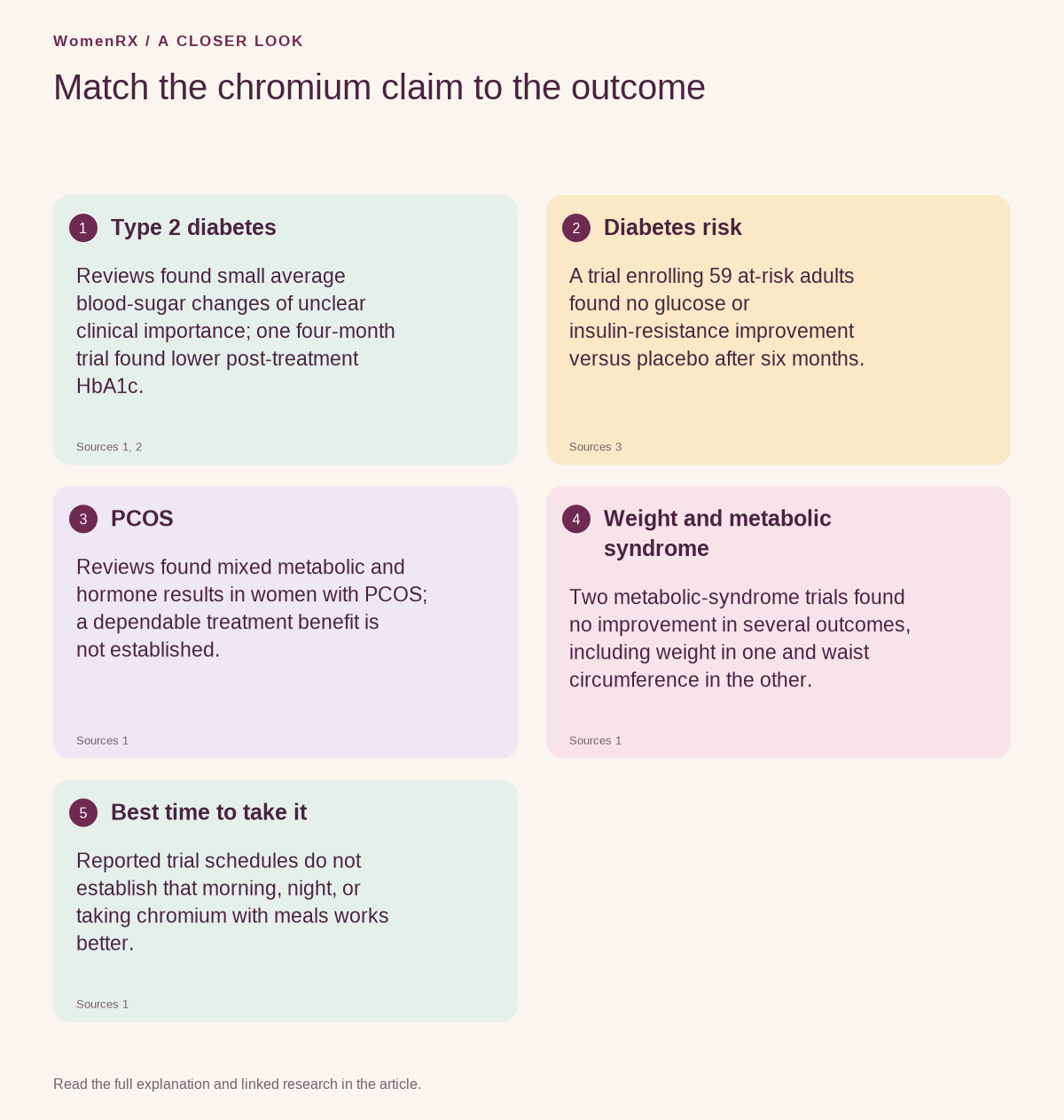
Match the chromium claim to the outcome
Type 2 diabetes: Reviews found small average blood-sugar changes of unclear clinical importance; one four-month trial found lower post-treatment HbA1c.12
Diabetes risk: A trial enrolling 59 at-risk adults found no glucose or insulin-resistance improvement versus placebo after six months.3
PCOS: Reviews found mixed metabolic and hormone results in women with PCOS; a dependable treatment benefit is not established.1
Weight and metabolic syndrome: Two metabolic-syndrome trials found no improvement in several outcomes, including weight in one and waist circumference in the other.1
Best time to take it: Reported trial schedules do not establish that morning, night, or taking chromium with meals works better.1
Read the figure as text
These findings come from different groups of people and answer different questions.- Type 2 diabetes: Reviews found small average blood-sugar changes of unclear clinical importance; one four-month trial found lower post-treatment HbA1c.12
- Diabetes risk: A trial enrolling 59 at-risk adults found no glucose or insulin-resistance improvement versus placebo after six months.3
- PCOS: Reviews found mixed metabolic and hormone results in women with PCOS; a dependable treatment benefit is not established.1
- Weight and metabolic syndrome: Two metabolic-syndrome trials found no improvement in several outcomes, including weight in one and waist circumference in the other.1
- Best time to take it: Reported trial schedules do not establish that morning, night, or taking chromium with meals works better.1
Sources you can check
- Chromium - Health Professional Fact SheetAccessed 2026-09-25Return to first citation
- Beneficial effects of oral chromium picolinate supplementation on glycemic control in patients with type 2 diabetes: A randomized clinical study.Paiva AN, Lima JG, Medeiros AC, Figueiredo HA, Andrade RL, Ururahy MA, Rezende AA, Brandão-Neto J, Almeida Md. · Journal of trace elements in medicine and biology : organ of the Society for Minerals and Trace Elements (GMS) · 2015Return to first citation
- Chromium effects on glucose tolerance and insulin sensitivity in persons at risk for diabetes mellitus.Ali A, Ma Y, Reynolds J, Wise JP, Inzucchi SE, Katz DL. · Endocrine practice : official journal of the American College of Endocrinology and the American Association of Clinical Endocrinologists · 2011Return to first citation