What Symptoms Can Estradiol Gel Help With?
A prescribed skin-applied estradiol gel is mainly used to ease menopause-related hot flashes and night sweats, so track those symptoms rather than expecting weight loss or cosmetic changes.
If your prescription is for transdermal estradiol gel, its clearest symptom goal is reducing hot flashes and night sweats. In a 12-week trial of postmenopausal women, the gel reduced the frequency and severity of moderate-to-severe vasomotor symptoms compared with placebo. Track how often symptoms happen and how disruptive they feel, then review whether the change is worthwhile for you. A vaginal estradiol gel is a different, locally delivered treatment. 41
Start with the symptom your prescription is meant to treat
For estradiol gel applied to the skin, the best-supported symptom target is vasomotor symptoms: hot flashes and night sweats. A randomized 12-week trial in 488 postmenopausal women found that transdermal estradiol gel reduced the frequency and severity of moderate-to-severe symptoms compared with placebo. Differences were reported as early as week 2 in that study, but that timing does not predict exactly when any one person will notice a change. 4
Hormone therapy is recognized as the most effective treatment for menopause-related vasomotor symptoms, but whether it’s suitable depends on the individual and the treatment plan. Benefits and risks vary with factors including route, timing, duration, and whether a progestogen is used. 2
Make the goal easy to review
Before you start, or at your next appointment, name the symptom you most want to change. For example, if night sweats are waking you, note how often they happen and how much they disrupt your sleep. If daytime hot flashes are the main problem, note how often they occur and how intense or disruptive they feel. These notes aren’t a formal test; they give you and your prescriber a clearer before-and-after comparison.
At review, ask: Is the symptom happening less often, less intensely, or both? Is that improvement meaningful enough to you to continue discussing the treatment? If symptoms haven’t improved enough, share what you tracked rather than assuming the gel has failed or changing how you use it on your own. Menopause guidance recommends individualizing treatment and revisiting its benefits and risks over time. 12
Skin-applied gel and vaginal gel aren’t interchangeable
A transdermal gel is applied to the skin as systemic hormone therapy. Vaginal estradiol is placed locally to treat genitourinary symptoms, such as symptoms affecting the vagina or urinary tract. NICE explains that vaginal estrogen is absorbed locally, with minimal bloodstream absorption compared with systemic hormone therapy. It can be used alongside systemic HRT when appropriate, which is one reason persistent vaginal symptoms deserve their own discussion rather than an assumption that skin-applied gel will address them. 1
The word “gel” alone doesn’t tell you which kind you have. A randomized trial of estradiol vaginal gel, for instance, studied postmenopausal vaginal atrophy, not skin-applied gel for hot flashes. Check the product and where it’s meant to be applied if you’re unsure. 3
Keep expectations tied to the evidence
The skin-applied gel trial measured hot flashes and night sweats, as well as signs of vulvar and vaginal atrophy. It did not establish estradiol gel as a weight-loss or cosmetic treatment. If weight, appearance, mood, or another concern is your main reason for asking about treatment, name that concern separately; the evidence for one symptom shouldn’t be treated as evidence for another. 4
At follow-up, bring your symptom notes and ask whether your original treatment goal has been met, whether the plan still fits your health and preferences, and what to do if symptoms return or change. If you have a uterus, it’s also reasonable to ask how the overall hormone plan addresses the uterine lining: a clinical practice guideline describes menopause hormone treatment for people who have not had a hysterectomy as combining estrogen with a progestogen. 15
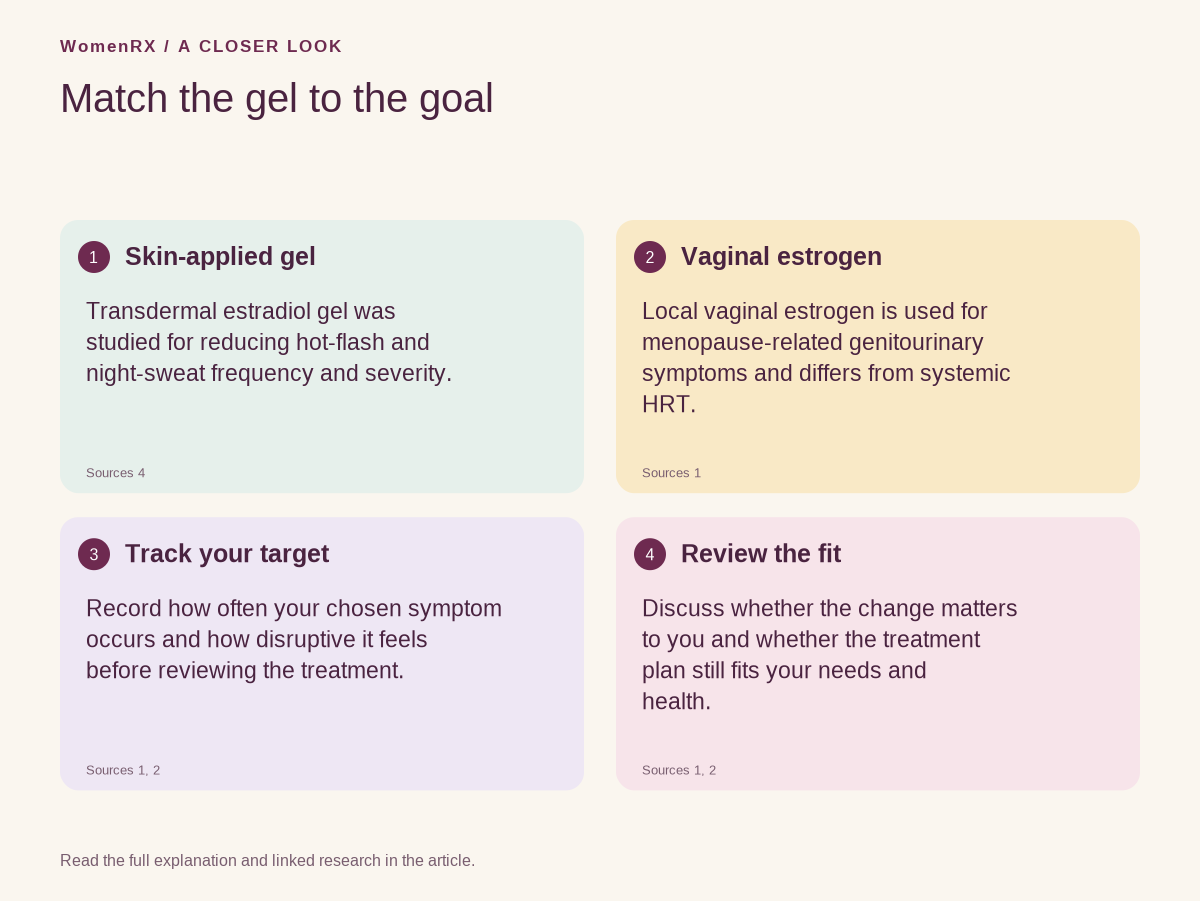
Match the gel to the goal
Skin-applied gel: Transdermal estradiol gel was studied for reducing hot-flash and night-sweat frequency and severity.4
Vaginal estrogen: Local vaginal estrogen is used for menopause-related genitourinary symptoms and differs from systemic HRT.1
Track your target: Record how often your chosen symptom occurs and how disruptive it feels before reviewing the treatment.12
Review the fit: Discuss whether the change matters to you and whether the treatment plan still fits your needs and health.12
Read the figure as text
The route helps clarify which symptoms the treatment evidence addresses and what to track at review.- Skin-applied gel: Transdermal estradiol gel was studied for reducing hot-flash and night-sweat frequency and severity.4
- Vaginal estrogen: Local vaginal estrogen is used for menopause-related genitourinary symptoms and differs from systemic HRT.1
- Track your target: Record how often your chosen symptom occurs and how disruptive it feels before reviewing the treatment.12
- Review the fit: Discuss whether the change matters to you and whether the treatment plan still fits your needs and health.12
More questions, answered
Can skin-applied estradiol gel treat vaginal dryness?
The gel trial reported improvement in signs of vulvar and vaginal atrophy, but skin-applied systemic gel and vaginal estradiol are different routes. If vaginal or urinary symptoms persist, ask whether a local treatment is appropriate; vaginal estrogen may also be used alongside systemic HRT. 41
How do I know whether I have the vaginal or transdermal gel?
Check the product instructions and where the gel is intended to be applied. Vaginal estradiol is delivered locally, while transdermal gel is applied to the skin as systemic therapy. Don’t substitute one for the other based on the word “gel.” 134
Sources you can check
- Recommendations | Menopause: identification and management | Guidance | NICEAccessed 2026-09-25Return to first citation
- The 2022 hormone therapy position statement of The North American Menopause Society.“The 2022 Hormone Therapy Position Statement of The North American Menopause Society” Advisory Panel. · Menopause (New York, N.Y.) · 2022Return to first citation
- The effectiveness of 12.5 and 25 micrograms 17β-estradiol vaginal gel for postmenopausal vaginal atrophy: A randomized non-inferiority trial.Chantrapanichkul P, Tanmahasamut P, Nanthiphatthanachai A, Wongwananuruk T, Indhavivadhana S, Rattanachaiyanont M, Sa-Nga-Areekul N. · International journal of gynaecology and obstetrics: the official organ of the International Federation of Gynaecology and Obstetrics · 2026Return to first citation
- Transdermal estradiol gel 0.1% for the treatment of vasomotor symptoms in postmenopausal women.Hedrick RE, Ackerman RT, Koltun WD, Halvorsen MB, Lambrecht LJ. · Menopause (New York, N.Y.) · 2009Return to first citation
- [Menopause hormone treatment in practice. Postmenopausal women management: CNGOF and GEMVi clinical practice guidelines].Gosset A, Robin G, Letombe B, Pouillès JM, Trémollieres F. · Gynecologie, obstetrique, fertilite & senologie · 2021Return to first citation