How Long Can Estradiol Gel Take to Help Menopause Symptoms?
A small study reported symptom improvement after three months of gel treatment, but it didn’t establish when relief began or set a deadline for your review.
There isn’t an exact start-to-relief timeline established here. In a small trial involving early postmenopausal women, menopausal symptoms improved after three months of percutaneous estradiol gel treatment, but the report didn’t say when improvement began or how individual symptoms changed. Track the symptoms that matter to you and agree with your prescriber when to review your treatment plan. 2 1
What a small gel study can tell you
A clinical trial included early postmenopausal women using percutaneous estradiol gel for three months. The researchers reported that menopausal symptoms improved after hormone therapy. The report doesn’t establish when relief first appeared, whether everyone improved, or whether one symptom changed before another. So the three-month study period is a description of that study, not a deadline for your own response. 2
The North American Menopause Society says hormone therapy should be individualized and its benefits and risks periodically reevaluated. Its guidance doesn’t set a gel-specific time by which you should feel better. 1
That leaves room for your own pattern. Rather than deciding based on one especially good or difficult day, keep a short record of the symptoms you want treatment to help and how they affect you.
Make your notes useful, not exhaustive
Before starting or changing treatment, choose a few symptoms to follow. Note how often they occur and what they disrupt. For example, if night sweats wake you, you might record whether they happened and whether they interrupted your sleep. If another symptom matters more to you, focus on that instead.
As you use the gel as prescribed, make brief notes using the same details. Keep symptoms separate: an overall “better” rating may hide that one symptom has changed while another hasn’t. The trial reported symptom improvement overall, but didn’t give separate response timing for individual symptoms. 2
You can also note a treatment change or an unusually disruptive night if it helps explain what you noticed. You don’t need a perfect record. This is a practical way to organize your observations, not a validated test of whether the gel is working.
Agree on a review point, without treating it as a waiting rule
When you start or change treatment, ask your prescriber when they’d like to review your response. At that point, your notes can help you explain what has improved, what remains bothersome, and how much it affects your daily life. Periodic reevaluation is part of individualized hormone therapy care, but the guidance cited here doesn’t name a specific interval for estradiol gel. 1
If symptoms remain troublesome, worsen, or you have concerns about treatment, contact your prescriber rather than treating the study’s three-month period as a required wait. That’s a practical reason to seek advice sooner, not a conclusion about timing from the gel trial. Don’t increase the gel dose on your own because improvement hasn’t happened yet.
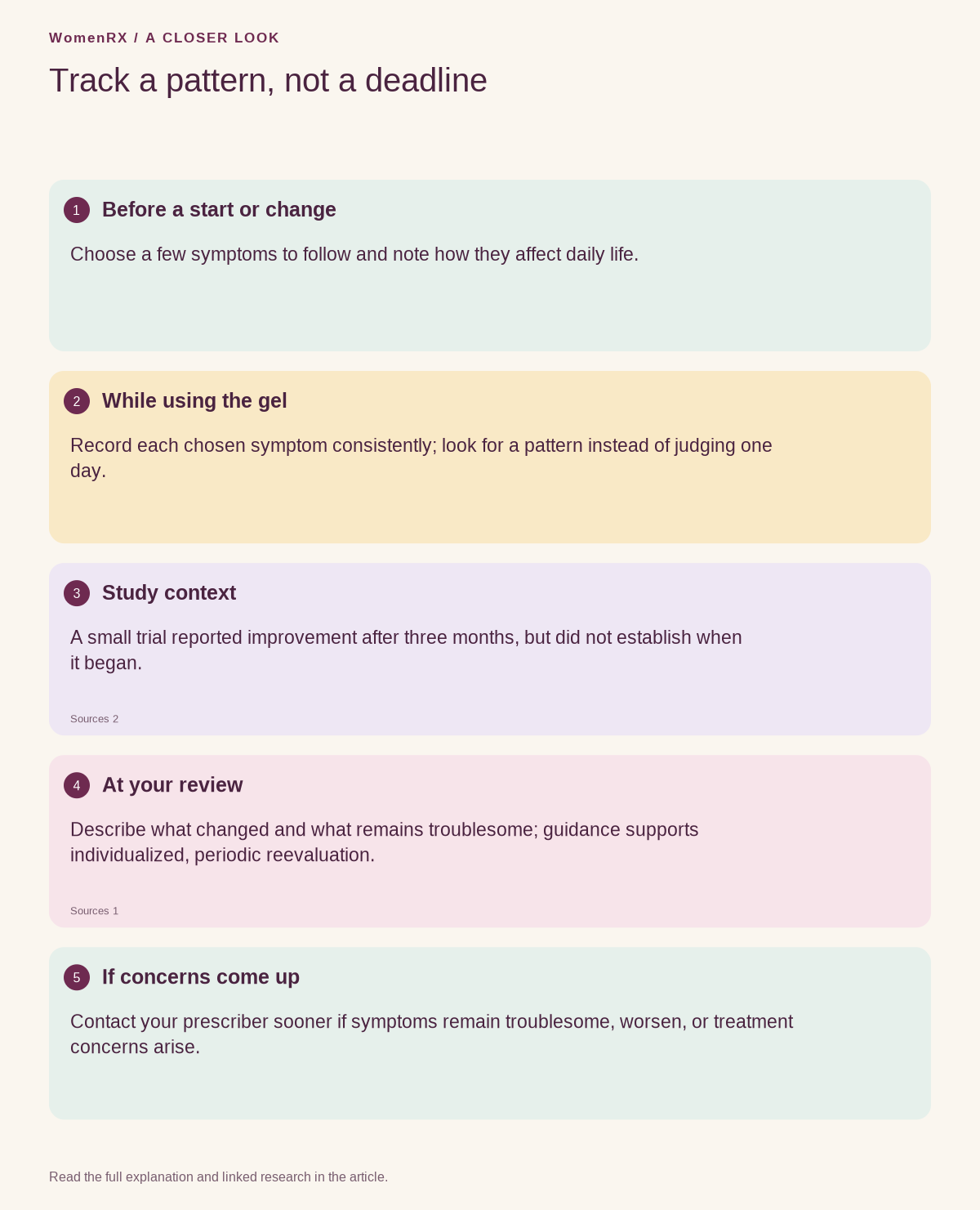
Track a pattern, not a deadline
Before a start or change: Choose a few symptoms to follow and note how they affect daily life.
While using the gel: Record each chosen symptom consistently; look for a pattern instead of judging one day.
Study context: A small trial reported improvement after three months, but did not establish when it began.2
At your review: Describe what changed and what remains troublesome; guidance supports individualized, periodic reevaluation.1
If concerns come up: Contact your prescriber sooner if symptoms remain troublesome, worsen, or treatment concerns arise.
Read the figure as text
Use this sequence to organize your observations while keeping a study’s treatment duration separate from your personal review plan.- Before a start or change: Choose a few symptoms to follow and note how they affect daily life.
- While using the gel: Record each chosen symptom consistently; look for a pattern instead of judging one day.
- Study context: A small trial reported improvement after three months, but did not establish when it began.2
- At your review: Describe what changed and what remains troublesome; guidance supports individualized, periodic reevaluation.1
- If concerns come up: Contact your prescriber sooner if symptoms remain troublesome, worsen, or treatment concerns arise.
More questions, answered
Does the three-month study mean I should wait three months before asking for a review?
No. Three months was the duration of gel treatment in a small trial, which reported symptom improvement afterward but didn’t establish when relief began or set an individual review deadline. Agree on a review point with your prescriber; you can contact them sooner if symptoms remain troublesome or you have concerns. 2 1
Should every menopause symptom improve at the same time?
The trial reported improvement in menopausal symptoms overall, but it didn’t describe the timing of change for specific symptoms. Keeping separate notes can help you describe your own pattern without assuming symptoms will change together. 2
Sources you can check
- The 2022 hormone therapy position statement of The North American Menopause Society.“The 2022 Hormone Therapy Position Statement of The North American Menopause Society” Advisory Panel. · Menopause (New York, N.Y.) · 2022Return to first citation
- Effects of micronized progesterone added to non-oral estradiol on lipids and cardiovascular risk factors in early postmenopause: a clinical trial.Casanova G, Spritzer PM. · Lipids in health and disease · 2012Return to first citation