Weight and Body Changes in Your 50s: What to Compare
A change on the scale, around your waist, or in your strength can mean different things, and one doesn’t automatically explain the others.
A small study found lower muscle mass and basal metabolic rate in its late-postmenopausal group, but it can’t separate the effects of aging from menopause. Weight alone can’t show whether fat, muscle, bone, or water changed. Activity, eating patterns, stress, and health conditions can also matter, so the useful first question is what changed, not whether your metabolism slowed. 1 3
One number can hide different changes
Your weight is the combined mass of muscle, bone, fat, and water. So a change on the scale doesn’t identify what changed. BMI has a similar limitation: it doesn’t distinguish fat from muscle or bone. Waist size adds a different clue, since fat carried more around the abdomen than the hips is associated with higher risk of heart disease and type 2 diabetes. 1
That makes “I gained weight” different from “my waist changed” or “I feel less strong.” They can overlap, but they aren’t interchangeable outcomes, and none of them alone measures metabolism.
What the menopause comparison can, and can’t, say
One observational study compared 56 postmenopausal women, ages 50-65, with 23 premenopausal controls, ages 40-50. Participants were matched for BMI, and all groups had overweight and abdominal obesity. The researchers reported insulin resistance in both postmenopausal groups; the late-postmenopausal group also had lower skeletal muscle mass and basal metabolic rate than the premenopausal group. 3
That’s a finding in a particular group, not a forecast for every woman in her 50s. The study was small and observational, so it can’t establish that menopause caused the differences. Its comparison groups also differed in age range. It measured basal metabolic rate, not every part of daily energy use. And it doesn’t tell us what to expect for someone still having periods in her 50s or someone whose menopause followed surgery.
The age comparison has a limit, too: these results don’t show how much of any difference came from growing older rather than menopausal stage. For older adults, keeping muscle and strength is a health priority, but neither that guidance nor this study establishes a universal metabolic drop at age 50. 1 3
Compare the change with its context
If you’re trying to make sense of a change, start by naming what has actually shifted:
- Total weight: Is the number changing, and was the change expected? Weight includes more than body fat. 1
- Waist: Has your shape changed even if your weight hasn’t changed much? Waist and total weight describe different things. 1
- Strength or muscle: Are you noticing a change in strength or everyday function? Muscle matters as you get older, but a scale or BMI can’t tell you how much muscle you have. 1
- Timing and context: Are you still having periods, postmenopausal, or unsure where you are in the transition? Has your activity, eating pattern, or stress changed? Those everyday factors can affect weight, and the study’s group results shouldn’t be applied as if age 50 automatically means postmenopause. 1 3
If managing weight is your goal, eating patterns and physical activity are practical factors to consider. They’re part of established approaches to weight management, but changing them won’t tell you whether menopause altered your basal metabolic rate. 1 2
A change you didn’t intend deserves a different question: could a health condition or medicine be involved? MedlinePlus advises discussing unexpected weight gain or loss with a health care provider, particularly when the change is sudden. 1
The most useful distinction is between a change in total weight, a change in where you carry weight, and a change in strength or muscle. Menopause may be part of the context, whether it happened recently, years ago, or after surgery. It isn’t an explanation that the scale can confirm on its own. 1 3
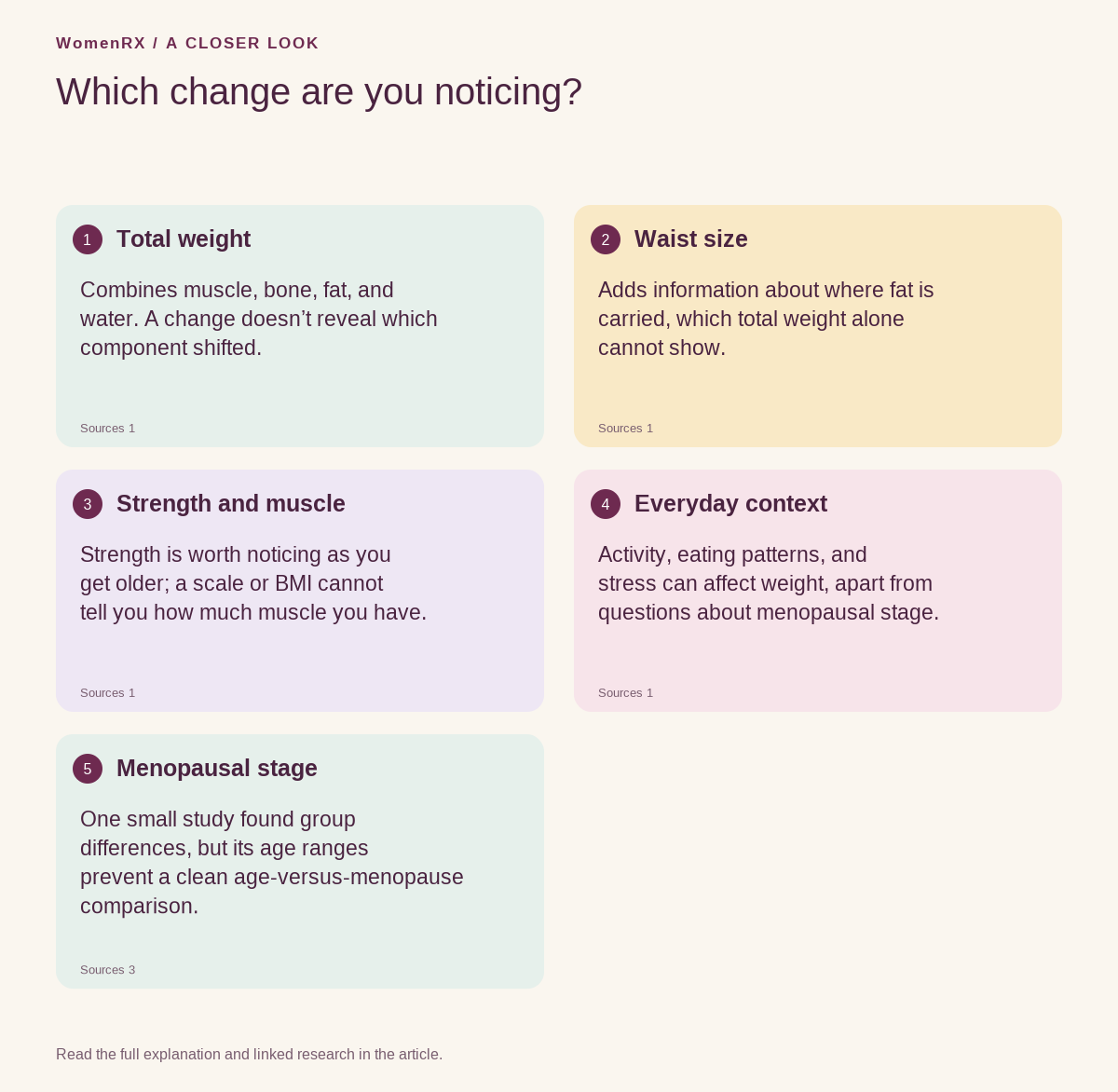
Which change are you noticing?
Total weight: Combines muscle, bone, fat, and water. A change doesn’t reveal which component shifted.1
Waist size: Adds information about where fat is carried, which total weight alone cannot show.1
Strength and muscle: Strength is worth noticing as you get older; a scale or BMI cannot tell you how much muscle you have.1
Everyday context: Activity, eating patterns, and stress can affect weight, apart from questions about menopausal stage.1
Menopausal stage: One small study found group differences, but its age ranges prevent a clean age-versus-menopause comparison.3
Read the figure as text
These clues describe different parts of a body change; none is a stand-alone test of metabolism or menopause’s effects.- Total weight: Combines muscle, bone, fat, and water. A change doesn’t reveal which component shifted.1
- Waist size: Adds information about where fat is carried, which total weight alone cannot show.1
- Strength and muscle: Strength is worth noticing as you get older; a scale or BMI cannot tell you how much muscle you have.1
- Everyday context: Activity, eating patterns, and stress can affect weight, apart from questions about menopausal stage.1
- Menopausal stage: One small study found group differences, but its age ranges prevent a clean age-versus-menopause comparison.3
More questions, answered
Can my weight tell me whether my metabolism has slowed?
No. Weight combines muscle, bone, fat, and water, and BMI doesn’t separate them either. A scale can show a change in total mass, but it can’t identify its cause or measure your basal metabolic rate. 1
Sources you can check
- Body Weight: MedlinePlusAccessed 2026-09-25Return to first citation
- Dietary Supplements for Weight Loss - Health Professional Fact SheetAccessed 2026-09-25Return to first citation
- Age and leptinemia association with anxiety and depression symptoms in overweight middle-aged women.Naufel MF, Boldarine VT, Oyama LM, do Nascimento CMO, Silva Dos Santos GM, Hachul H, Ribeiro EB. · Menopause (New York, N.Y.) · 2019Return to first citation