Menopause and Weight Gain: What Changes, and What Does Not
Midlife weight changes have more than one cause, and the scale may miss shifts in where fat is stored.
Menopause doesn’t inevitably cause weight gain. In midlife, aging and changes in activity and other habits can contribute to weight trends, while the menopausal transition may also influence where fat is stored, including around the abdomen. These effects vary, and research hasn’t fully separated menopause’s influence from aging and other factors. 2 4
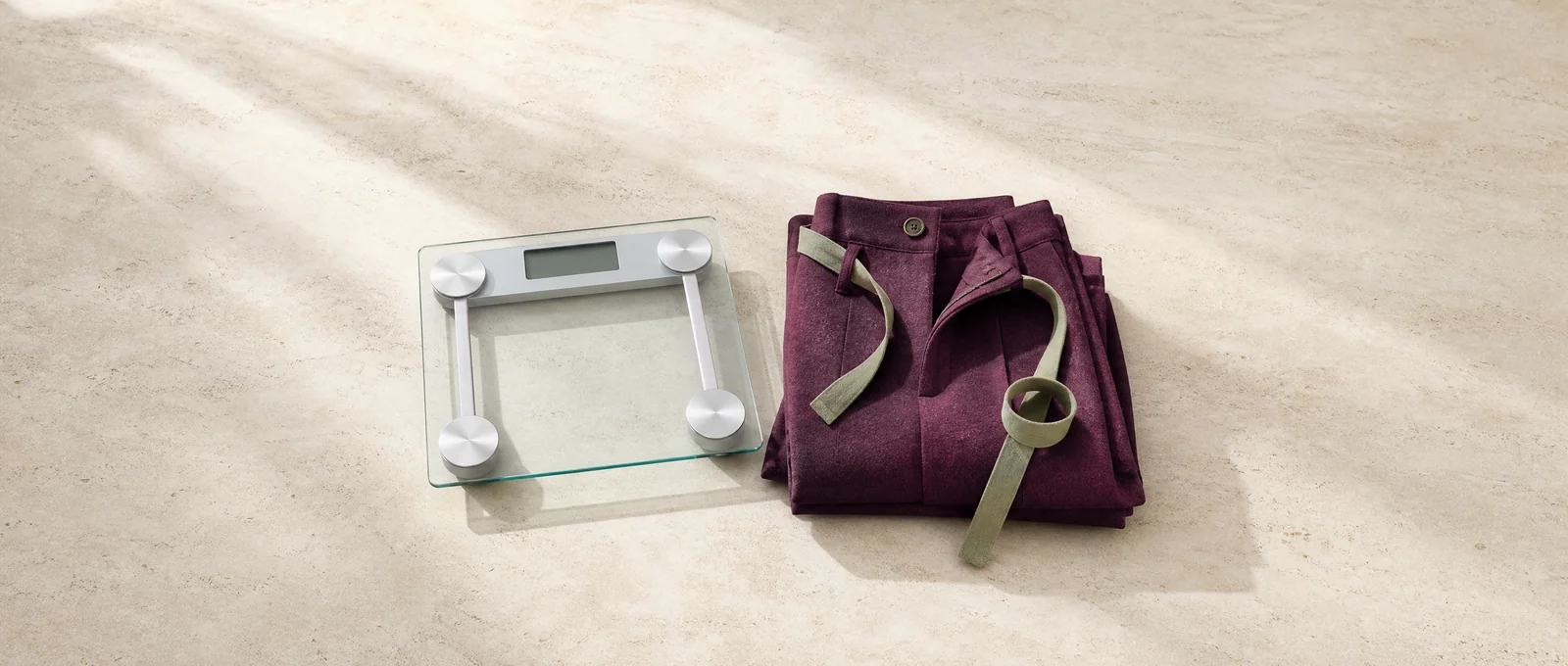
The scale and your shape answer different questions
Body weight combines fat, muscle, bone, and water. A scale can show that your total weight has changed, but it can’t tell you which component changed or where fat is stored. Waist size and body-composition measures offer different information, though no single measure explains the whole picture. 1
That distinction can matter around menopause. Reviews of midlife women describe age-related factors, including changes in energy expenditure and physical activity, as contributors to weight trends. They also describe menopause-related hormonal changes as potentially influencing fat distribution, including a shift toward more central, or abdominal, fat. These influences can overlap, so a change on the scale can’t automatically be attributed to menopause. 2 4
For example, your weight might stay fairly steady while your waist or the fit of your clothes changes. That could reflect a change in body composition or fat distribution, but it doesn’t establish the cause. And a higher number on the scale doesn’t reveal whether the change is fat, muscle, water, or some combination.
What studies can tell us, and where they differ
A 2022 review describes evidence of changes in body composition during the menopausal transition, including increases in fat mass and declines in lean mass. It also emphasizes that age, behavior, and other factors may contribute, and that researchers have not fully established how much of the change is directly due to menopause. 2
A cross-sectional study offers a different snapshot. It compared 171 clinically healthy women ages 45 to 55 who were matched for body mass index (BMI). Researchers found no significant differences between the premenopausal and postmenopausal groups in several measured fat-distribution measures. Because the study compared groups at one point in time, it can’t show how an individual woman’s body changed across the transition. Nor does one study settle what happens for all women. 3
Taken together, the findings don’t mean menopause has no role, or that it explains every change. They suggest that weight trends and fat distribution can have overlapping influences, and the evidence doesn’t let us neatly assign an individual change to hormones, aging, or lifestyle alone. Patterns can also differ with a person’s health and circumstances. 2 3 4
Read the measurements as a pattern, not a verdict
If you’re trying to understand what has changed, compare measurements over time in a consistent way rather than treating one number as the answer. Scale weight tracks total body mass. A waist measurement can help you notice a change in abdominal size, while body-composition estimates may offer another view. BMI has limits too: it doesn’t distinguish fat from muscle or bone. 1
A useful way to frame the question is: has the change been mainly in total weight, around the waist, or both? Have your activity or eating habits changed? Are sleep or other health circumstances different? Those details can add context, but they can’t prove what caused a change. Midlife reviews identify aging, activity, other behaviors, and menopause-related changes as overlapping influences. 2 4
When a change deserves a closer look
A gradual trend is different from a sudden, unexpected gain or loss. MedlinePlus advises discussing weight changes that happen without trying, because an unexpected change can sometimes signal a medical problem. 1
The scale is one useful measure, not a complete explanation. Looking at total weight, waist size, the broader pattern, and what else has changed gives you a more grounded starting point than blaming menopause alone.
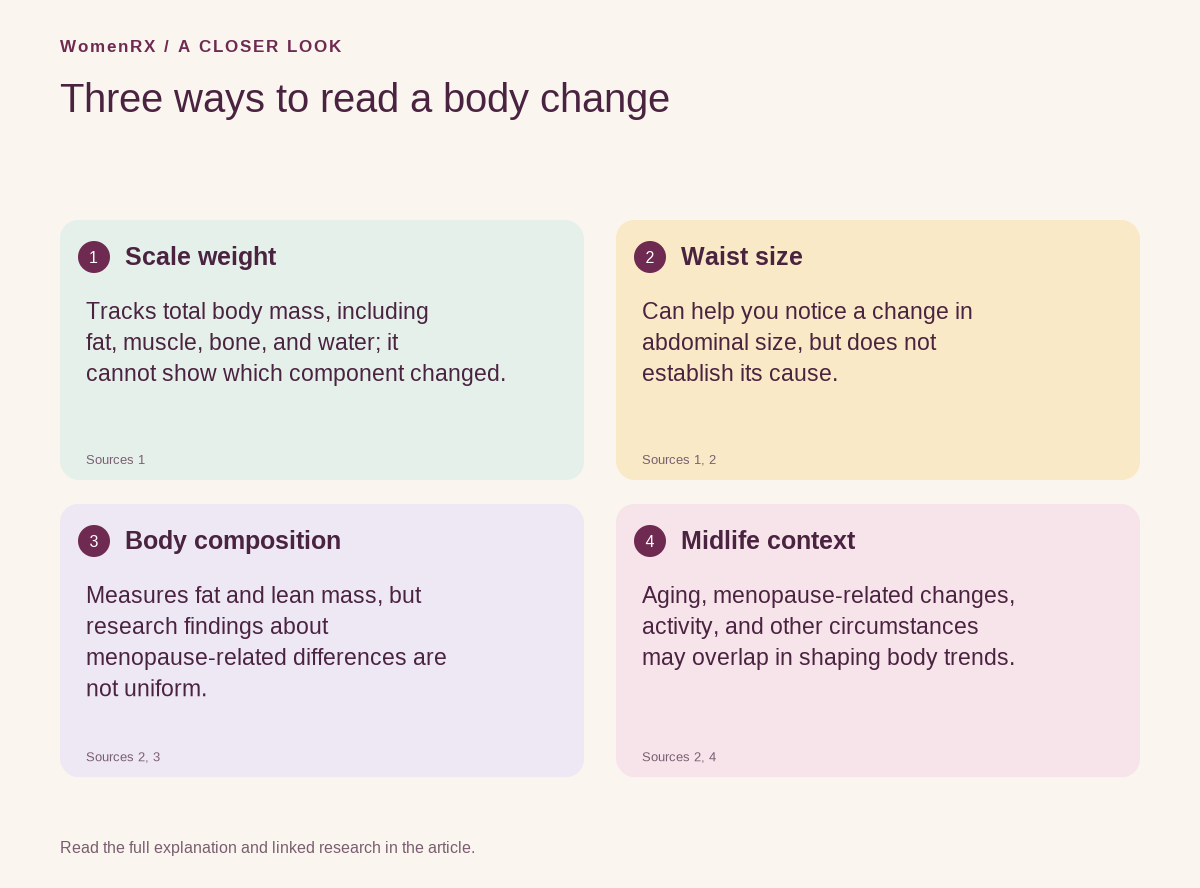
Three ways to read a body change
Scale weight: Tracks total body mass, including fat, muscle, bone, and water; it cannot show which component changed.1
Waist size: Can help you notice a change in abdominal size, but does not establish its cause.12
Body composition: Measures fat and lean mass, but research findings about menopause-related differences are not uniform.23
Midlife context: Aging, menopause-related changes, activity, and other circumstances may overlap in shaping body trends.24
Read the figure as text
Scale weight, waist size, and body-composition measures describe different things. None identifies why a change happened on its own.- Scale weight: Tracks total body mass, including fat, muscle, bone, and water; it cannot show which component changed.1
- Waist size: Can help you notice a change in abdominal size, but does not establish its cause.12
- Body composition: Measures fat and lean mass, but research findings about menopause-related differences are not uniform.23
- Midlife context: Aging, menopause-related changes, activity, and other circumstances may overlap in shaping body trends.24
More questions, answered
Can menopause affect my body shape if my weight hasn’t changed?
Possibly. Total weight doesn’t show where fat is stored, and a review describes potential shifts toward more central fat during the menopausal transition. But a change in waist size or clothing fit can’t identify the cause on its own, and findings across studies vary. 1 2 3
Should I pay attention to a sudden, unexplained weight change?
Yes. A sudden, unexpected gain or loss is different from a gradual midlife trend. MedlinePlus advises discussing weight changes that happen without trying, since they can sometimes signal a medical problem. 1
Sources you can check
- Body Weight: MedlinePlusAccessed 2026-09-25Return to first citation
- Adverse Changes in Body Composition During the Menopausal Transition and Relation to Cardiovascular Risk: A Contemporary Review.Kodoth V, Scaccia S, Aggarwal B. · Women's health reports (New Rochelle, N.Y.) · 2022Return to first citation
- Fat Mass Is Associated with Aging Rather than Menopausal Transition.Barbu CG, Nistor IM, Albu A, Martin SC, Oprea TE, Sirbu AE, Vlad A, Fica S. · Healthcare (Basel, Switzerland) · 2026Return to first citation
- Weight Gain in Midlife Women.Hurtado MD, Saadedine M, Kapoor E, Shufelt CL, Faubion SS. · Current obesity reports · 2024Return to first citation