Can Testosterone Therapy Affect Weight or Body Composition?
One small study in postmenopausal women reported changes in lean and fat mass, but it doesn’t tell us whether scale weight changed.
Testosterone may affect body composition, but the available postmenopausal evidence doesn’t show that it routinely causes weight gain, prevents it, or produces weight loss. A small trial of estrogen plus methyltestosterone reported increased lean mass and decreased fat mass; its summary doesn’t report the scale-weight result or establish what testosterone alone would do. 2

The scale and body composition tell different stories
Your weight is the combined mass of muscle, bone, fat, and water. A scale can show that your total weight changed, but not which part changed. So a change in lean mass and fat mass doesn’t automatically tell you whether the number on the scale went up or down. 1
That distinction matters when you’re trying to work out whether testosterone is affecting your weight. The evidence in postmenopausal women is limited, and the study summarized here doesn’t establish that testosterone is a weight-loss treatment or that it routinely causes weight gain. 2
What a small postmenopausal trial found
A scoping review summarizes a randomized trial of 37 postmenopausal women, with a mean age of 57. For 16 weeks, participants received either estrogen alone or estrogen combined with methyltestosterone. The review reports increased lean body mass and decreased fat mass in the combined-treatment group. 2
Those findings don’t settle what happened to total weight: although body weight was assessed, the review’s summary doesn’t say whether it rose, fell, or stayed the same. It also doesn’t provide a clear between-group comparison for the reported lean- and fat-mass changes. The result is worth noting, but it can’t establish that testosterone caused those changes. 2
The treatment comparison has another important boundary: both groups received estrogen. It therefore doesn’t show the effect of testosterone by itself. Nor does one 16-week trial tell you what to expect from another formulation, amount, treatment goal, or duration. The review describes substantial gaps in research on testosterone therapy in postmenopausal women and calls for higher-quality studies. 2
Keep the treatment goal separate from the scale
If you’re considering or already using testosterone for a menopause-related concern, start with the reason it was prescribed or proposed. Ask what specific symptom the treatment is intended to help, and how you and your prescriber will decide whether it’s helping. If weight or body composition is part of your concern, ask which measure you’ll use and what the available evidence can, and can’t, tell you about your particular treatment.
That conversation can clarify the difference between a treatment goal and an assumed side effect or benefit. The trial doesn’t establish an expected weight change, and a scale reading alone can’t identify a change in muscle or fat. 1 2
If your weight changes unexpectedly, don’t assume testosterone is the cause. MedlinePlus advises discussing weight gain or loss that happens without trying. 1
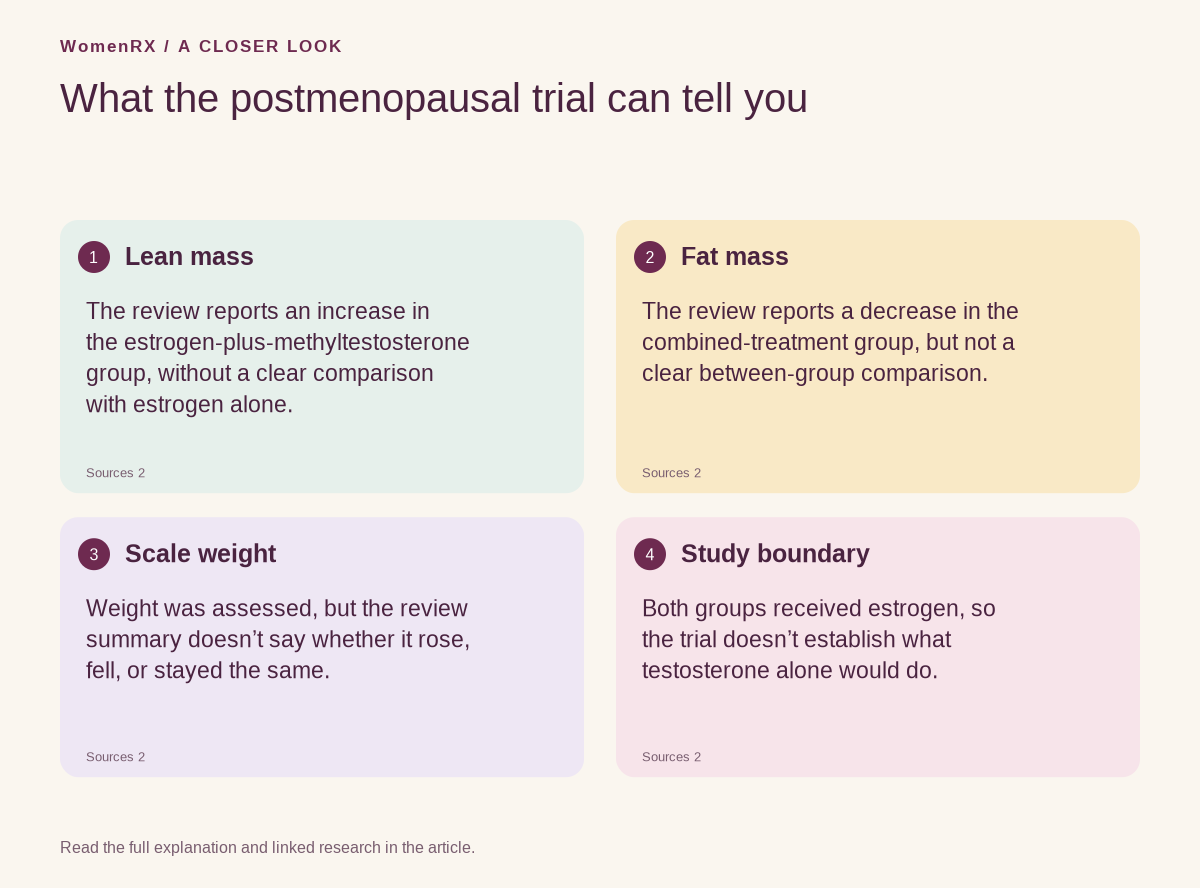
What the postmenopausal trial can tell you
Lean mass: The review reports an increase in the estrogen-plus-methyltestosterone group, without a clear comparison with estrogen alone.2
Fat mass: The review reports a decrease in the combined-treatment group, but not a clear between-group comparison.2
Scale weight: Weight was assessed, but the review summary doesn’t say whether it rose, fell, or stayed the same.2
Study boundary: Both groups received estrogen, so the trial doesn’t establish what testosterone alone would do.2
Read the figure as text
Separate the body-composition changes reported in one small trial from the scale-weight result and comparisons its summary leaves unclear.- Lean mass: The review reports an increase in the estrogen-plus-methyltestosterone group, without a clear comparison with estrogen alone.2
- Fat mass: The review reports a decrease in the combined-treatment group, but not a clear between-group comparison.2
- Scale weight: Weight was assessed, but the review summary doesn’t say whether it rose, fell, or stayed the same.2
- Study boundary: Both groups received estrogen, so the trial doesn’t establish what testosterone alone would do.2
More questions, answered
Does the trial show that testosterone caused weight loss?
No. The review reports decreased fat mass in the estrogen-plus-methyltestosterone group, but its summary doesn’t report the scale-weight result or provide a clear between-group comparison for body composition. It also can’t separate the effect of testosterone from estrogen. 2
If my weight changes, should I assume testosterone is responsible?
No. Weight includes muscle, bone, fat, and water, and a scale can’t show which component changed. If you gain or lose weight without trying, MedlinePlus advises discussing the change with a provider rather than assuming its cause. 1
Sources you can check
- Body Weight: MedlinePlusAccessed 2026-09-25Return to first citation
- The Impact of Testosterone Therapy on Cardiovascular Risk Among Postmenopausal Women.Britton RC, Beamish NF. · Journal of the Endocrine Society · 2023Return to first citation