Wegovy and Gallstones: What Symptoms and Risk Mean
Gallbladder problems were more common with Wegovy than placebo in weight-loss trials, and rapid weight loss is another risk to consider.
Wegovy doesn’t inevitably cause gallstones, but gallstones and gallbladder inflammation were reported more often with Wegovy than placebo in adult weight-loss trials. Substantial or rapid weight loss can also increase gallstone risk. If you develop severe abdominal pain, or pain with yellowing eyes or skin, dark urine, or pale stools, seek prompt medical evaluation rather than assuming it’s an ordinary treatment side effect. 12
Wegovy and weight change are two parts of the picture
In adult weight-reduction trials of Wegovy injection, gallstones were reported in 1.6% of people taking Wegovy and 0.7% taking placebo. Gallbladder inflammation, called cholecystitis, was reported in 0.6% and 0.2%, respectively. These figures describe what happened across trial groups, not what will happen to any one person. 1
Substantial or rapid weight loss can also increase gallstone risk. But weight loss isn’t the whole explanation for the trial difference: acute gallbladder disease remained more frequent with Wegovy than placebo even after researchers accounted for the degree of weight loss. That finding doesn’t establish why an individual person developed symptoms or prove a particular biological mechanism. 1
Your broader health history matters, too. Rapid weight loss, diabetes, Crohn’s disease, and a diet high in fat and low in fiber are among the gallstone risk factors listed in NHS guidance. Having a risk factor doesn’t mean abdominal pain is coming from your gallbladder. 2
If you had abdominal pain or a known gallbladder problem during a pregnancy, mention it when describing new symptoms. That’s useful history to share, not evidence that a past pregnancy changes Wegovy’s effect. The adult Wegovy trial rates above do not report outcomes by pregnancy history or establish a different medicine effect in women. 1
Symptoms worth taking seriously
Many gallstones cause no symptoms. Pain can occur when a stone blocks a bile duct, and gallstones can sometimes lead to inflammation of the gallbladder or pancreas. Abdominal pain alone cannot tell you whether a stone is present or whether Wegovy is involved. 2
Yellowing of the whites of the eyes or skin can signal jaundice; itchy skin, darker urine, or paler stools may come with it. Yellowing of the skin may be harder to notice on brown or Black skin, so changes in the eyes, urine, or stool matter too. Seek prompt medical evaluation for severe abdominal pain or pain alongside these changes. 2
How a suspected gallbladder problem is checked
When gallstones are suspected, Wegovy’s prescribing information calls for gallbladder studies and appropriate follow-up. An ultrasound and blood tests may be part of that evaluation. A scan can also find stones that are causing no symptoms, and those stones may not need treatment. 12
When describing what’s happening, say that you take Wegovy, when the pain began, whether it has changed, and whether you’ve had substantial or rapid weight loss. Mention any previous gallbladder problem, including one that arose during pregnancy. These details give the care team context without asking you to decide for yourself whether the medicine or weight loss caused the pain.
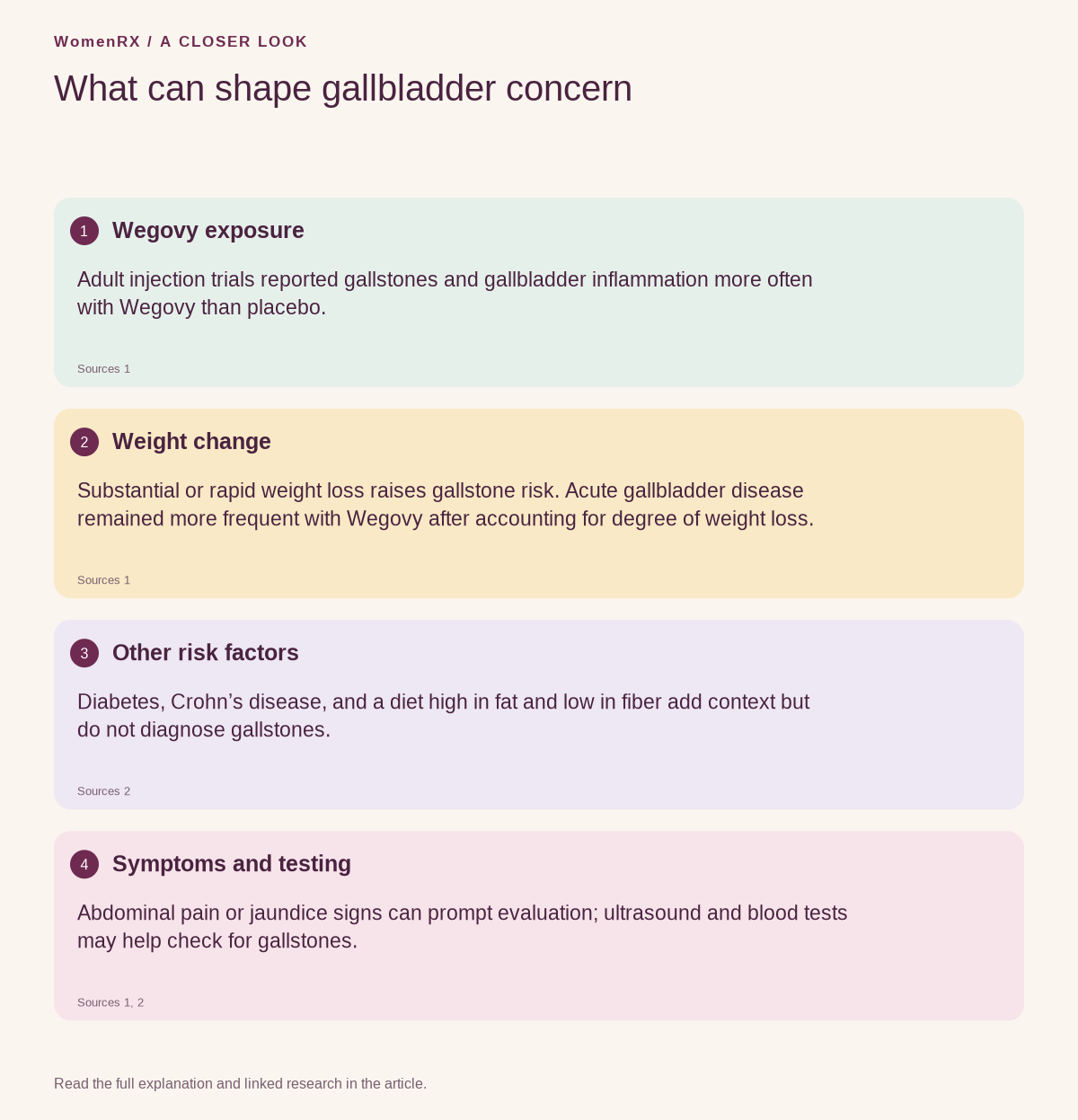
What can shape gallbladder concern
Wegovy exposure: Adult injection trials reported gallstones and gallbladder inflammation more often with Wegovy than placebo.1
Weight change: Substantial or rapid weight loss raises gallstone risk. Acute gallbladder disease remained more frequent with Wegovy after accounting for degree of weight loss.1
Other risk factors: Diabetes, Crohn’s disease, and a diet high in fat and low in fiber add context but do not diagnose gallstones.2
Symptoms and testing: Abdominal pain or jaundice signs can prompt evaluation; ultrasound and blood tests may help check for gallstones.12
Read the figure as text
These are separate considerations, not a formula for predicting who will develop gallstones or a way to diagnose abdominal pain.- Wegovy exposure: Adult injection trials reported gallstones and gallbladder inflammation more often with Wegovy than placebo.1
- Weight change: Substantial or rapid weight loss raises gallstone risk. Acute gallbladder disease remained more frequent with Wegovy after accounting for degree of weight loss.1
- Other risk factors: Diabetes, Crohn’s disease, and a diet high in fat and low in fiber add context but do not diagnose gallstones.2
- Symptoms and testing: Abdominal pain or jaundice signs can prompt evaluation; ultrasound and blood tests may help check for gallstones.12