Semaglutide and Gallstones: What Symptoms Mean
Semaglutide is linked with a small increase in gallbladder events in one large trial, but the results don’t show that the medicine alone caused them.
Yes, gallbladder problems, including gallstones, have been reported with semaglutide. In the SELECT trial, gallbladder-related disorders occurred in 2.8% of people taking semaglutide and 2.3% taking placebo; the difference was small, and the results don’t establish whether treatment, weight change, or both contributed. Tell your prescriber promptly about upper-abdominal pain or clay-colored stools. 2 3 1
What the trial numbers can, and can’t, tell you
Semaglutide’s prescribing information warns about gallbladder problems, including gallstones. A useful comparison comes from the SELECT randomized trial, which studied semaglutide versus placebo in people with overweight or obesity and established cardiovascular disease. Gallbladder-related disorders were reported in 2.8% of participants taking semaglutide and 2.3% taking placebo. That’s a difference of 0.5 percentage points in the proportions reported, not evidence that every person taking semaglutide faces the same risk. 2 3
The difference was mainly in gallstones, also called cholelithiasis: 1.4% with semaglutide versus 1.1% with placebo. Gallbladder inflammation, or cholecystitis, was similar between groups: 0.56% versus 0.59%. These are distinct outcomes, so a report of “gallbladder problems” doesn’t necessarily mean inflammation or a need for surgery. 3
The comparison suggests a modest increase in gallbladder-related events in that study, but it doesn’t settle why. SELECT found no clear relationship between the percentage of weight lost and serious gallbladder events. That finding doesn’t prove weight loss played no part: the trial wasn’t able to separate every possible effect of the medicine from effects related to changing weight. It also doesn’t show that semaglutide is the sole cause of an individual person’s gallstones. 3
The trial figures describe its overall study population, not a women-only or reproductive-stage estimate. They can’t tell you whether risk differs by menstrual stage, perimenopause, or menopause. 3
Symptoms worth taking seriously
Nausea, vomiting, diarrhea, constipation, and abdominal discomfort can occur with semaglutide, and gastrointestinal side effects are reported more often during dose escalation. Those symptoms alone don’t identify the gallbladder as the cause. 1 2
The medication instructions specifically flag pain in the upper abdomen as a possible gallbladder symptom. Clay-colored stools are also listed in the oral semaglutide patient instructions. Neither symptom proves you have gallstones, but tell your prescriber right away if you notice them, especially if they’re new or persistent. 1 2
Pay particular attention to severe abdominal pain that won’t go away. Semaglutide’s patient instructions say to stop taking the medicine and contact your prescriber right away in that situation because persistent severe pain is also a warning for pancreatitis, which is a different problem from gallstones. Don’t assume the cause based on where the pain is or on the fact that you take semaglutide. 1 2
A practical next step
If you have upper-abdominal pain or clay-colored stools, contact the clinician who prescribes your semaglutide and describe what you’re noticing and when it began. If the pain is severe and persistent, follow the medication instructions to stop taking it and call your prescriber right away. Your clinician can assess whether the symptoms fit a gallbladder problem or another cause; symptoms alone aren’t a diagnosis. 1 2
If you feel well, these trial findings aren’t a reason to assume you’ll develop gallstones or to change your treatment on your own. They’re a reason to know which symptoms the medication instructions call out and to report them promptly if they occur. 1 2 3
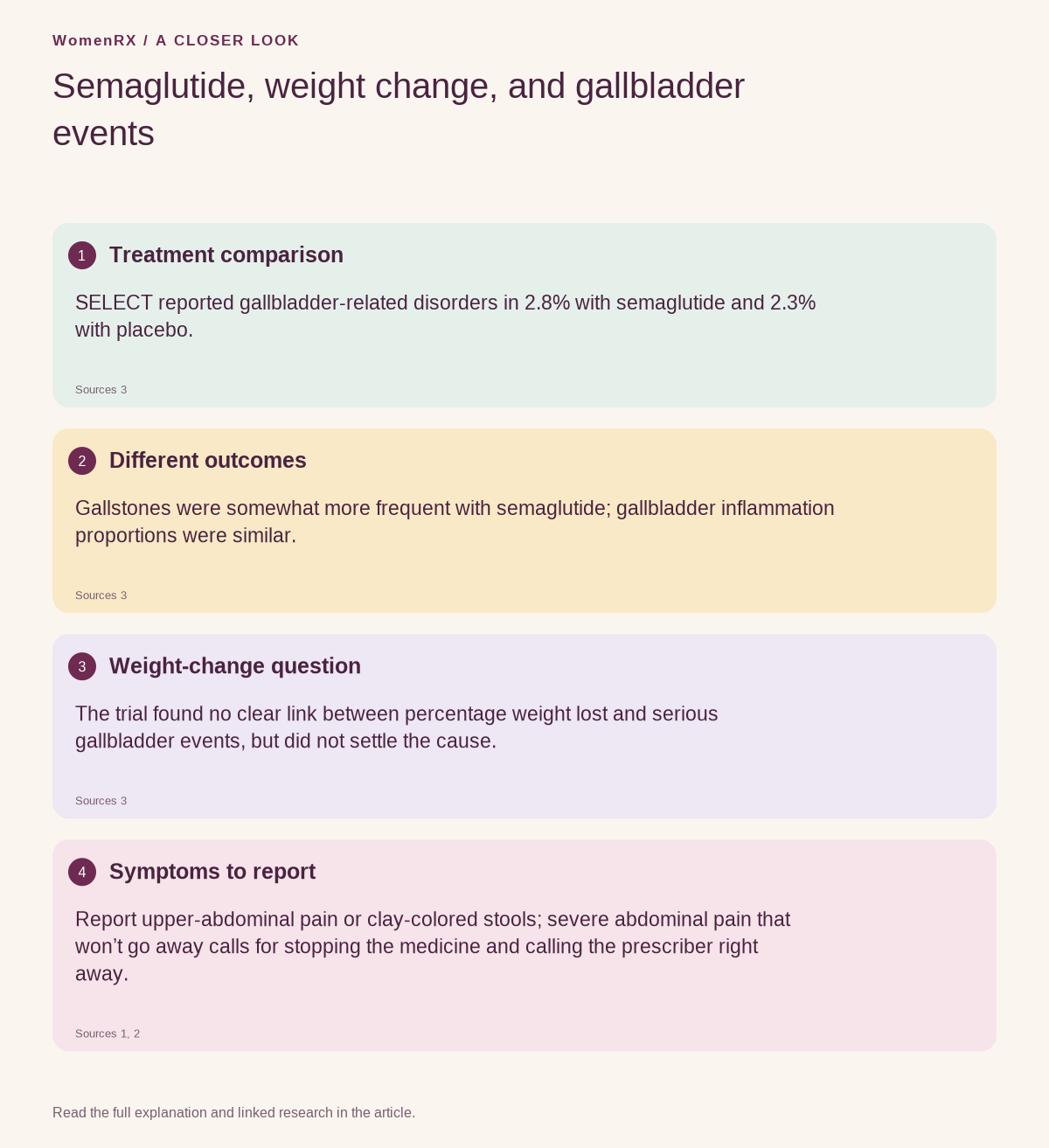
Semaglutide, weight change, and gallbladder events
Treatment comparison: SELECT reported gallbladder-related disorders in 2.8% with semaglutide and 2.3% with placebo.3
Different outcomes: Gallstones were somewhat more frequent with semaglutide; gallbladder inflammation proportions were similar.3
Weight-change question: The trial found no clear link between percentage weight lost and serious gallbladder events, but did not settle the cause.3
Symptoms to report: Report upper-abdominal pain or clay-colored stools; severe abdominal pain that won’t go away calls for stopping the medicine and calling the prescriber right away.12
Read the figure as text
The trial shows a small difference in reported gallbladder events, but does not establish whether medicine effects, weight change, or both explain it.- Treatment comparison: SELECT reported gallbladder-related disorders in 2.8% with semaglutide and 2.3% with placebo.3
- Different outcomes: Gallstones were somewhat more frequent with semaglutide; gallbladder inflammation proportions were similar.3
- Weight-change question: The trial found no clear link between percentage weight lost and serious gallbladder events, but did not settle the cause.3
- Symptoms to report: Report upper-abdominal pain or clay-colored stools; severe abdominal pain that won’t go away calls for stopping the medicine and calling the prescriber right away.12
More questions, answered
Does upper-abdominal pain mean I have gallstones?
No. Upper-abdominal pain is listed as a possible gallbladder symptom, but it can’t confirm the cause by itself. Contact your prescriber about it, especially if it’s new or persistent. 1 2
Are gallstones and gallbladder inflammation the same thing?
No. Gallstones are called cholelithiasis; gallbladder inflammation is cholecystitis. In SELECT, gallstones were somewhat more frequent with semaglutide, while cholecystitis proportions were similar between groups. 3
Sources you can check
- OZEMPIC (ORAL SEMAGLUTIDE) TABLET RYBELSUS (ORAL SEMAGLUTIDE) TABLET [NOVO NORDISK PHARMACEUTICAL INDUSTRIES, LP] | US prescribing information and patient instructionsAccessed 2026-09-25Return to first citation
- WEGOVY (SEMAGLUTIDE) INJECTION, SOLUTION WEGOVY (SEMAGLUTIDE) TABLET [NOVO NORDISK PHARMACEUTICAL INDUSTRIES, LP] | US prescribing information and patient instructionsAccessed 2026-09-25Return to first citation
- Safety profile of semaglutide versus placebo in the SELECT study: a randomized controlled trial.Kushner RF, Ryan DH, Deanfield J, Kokkinos A, Cercato C, Wilding J, Burguera B, Wu CC, Craciun AE, Pall D, Hramiak I, Hjelmesæth J, Harder-Lauridsen NM, Weimers P, Jeppesen OK, Kal... · Obesity (Silver Spring, Md.) · 2025Return to first citation