Waking Up at Night? Match the Pattern to the Cause
When you wake can offer clues, from hot flashes to sleep habits, pain, mood, or another sleep or health issue.
Repeated waking can be insomnia even if you fall asleep easily. Notice whether a hot flash or another discomfort wakes you, whether you struggle to get back to sleep, or whether you wake early and stay awake. Those patterns aren’t a diagnosis, but a short log can help you spot possible contributors and choose what to change or discuss. 2 6
First, notice what kind of waking it is
Waking during the night is common. If it happens regularly and leaves you tired or unrefreshed, it may be part of insomnia, which can involve trouble staying asleep as well as trouble falling asleep. 2
Try separating two patterns: waking in the middle of the night and having trouble returning to sleep, versus waking earlier than you want and not getting back to sleep. Also note whether you feel rested the next day. These details help describe the problem more clearly; they don’t identify its cause on their own. 2 6
Follow the clue that repeats
A wave of heat or sweating. Menopause-related hot flashes and night sweats are one possible reason for disrupted sleep. In a study of 158 premenopausal and postmenopausal women, postmenopausal participants reported more night sweats, hot flashes, depressive symptoms, and awakenings. The study found an association, not proof that menopause explains every person’s waking. 5 If heat or sweating often comes just before you wake, note that connection. Sweating that soaks your clothes and bedding despite a cool room is different from simply feeling too warm; regular soaking night sweats are worth discussing with a clinician. 1
A change in routine or sleep setting. Noise, an uncomfortable bed, or a room that feels too hot or cold can interfere with sleep. Caffeine, alcohol, tobacco, some medicines, and shift work or travel can also contribute to insomnia. 2 3 For example, if you wake after drinking alcohol or on nights when the room is warm, record that rather than assuming every awakening is hormonal.
Pain or mood symptoms. Long-term pain can disrupt sleep, and stress or anxiety can play a role in insomnia. Depressive symptoms were associated with disturbed sleep regardless of menopause status in the study of midlife women. 3 4 5 A note about pain, worry, or mood alongside the time you woke may reveal a pattern worth addressing.
A possible sleep or health condition. Insomnia can be related to medical conditions, medicines, or another sleep disorder. A clinical review recommends considering sleep apnea, restless legs syndrome, narcolepsy, medicines, and medical or mental health conditions when assessing insomnia. 2 6 A log can help show what is happening, but it can’t rule these out.
Make a small, useful night-waking log
For a week or two, jot down your bedtime, when you woke, whether you got back to sleep, and your final wake time. Add what you noticed just before or during waking, such as feeling hot, pain, worry, noise, or needing to use the bathroom. Include relevant changes like alcohol, caffeine, a new medicine, travel, or a shift in work hours. Record how you felt the next day, too.
Keep it simple. The goal isn’t to monitor every minute or find a perfect explanation; it’s to see whether the same clue shows up repeatedly. Bring the notes if sleep trouble continues or affects your daytime life. An evaluation may include questions about sleep habits and medical history, and sometimes a sleep study. 2
Match the next step to the pattern
If the room, noise, or schedule seems to be part of the problem, try adjusting that factor and keeping regular sleeping hours. Sleep guidance also suggests going to bed when sleepy and avoiding caffeine, tea, coffee, tobacco, or alcohol close to bedtime. 3 If the pattern points to hot flashes, pain, mood symptoms, a medicine, or another sleep problem, discuss that possible contributor rather than treating every awakening as the same issue.
For ongoing insomnia, cognitive behavioral therapy for insomnia (CBT-I) is a treatment option: it works on thoughts and behaviors that can keep sleep problems going. A clinical review describes CBT-I, including digital CBT-I, as first-line treatment across insomnia types and causes. 2 6 If sleep habits haven’t helped or the problem has lasted for months, seek an evaluation; regular soaking night sweats, or sweats along with unexplained weight loss, feverishness, cough, or diarrhea, also deserve medical attention. 1 3
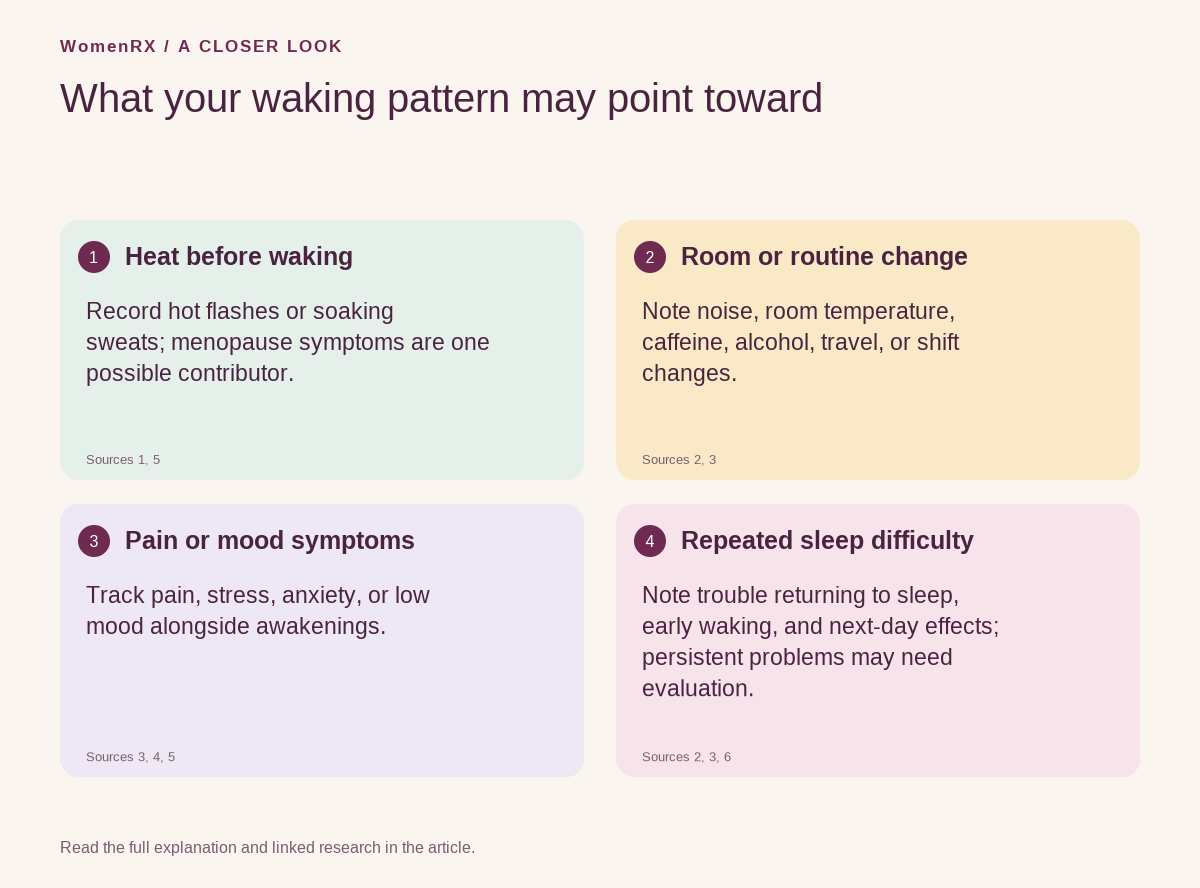
What your waking pattern may point toward
Heat before waking: Record hot flashes or soaking sweats; menopause symptoms are one possible contributor.15
Room or routine change: Note noise, room temperature, caffeine, alcohol, travel, or shift changes.23
Pain or mood symptoms: Track pain, stress, anxiety, or low mood alongside awakenings.345
Repeated sleep difficulty: Note trouble returning to sleep, early waking, and next-day effects; persistent problems may need evaluation.236
Read the figure as text
Compare the waking pattern with clues to record. These are possibilities to explore, not a diagnostic checklist.- Heat before waking: Record hot flashes or soaking sweats; menopause symptoms are one possible contributor.15
- Room or routine change: Note noise, room temperature, caffeine, alcohol, travel, or shift changes.23
- Pain or mood symptoms: Track pain, stress, anxiety, or low mood alongside awakenings.345
- Repeated sleep difficulty: Note trouble returning to sleep, early waking, and next-day effects; persistent problems may need evaluation.236
More questions, answered
Does waking at the same time every night mean it’s hormonal?
Not by itself. Menopause-related hot flashes and night sweats can disturb sleep, but insomnia can also relate to habits, stress, pain, medicines, medical conditions, or other sleep disorders. Note what you experience around the waking instead of treating the clock time as proof of a cause. 1 2 6
When should I get night sweats checked?
If you regularly wake with clothes or bedding soaked even though the room is cool, arrange a medical evaluation. Also seek evaluation if the sweats come with unexplained weight loss, feverishness or chills, cough, or diarrhea. 1
Sources you can check
- Night sweats - NHSAccessed 2026-09-25Return to first citation
- Insomnia | MedlinePlusAccessed 2026-09-25Return to first citation
- Insomnia - NHSAccessed 2026-09-25Return to first citation
- Pain | MedlinePlusAccessed 2026-09-25Return to first citation
- Sleep in midlife women: effects of menopause, vasomotor symptoms, and depressive symptoms.Lampio L, Polo-Kantola P, Polo O, Kauko T, Aittokallio J, Saaresranta T. · Menopause (New York, N.Y.) · 2014Return to first citation
- Insomnia in ambulatory care: A clinical review.Dopheide JA, Roth WR, Chu MKL. · American journal of health-system pharmacy : AJHP : official journal of the American Society of Health-System Pharmacists · 2025Return to first citation