Vulvodynia: What May Contribute to Vulvar Pain
Persistent vulvar pain deserves an assessment even when the skin looks normal and no single cause is apparent.
Vulvodynia means vulvar pain lasting at least three months without another clearly identifiable cause. Its exact cause isn’t known. An assessment looks for treatable explanations, such as an infection or skin condition, while also exploring where the pain occurs and what brings it on. Pain with touch or sex is worth describing in detail, even if an earlier exam found nothing visible. 5 6
What the name does, and doesn’t, explain
The vulva is the area around the outside of the vagina. Vulvodynia describes pain there that has lasted at least three months and cannot be explained by another identifiable condition. It doesn’t identify one hidden cause that every person has. The exact cause remains unknown. 5 6
That distinction matters because vulvar pain and vulvodynia aren’t automatically the same thing. For example, a skin condition or infection may cause pain that needs its own treatment. It’s also possible to have ongoing pain without a visible change that explains it. An assessment helps sort out which situation you’re in. 3 5 6
What else might cause the pain?
Clinicians consider what the skin looks and feels like, whether there’s itching or discharge, and whether symptoms suggest an infection. The European guideline for vulval conditions includes dermatitis, psoriasis, lichen sclerosus and other skin conditions alongside vulvodynia. It recommends considering STI screening according to symptoms and risk factors, and excluding a yeast infection when vulvar itching occurs, particularly with increased vaginal discharge. That’s a reason for targeted questions or tests, not a reason to assume every case is an infection. 3
Lichen sclerosus is one example of a condition worth recognizing: it can cause itchy white patches that hurt when the skin is rubbed, and sex may be painful if the vulva becomes tight. It can affect people of any age, though it’s more common in women over 50. If you notice a patch, point it out during an assessment rather than treating the pain as unexplained. 1
Pain with penetration can have more than one possible explanation. A review distinguishes vulvodynia from the broader category of recurrent pain with intercourse and involuntary pelvic-floor contraction with attempted penetration. Another review discusses pelvic-floor muscle pain among conditions considered in women with pelvic pain. Neither means that pelvic-floor muscles are the cause of your vulvar pain; they’re a relevant part of the discussion when touch or penetration hurts. 4 5
Where the pain is matters too. Pain felt at the vulvar opening with contact is a different description from pain felt deep inside during sex. If pain is deep, a clinician may discuss whether evaluation for pelvic-organ conditions is appropriate; it doesn’t, by itself, establish that an organ condition is present. Routine imaging or lab tests aren’t indicated for every person with pain during sex, but tests may help answer a specific question raised by symptoms or an exam. 5
What an assessment can look like
Expect questions about when the pain began, exactly where you feel it, and what it feels like. Mention whether it happens without contact or during particular activities. For example, you could describe whether a tampon, sex or an examination brings on pain, and whether the feeling is at the opening or deeper inside. Those details help communicate the problem; they aren’t a test you have to pass. Clinicians may also ask about past skin conditions, vaginal infections and pain with sex. 2 6
An examination may help look for skin changes or another explanation. A swab may be used when an infection needs to be ruled out. The European vulval-conditions guideline emphasizes informed consent for intimate examinations and says a chaperone should be offered. You can tell the clinician what has hurt during previous exams and ask them to explain a step before it happens. 3 6
If no separate cause is found
An assessment may end with a diagnosis of vulvodynia even though it cannot pinpoint why the pain began. The next question is how to make daily life and intimacy more comfortable. Evidence for vulvodynia treatments is limited, but a clinical review finds the most consistent evidence of benefit for pelvic-floor physical therapy and psychosocial approaches such as cognitive behavioral therapy. These are approaches to pain management, not claims that the pain is muscular or psychological in every case. 5
If vulvar discomfort keeps returning, or pain is making tampon use or sex difficult, it’s reasonable to seek an assessment. You don’t need to decide in advance whether it’s vulvodynia, an infection or a skin problem. 6
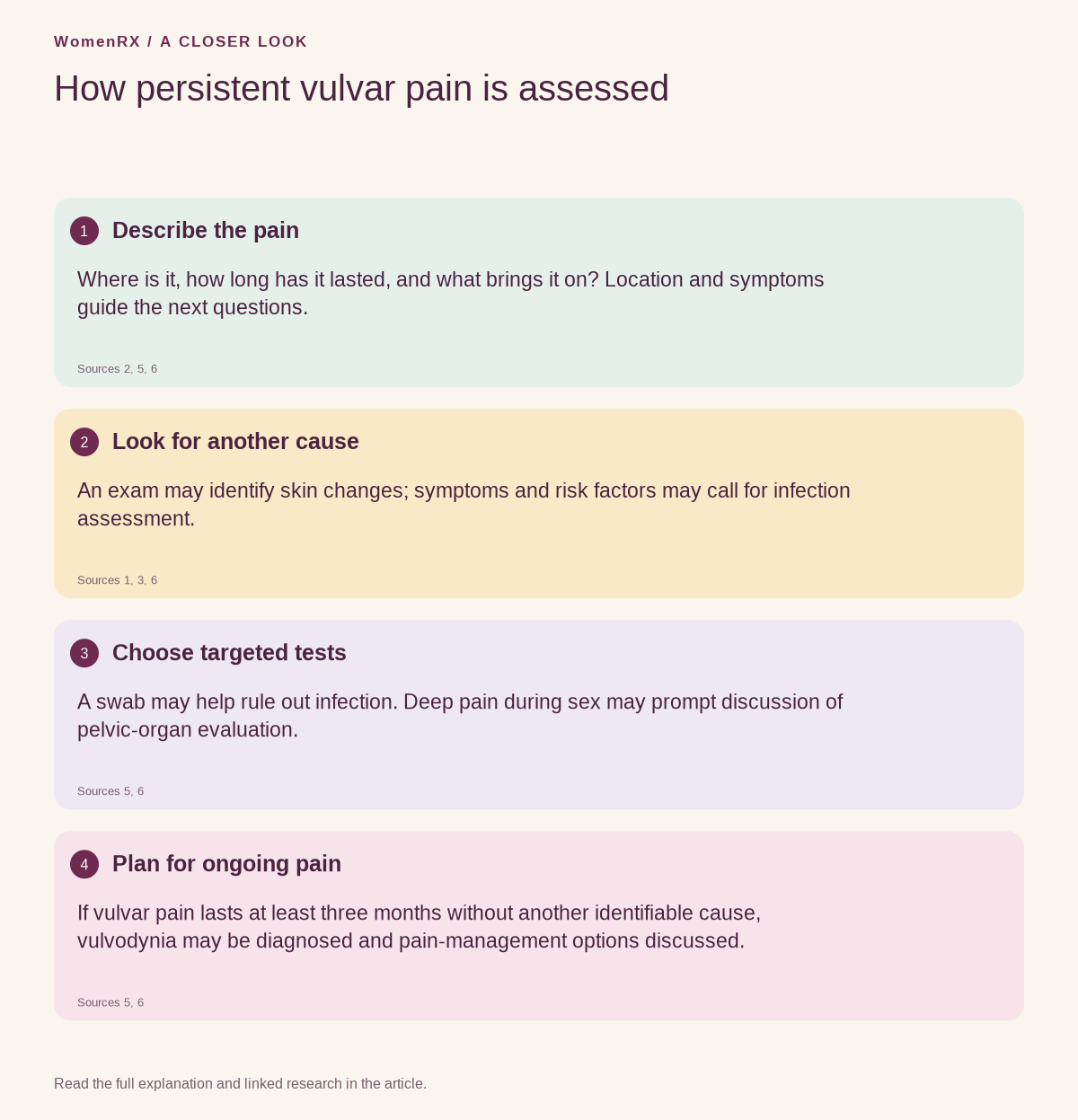
How persistent vulvar pain is assessed
Describe the pain: Where is it, how long has it lasted, and what brings it on? Location and symptoms guide the next questions.256
Look for another cause: An exam may identify skin changes; symptoms and risk factors may call for infection assessment.136
Choose targeted tests: A swab may help rule out infection. Deep pain during sex may prompt discussion of pelvic-organ evaluation.56
Plan for ongoing pain: If vulvar pain lasts at least three months without another identifiable cause, vulvodynia may be diagnosed and pain-management options discussed.56
Read the figure as text
The steps separate a description of pain from a diagnosis and show why testing depends on the symptoms.- Describe the pain: Where is it, how long has it lasted, and what brings it on? Location and symptoms guide the next questions.256
- Look for another cause: An exam may identify skin changes; symptoms and risk factors may call for infection assessment.136
- Choose targeted tests: A swab may help rule out infection. Deep pain during sex may prompt discussion of pelvic-organ evaluation.56
- Plan for ongoing pain: If vulvar pain lasts at least three months without another identifiable cause, vulvodynia may be diagnosed and pain-management options discussed.56
More questions, answered
Can vulvodynia be diagnosed if the skin looks normal?
Yes. Vulvodynia is defined by persistent vulvar pain without another clearly identifiable cause, not by a required visible skin change. An examination still matters because a skin condition or other explanation may need different care. 3 5
Does pain during sex always mean vulvodynia?
No. Pain during sex can occur for different reasons, and pain felt deep inside calls for a different discussion from pain at the vulva. A clinician can use the location, symptoms and examination findings to decide whether any targeted tests would help. 5
Sources you can check
- Lichen sclerosus - NHSAccessed 2026-09-25Return to first citation
- Pain | MedlinePlusAccessed 2026-09-25Return to first citation
- 2016 European guideline for the management of vulval conditions.van der Meijden WI, Boffa MJ, Ter Harmsel WA, Kirtschig G, Lewis FM, Moyal-Barracco M, Tiplica GS, Sherrard J. · Journal of the European Academy of Dermatology and Venereology : JEADV · 2017Return to first citation
- Pelvic Pain and Pelvic Floor Disorders in Women: A Physiatrist's Approach to Diagnosis, Management, and Multidisciplinary Care.Laurenzana L, Fitzgerald C, Bennis S. · Physical medicine and rehabilitation clinics of North America · 2025Return to first citation
- Female Pelvic Conditions: Dyspareunia and Vulvodynia.Brown B. · FP essentials · 2024Return to first citation
- Vulvodynia (vulval pain) - NHSAccessed 2026-09-25Return to first citation