Vitamin E Deficiency: When to Check, Not Guess
Most people get enough vitamin E from food, but certain health conditions can make a low level worth investigating.
Vitamin E deficiency is uncommon when you absorb nutrients normally and eat a varied diet. It becomes more plausible with fat-malabsorption disorders, certain inherited conditions, or after gastrectomy. Muscle weakness or coordination problems can raise concern, but symptoms alone can’t identify the cause. Assessment may include a blood measurement considered alongside your health history. Before adding a high-dose supplement, review the product and your medicines, especially blood thinners. 1 2 4
Why your health history matters more than a symptom list
Vitamin E is fat-soluble: it’s absorbed through the small intestine, and the liver preferentially retains one form, alpha-tocopherol. Most people get enough vitamin E from food. Vegetable oils, nuts, seeds, leafy greens, and fortified cereals are among its sources. If your body has trouble handling dietary fat, though, getting vitamin E into your diet may not be the whole story. 1 2
One clear example is abetalipoproteinemia, a rare inherited disorder that causes poor absorption of dietary fat. Another rare condition, ataxia with vitamin E deficiency (AVED), works differently: a liver protein that helps transfer alpha-tocopherol is defective or absent. Both can lead to severe deficiency and nerve damage. These are reasons for specialized assessment, not conditions to diagnose from a symptom checklist. 1
Other medical histories can make a vitamin E conversation worthwhile. MedlinePlus identifies Crohn’s disease, cystic fibrosis, and certain liver diseases as conditions in which someone may need extra vitamin E. It does not mean that everyone with one of these diagnoses is deficient. Stomach surgery is another specific consideration: in a study of 48 adults who had gastrectomy for stomach cancer, 7 had low serum vitamin E. Low levels were more frequent after total than subtotal gastrectomy and were associated with neuropathy. That small, specific study doesn’t tell us the risk after other kinds of surgery. 2 4
What symptoms and a blood test can tell you
Severe vitamin E deficiency can affect nerve signaling and muscle function. The NIH Office of Dietary Supplements describes muscle weakness and nerve problems in abetalipoproteinemia, including retinal damage that can lead to vision loss. AVED can cause progressive problems with walking. These serious effects explain why a relevant health history and new muscle or coordination problems deserve assessment. They don’t make weakness or unsteadiness a reliable vitamin E test: those symptoms can have other causes. 1
A clinician may measure vitamin E in the blood, commonly as serum alpha-tocopherol, and consider the result with your symptoms and medical history. For example, the gastrectomy study assessed serum vitamin E alongside other measurements and found that low vitamin E was associated with low total cholesterol. The NIH Office of Dietary Supplements also notes limitations in validated measures of vitamin E status. A blood result is useful information, but it isn’t a complete diagnosis by itself. 1 4
A supplement is not the same as an assessment
Vitamin E supplements typically contain alpha-tocopherol, although products with other forms exist. Natural and synthetic alpha-tocopherol differ in their composition. A label’s form and amount are worth checking, but neither tells you whether you’re deficient or what amount is right for you. The very large supplemental amounts used for some rare inherited disorders are treatments for those conditions, not a model for self-treating a suspected deficiency. 1
Bring the product label and your medicine list to a clinician or pharmacist before adding a high-dose supplement. MedlinePlus specifically warns that vitamin E supplements may be harmful for people taking blood thinners or other medicines. That is a reason to check your particular combination, rather than assume a vitamin is harmless because it’s sold over the counter. 2
Taking extra vitamin E also isn’t a proven way to prevent heart disease. In a randomized trial of nearly 10,000 people at high risk of heart attack or stroke, those assigned vitamin E had no fewer cardiovascular events than those assigned placebo over 4.5 years. That prevention question is separate from treating a diagnosed deficiency. 1
If you’re pregnant or breastfeeding
Pregnancy or breastfeeding alone doesn’t establish that you’re low in vitamin E. They are good times to look at your total intake, including any prenatal vitamin and separate supplements, before adding another product. Vitamin E intake recommendations distinguish pregnancy from lactation. 1
In a review of six randomized trials involving 3,823 pregnant women, vitamin E supplementation raised maternal blood alpha-tocopherol levels but did not show a significant effect on gestational age at birth or birth weight. A higher blood level, in other words, isn’t by itself evidence of a better birth outcome. If you have a condition that could affect your vitamin E status, discuss that specific history and everything you’re taking with your pregnancy care team. 3
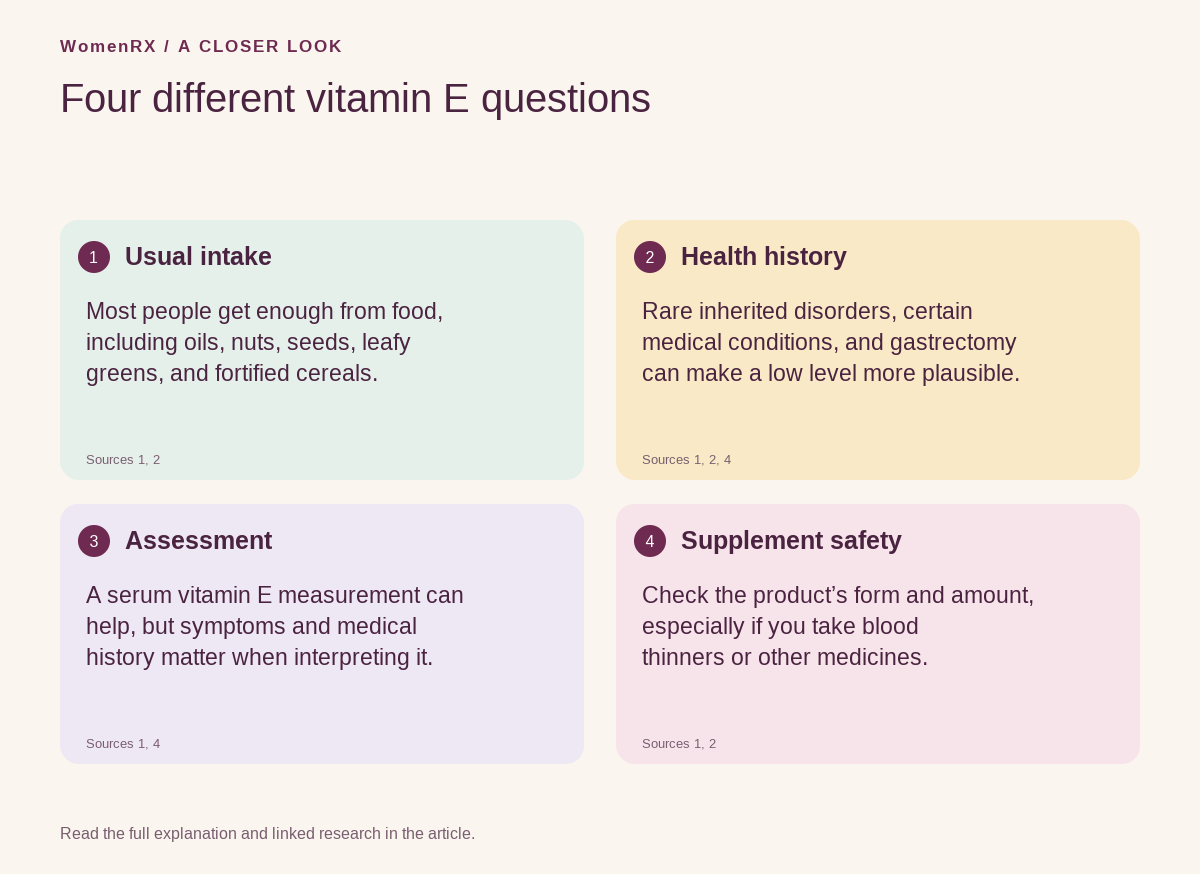
Four different vitamin E questions
Usual intake: Most people get enough from food, including oils, nuts, seeds, leafy greens, and fortified cereals.12
Health history: Rare inherited disorders, certain medical conditions, and gastrectomy can make a low level more plausible.124
Assessment: A serum vitamin E measurement can help, but symptoms and medical history matter when interpreting it.14
Supplement safety: Check the product’s form and amount, especially if you take blood thinners or other medicines.12
Read the figure as text
The reason for concern determines whether food, assessment, or supplement safety is the useful next question.- Usual intake: Most people get enough from food, including oils, nuts, seeds, leafy greens, and fortified cereals.12
- Health history: Rare inherited disorders, certain medical conditions, and gastrectomy can make a low level more plausible.124
- Assessment: A serum vitamin E measurement can help, but symptoms and medical history matter when interpreting it.14
- Supplement safety: Check the product’s form and amount, especially if you take blood thinners or other medicines.12
Sources you can check
- Vitamin E - Health Professional Fact SheetAccessed 2026-09-25Return to first citation
- Vitamin E: MedlinePlusAccessed 2026-09-25Return to first citation
- Efficacy of Vitamin E Supplementation During Pregnancy on the Vitamin E Nutritional Status of the Mother-Child Dyad: A Systematic Review and Meta-Analysis of Randomized Controlled Trial.Carneiro BR, de Araújo AC, Sisinano YM, de Oliveira AF, de Rezende AA, da Silva Ribeiro KD. · Food science & nutrition · 2026Return to first citation
- Vitamin E malabsorption and neurological consequences after gastrectomy for gastric cancer.Rino Y, Suzuki Y, Kuroiwa Y, Yukawa N, Saeki H, Kanari M, Wada H, Ino H, Takanashi Y, Imada T. · Hepato-gastroenterology · 2007Return to first citation