Vitamin C Supplements: Side Effects and When to Check First
Stomach upset is the most common problem with high-dose vitamin C, but kidney conditions, iron overload, and some cancer treatments call for a closer look.
Vitamin C supplements are usually low risk, but higher amounts can cause diarrhea, nausea, and abdominal cramps. Before starting or increasing one, check the total amount from all supplements and ask about it if you have kidney disease or a history of high urinary oxalate, hereditary hemochromatosis, or are receiving chemotherapy or radiation. These cautions are specific, not a reason everyone needs to avoid vitamin C. 1
Start with the amount, not just the label
Vitamin C from food and supplements counts toward your daily total. For adults age 19 and older, the recommended amount is 75 mg a day for women, 85 mg during pregnancy, and 120 mg while breastfeeding. The adult upper limit is 2,000 mg a day from all sources, including food and supplements. That limit is not a target or a guarantee that a high dose will suit you; it is the highest daily intake considered unlikely to cause harm for most people. 1
The first effects of taking more than your body absorbs are usually digestive: diarrhea, nausea, abdominal cramps, or other stomach upset. Vitamin C that remains unabsorbed in the gut can draw in water, which helps explain why symptoms may become more noticeable as the dose rises. If a supplement is bothering your stomach, check the amount per serving and whether you’re doubling up across products, such as a multivitamin and a separate vitamin C tablet. 1
Kidney concerns depend on your history
High vitamin C intake can increase urinary oxalate and uric acid. Research has not consistently shown that this leads to kidney stones in everyone, but concern is greater for people with kidney disorders, especially those with pre-existing hyperoxaluria, a condition involving high oxalate in the urine. If you have kidney disease, have had oxalate-related stones, or are on dialysis, ask your care team or pharmacist before adding a high-dose supplement. 1
A randomized trial in 99 people with severe renal impairment found that vitamin C supplementation did not improve the symptoms or cardiovascular stability measured in the study. Researchers also saw a trend toward worse nausea in the supplement group. This study does not show that vitamin C is harmful for everyone with kidney disease, but it is a reminder that people with severe kidney problems should not assume a supplement is automatically harmless. 2
Iron overload is another reason to check first
Vitamin C helps the body absorb nonheme iron, the type found in plant foods. In healthy people, this is not generally considered a safety problem. But if you have hereditary hemochromatosis, a condition that causes iron to build up in the body, regular high-dose vitamin C could add to iron overload and tissue damage. Mention the supplement to the clinician managing your iron levels before taking it regularly. 1
Medicine questions worth asking
Chemotherapy or radiation: Whether antioxidant supplements affect cancer treatment is unsettled. Some evidence raises concern that antioxidants could interfere with certain treatments, while other evidence suggests they may protect healthy tissue or support treatment. It’s not clear whether oral vitamin C changes levels enough to cause those effects. If you’re receiving chemotherapy or radiation, check with your oncology team before taking vitamin C supplements, particularly high-dose products. 1
A specific cholesterol-treatment combination: Vitamin C taken with other antioxidants may reduce the HDL increase associated with niacin plus simvastatin. It’s not known whether this applies to other cholesterol medicines or statin regimens, so this is not a blanket warning about all statins. If you take niacin and simvastatin and are considering an antioxidant supplement, ask your prescriber or pharmacist whether your lipid levels need monitoring. 1
Pregnancy and breastfeeding
Pregnancy and breastfeeding do not automatically mean you need to avoid vitamin C. They do change the recommended intake, and the adult upper limit remains 2,000 mg a day during these life stages. Use those figures as context for the total amount from food and supplements, not as a reason to add a high-dose product. If you’re considering a separate supplement beyond what you already take, check the combined amount and ask your prenatal or postpartum care team whether there’s a reason to add it. 1
A useful check is to bring the product label, including the serving size, and a list of other supplements and medicines to a pharmacist or clinician. That makes it easier to spot overlapping vitamin C and decide whether a condition or treatment changes the answer for you.
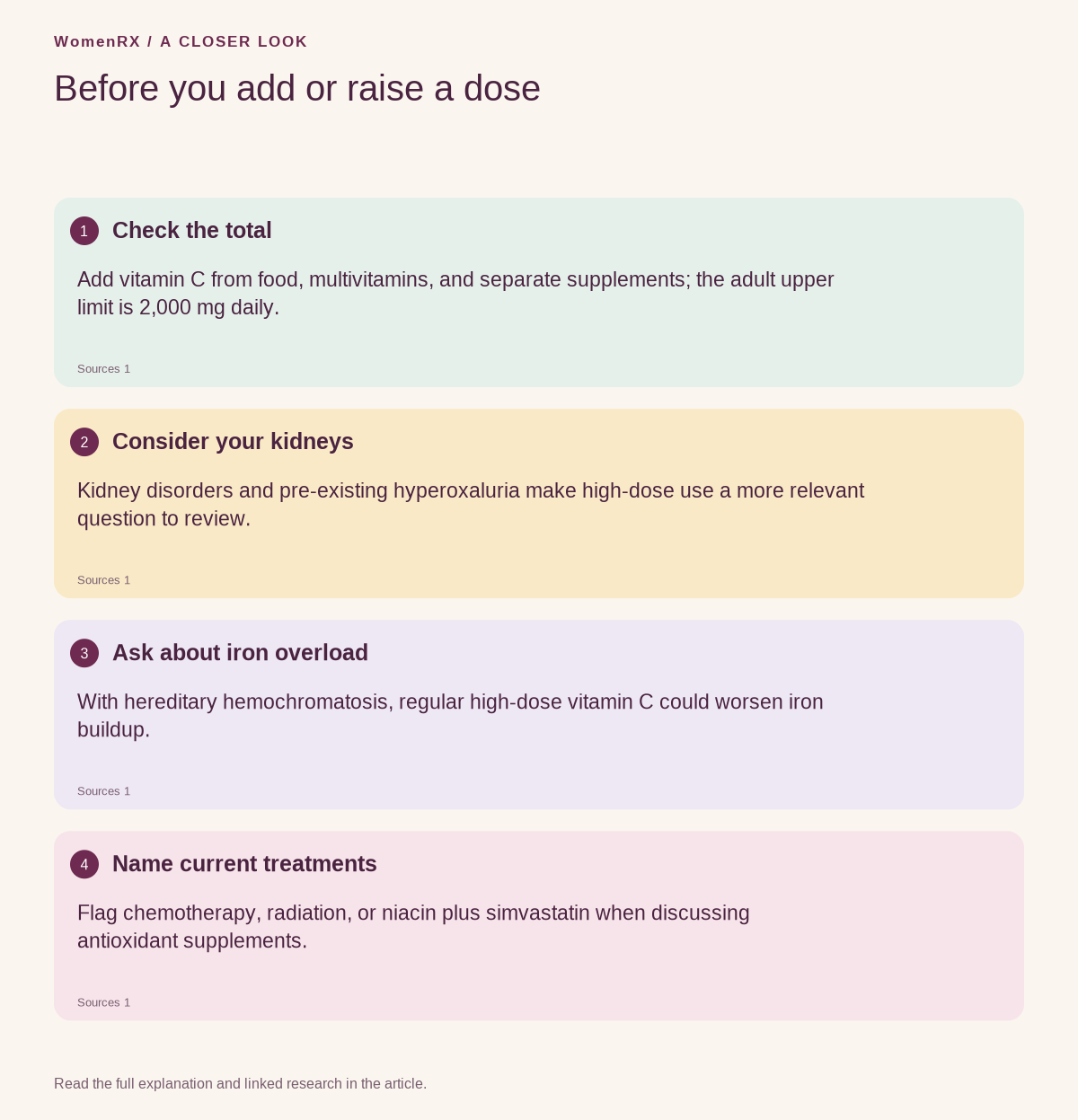
Before you add or raise a dose
Check the total: Add vitamin C from food, multivitamins, and separate supplements; the adult upper limit is 2,000 mg daily.1
Consider your kidneys: Kidney disorders and pre-existing hyperoxaluria make high-dose use a more relevant question to review.1
Ask about iron overload: With hereditary hemochromatosis, regular high-dose vitamin C could worsen iron buildup.1
Name current treatments: Flag chemotherapy, radiation, or niacin plus simvastatin when discussing antioxidant supplements.1
Read the figure as text
Use these four checks to identify the situations where a vitamin C supplement deserves a closer look.- Check the total: Add vitamin C from food, multivitamins, and separate supplements; the adult upper limit is 2,000 mg daily.1
- Consider your kidneys: Kidney disorders and pre-existing hyperoxaluria make high-dose use a more relevant question to review.1
- Ask about iron overload: With hereditary hemochromatosis, regular high-dose vitamin C could worsen iron buildup.1
- Name current treatments: Flag chemotherapy, radiation, or niacin plus simvastatin when discussing antioxidant supplements.1
More questions, answered
Are vitamin C supplements more risky than vitamin C in food?
The upper limit applies to vitamin C from both food and supplements. The practical concern is often that a supplement can add a large amount at once or overlap with other products; high intakes are more likely to cause digestive symptoms. 1
Sources you can check
- Vitamin C - Health Professional Fact SheetAccessed 2026-09-25Return to first citation
- Vitamin C supplementation in kidney failure: effect on uraemic symptoms.Singer RF. · Nephrology, dialysis, transplantation : official publication of the European Dialysis and Transplant Association - European Renal Association · 2011Return to first citation