Vitamin B12: Do You Need a Supplement, and Which Type?
The right B12 plan depends on whether you’re preventing low intake or treating a deficiency, and on why your B12 may be low.
If you eat few foods that provide B12, a supplement may help prevent low intake. Symptoms or a low test result call for a different conversation: what’s causing the problem, and does it need treatment? Injections bypass absorption barriers, while high-dose oral B12 may work in some situations. The cause helps determine which route to discuss. 12
First, separate prevention from treatment
If you’re considering B12 because you eat no animal products, your immediate question may be how to get enough B12 regularly. Vegetarian diets can also raise the risk of inadequate B12 intake. That’s a prevention question, and it’s different from deciding how to treat a suspected or confirmed deficiency. 12
Low B12 isn’t always about food. Pernicious anemia, digestive conditions, gastrointestinal surgery and prolonged use of medicines such as metformin or proton pump inhibitors can contribute to deficiency. For example, if you eat foods containing B12 but have had gastrointestinal surgery, simply comparing supplement labels won’t tell you whether you’re absorbing enough or what treatment you need. 1
Your risk isn’t determined by being a woman. Diet, medical history and medicines matter. Pregnancy and breastfeeding add another reason to pay attention to B12 intake and possible deficiency, because a mother’s B12 status can affect her baby. 1
Symptoms and blood results need context
B12 deficiency can affect the nervous system, and neurological symptoms can occur even without anemia. If you have new or worsening neurological symptoms, seek timely assessment rather than waiting to see whether an over-the-counter supplement helps: delayed diagnosis can allow damage that may be irreversible. Symptoms alone, though, can’t tell you that B12 is the cause. 1
A test result may need context too. Methylmalonic acid, often called MMA, is a sensitive marker of B12 status. But MMA can also rise with reduced kidney function and tends to be higher in older adults. The useful question is how a result fits with your symptoms and health history, not whether one number settles the issue by itself. 1
Oral B12 and injections solve different practical problems
Injections bypass barriers to absorption. They’re typically used when deficiency is linked to pernicious anemia or another condition causing significant malabsorption. High-dose oral B12 may also be effective in some situations, so an absorption concern doesn’t automatically settle the route for every person. A review summarized by the NIH Office of Dietary Supplements included three randomized trials comparing high-dose oral with intramuscular B12 in 153 participants altogether. That’s a limited basis for choosing one route for every cause of deficiency. 1
Cyanocobalamin is a form of B12 used in supplements and treatment. The name on a bottle, however, doesn’t answer the bigger question: are you addressing low dietary intake, or treating a deficiency that may have an absorption-related cause? If treatment is needed, ask why a particular form and route are being proposed for you. 12
Follow-up matters as well. B12 levels and symptoms may take weeks to improve with treatment, and blood tests may be used to monitor B12 levels. Ask what improvement to look for and how the plan will be reassessed if it isn’t working as expected. 2
When you’re pregnant or breastfeeding
B12 deficiency during pregnancy or breastfeeding may affect the baby. Exclusively breastfed infants of mothers who eat no animal products may have very limited B12 reserves, particularly if the mother is deficient. If that describes your diet, bring up your B12 intake and any concern about deficiency during pregnancy or breastfeeding. The same conversation is worthwhile if you have a condition that could interfere with absorption. 1
Questions that make the next decision clearer
You don’t need to arrive with a favorite product. You can ask:
- Am I trying to prevent low intake, or do my symptoms or results suggest a deficiency that needs assessment?
- Could my diet, a digestive condition, surgery or a medicine explain a low result?
- How do my test results fit with my history? Would another test, such as MMA, help clarify them?
- If I need B12, what dose is being proposed, and is it intended for prevention or treatment?
- Why does oral B12 or an injection make sense in my situation, and how will we check whether it’s working?
Those answers do more to narrow the choice than a claim that one B12 product is best for everyone.
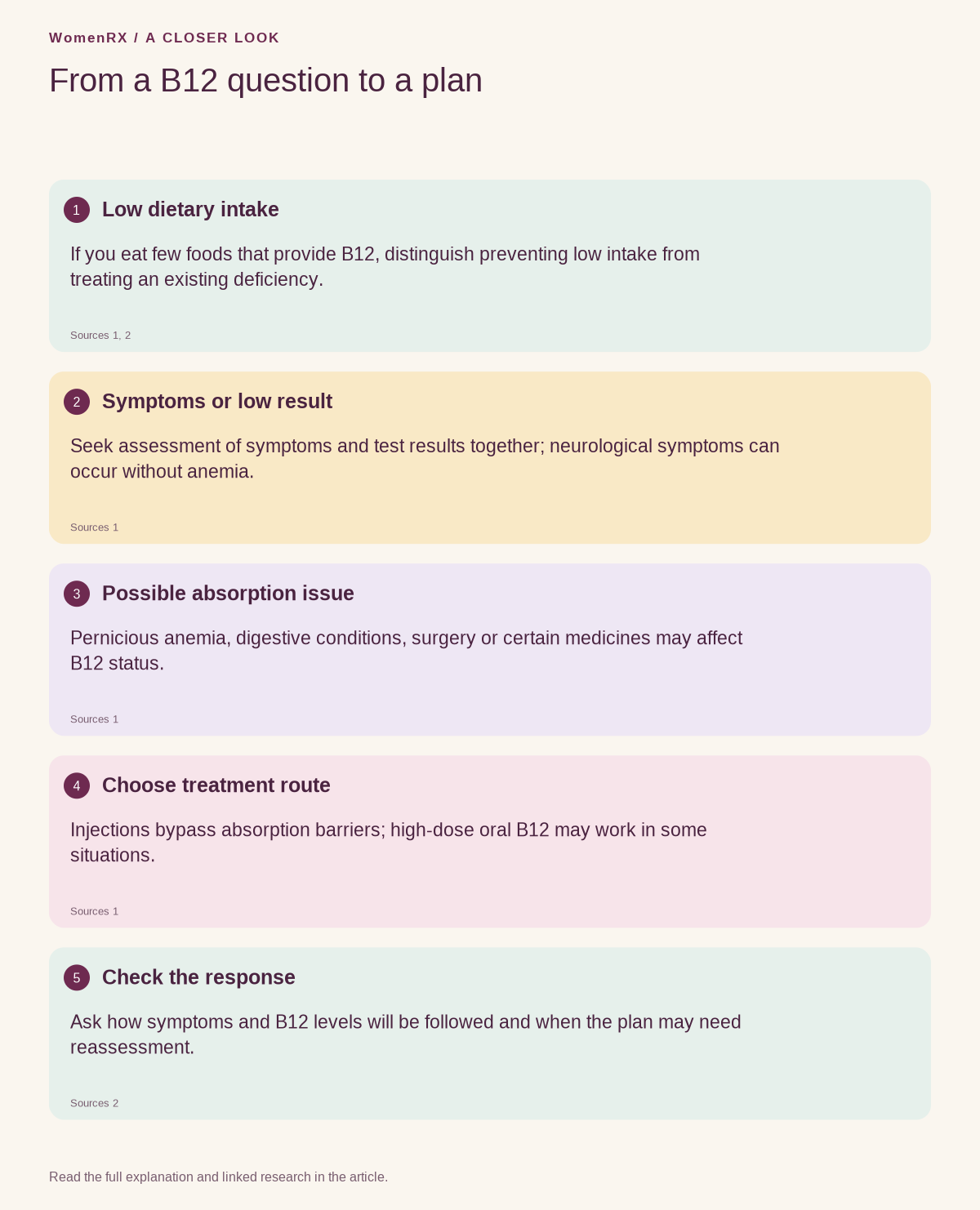
From a B12 question to a plan
Low dietary intake: If you eat few foods that provide B12, distinguish preventing low intake from treating an existing deficiency.12
Symptoms or low result: Seek assessment of symptoms and test results together; neurological symptoms can occur without anemia.1
Possible absorption issue: Pernicious anemia, digestive conditions, surgery or certain medicines may affect B12 status.1
Choose treatment route: Injections bypass absorption barriers; high-dose oral B12 may work in some situations.1
Check the response: Ask how symptoms and B12 levels will be followed and when the plan may need reassessment.2
Read the figure as text
Start with why you’re considering B12; that helps frame assessment, treatment and follow-up.- Low dietary intake: If you eat few foods that provide B12, distinguish preventing low intake from treating an existing deficiency.12
- Symptoms or low result: Seek assessment of symptoms and test results together; neurological symptoms can occur without anemia.1
- Possible absorption issue: Pernicious anemia, digestive conditions, surgery or certain medicines may affect B12 status.1
- Choose treatment route: Injections bypass absorption barriers; high-dose oral B12 may work in some situations.1
- Check the response: Ask how symptoms and B12 levels will be followed and when the plan may need reassessment.2
Sources you can check
- Vitamin B12 - Health Professional Fact SheetAccessed 2026-09-25Return to first citation
- About cyanocobalamin - NHSAccessed 2026-09-25Return to first citation